

Is it worth replacing a dryer heating element?
Yes, it’s usually worth replacing the heating element in an Estate TEDS840PQ0 dryer when the dryer still tumbles normally and the rest of the machine is in decent shape. A heating repair typically restores heat for far less than the cost of replacing the dryer, especially when the issue is limited to the heater circuit.
We recommend replacing the element when these conditions fit your situation:
- The drum turns, but clothes stay cold or take much longer to dry
- You have proper airflow (lint screen and venting are clear)
- The dryer is otherwise quiet (no loud squealing, grinding, or thumping)
- You are not also chasing multiple electrical or control problems
- You can access and test the heater circuit safely with power disconnected
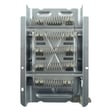
A common replacement for this model is the dryer element 279838.
A “no heat” symptom is often caused by a safety device or airflow problem, not just the element. Check these items first:
- Lint screen and lint housing for blockage
- Exhaust duct for crushing, kinks, or heavy lint buildup
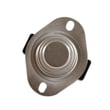
- High-limit thermostat operation (overheating can open it)
- Thermal cut-off condition (often opens after overheating)
- Power supply: many electric dryers can run but not heat if one leg of power is missing
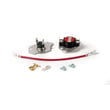
If you suspect an overheat event, the dryer thermal cut-off fuse kit 279816 is a common fix path along with correcting vent restrictions.
| Option | Typical outcome | Best when |
|---|---|---|
| Replace heating element | Restores heat if element is open/broken | Dryer tumbles, airflow is good |
| Replace thermal cut-off kit | Restores heat and safety protection | Dryer overheated or vent was restricted |
| Replace dryer | New appliance, higher cost | Multiple major failures or severe wear |
A failed heating element is a straightforward repair, but overheating from poor venting can repeatedly damage the heater circuit. Fixing airflow helps protect parts like the heating element, high-limit thermostat, and thermal cut-off.
For maintenance habits that prevent repeat failures, use how to clean and maintain your clothes dryer.
Last updated: February 2026
What causes a dryer thermistor to fail?
A dryer thermistor fails when it can no longer read temperature accurately, most often due to overheating from restricted airflow, moisture or corrosion at the connector, or normal aging from repeated heat cycles. On an Estate TEDS840PQ0 dryer, fixing the airflow problem is just as important as replacing the sensor.
- Restricted venting or lint buildup: clogged lint screen, crushed vent hose, or blocked exterior hood causes heat to rise too high.
- Overheating events: repeated high-heat operation with poor airflow stresses the sensor.
- Loose, damaged, or corroded wiring: vibration and heat can loosen terminals; moisture can corrode them.
- Shorts from rubbed-through wires: cabinet edges or drum movement can damage insulation.
- Control or cycling issues: if the dryer runs too hot too long, the thermistor is under constant stress.
- Unplug the dryer.
- Clean the lint screen and the lint screen housing.
- Inspect the vent path end-to-end (dryer outlet, vent hose, wall duct, outside hood) for restrictions.
- Check the thermistor wiring harness for discoloration, loose terminals, or corrosion.
- If you have a multimeter, test the thermistor resistance at room temperature and compare readings as it warms slightly (a bad thermistor often reads open, shorted, or erratic).
| Symptom you notice | What it often points to | Example part on this model page |
|---|---|---|
| Dryer runs hot, shuts off, or smells hot | Airflow restriction or over-temp protection opening | Dryer thermal cut-off fuse kit 279816 |
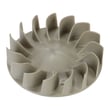
| Long dry times and high heat | Poor airflow, lint restriction, weak exhaust | Dryer blower wheel WP694089 |
| Heat is inconsistent | Heating circuit cycling abnormally | Dryer high-limit thermostat WP3977767 |
A failed thermistor can cause poor drying performance, overheating, or nuisance shutdowns. Correcting venting and lint issues prevents repeat failures and protects key heating components like the heating element.
Related help: dryer takes a long time to dry
Last updated: February 2026
What are the symptoms of a bad dryer thermostat?
On an Estate TEDS840PQ0 dryer, a bad thermostat commonly shows up as no heat, overheating (clothes feel overly hot), or the dryer shutting off mid-cycle because temperature control is not cycling correctly. These symptoms often overlap with airflow problems, so we check venting first.
- Dryer runs but produces little or no heat
- Dryer overheats; loads come out very hot or scorched
- Dryer stops during a cycle and may restart after cooling
- Dry times get longer even on smaller loads
- Burning smell or unusually hot cabinet area
Poor airflow can mimic thermostat failure and can also cause repeated overheating.
- Clean the lint screen and confirm it is not coated with fabric softener residue
- Check the exhaust vent for kinks, crushing, or heavy lint buildup
- Make sure the outside vent hood opens fully while the dryer runs
- Avoid overloading; heavy loads can restrict drum airflow
- If drying is slow, follow the steps in dryer takes a long time to dry
- Unplug the dryer (and shut off gas if you have a gas model).
- Access the thermostat location (often on the blower housing or heater box, depending on design).
- Use a multimeter to check continuity at room temperature (many dryer thermostats read closed at room temp).
- If the thermostat reads open when it should be closed, or it never changes state with temperature, it is failing.
| Symptom | Common related part | Example part for TEDS840PQ0 |
|---|---|---|
| Overheats or shuts down | High-limit thermostat | Dryer high-limit thermostat WP3977767 |
| No heat after overheating event | Thermal cut-off or fuse kit | Dryer thermal cut-off fuse kit 279816 |
| No heat (electric models) | Heating element | Dryer element 279838 |
A thermostat that does not regulate temperature can cause unsafe overheating, damage fabrics, and trigger other safety devices (like thermal cut-offs). Fixing airflow and the correct temperature-control part restores normal cycling and drying performance.
Last updated: February 2026
Will a dryer still run if the thermal fuse is blown?
On an Estate TEDS840PQ0 dryer, a blown thermal fuse typically stops the dryer from running at all; on some designs, the drum may still tumble but the dryer will not heat. Either way, a blown fuse means the dryer overheated and the venting and airflow problem must be fixed before returning it to service.
- Dryer will not start (most common)
- Dryer runs but has no heat (some configurations)
- Cycle stops mid-cycle and won’t restart until the fuse is replaced
- Burning smell or very hot cabinet (often caused by restricted airflow)
- Clothes take much longer to dry (a common lead-up symptom)
- Unplug the dryer (or switch off the breaker) before any checks.
- Check airflow first: clean the lint screen, inspect the vent hose for kinks, and clear the wall vent and outside hood.
- If the dryer still won’t run or won’t heat, test the thermal fuse and thermostats with a multimeter for continuity.
- Replace failed safety parts as needed; for this model, the common fix is a thermal cut-off and fuse set such as the dryer thermal cut-off fuse kit 279816.
- After repair, run a timed dry cycle and confirm strong airflow at the outside vent.
| Symptom | Common cause | Part often involved |
|---|---|---|
| Won’t start | Open safety circuit | Dryer thermal cut-off fuse kit 279816 |
| Runs but no heat | Open heater circuit or safety trip | Dryer element 279838 |
| Long dry times, overheating | Poor airflow, weak exhaust | Dryer blower wheel WP694089 |
| Stops and starts, intermittent | Heat control issue | Dryer high-limit thermostat WP3977767 |
The thermal fuse is a one-time safety device designed to open when temperatures get unsafe. Replacing the fuse without correcting restricted venting or lint buildup often leads to repeat failures and continued overheating.
For airflow and maintenance tips that help prevent overheating, use our guide: how to clean and maintain your clothes dryer.
Last updated: February 2026