Owner’s manual
 Error Codes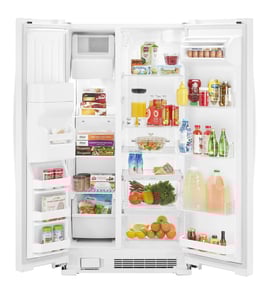


What is the average lifespan of a GE refrigerator?
Most GE refrigerators last about 12 to 16 years on average, and many run 10 to 20 years with normal use. For your GE PSE25KSHBHSS side-by-side refrigerator, routine care like keeping airflow clear and maintaining the water filtration system helps you reach the longer end of that range.
- Condenser cleanliness (dust buildup makes the compressor work harder)
- Door seal condition (warm air leaks increase run time)
- Ice maker and dispenser use (more moving parts, more wear)
- Water quality and filter changes (reduces valve and dispenser issues)
- Temperature settings and loading (overpacking restricts airflow)
We recommend these habits for side-by-side refrigerators:
- Vacuum and brush the condenser area every 6 to 12 months.
- Keep vents inside the fresh food and freezer compartments unblocked.
- Replace the water filter on schedule and flush the dispenser after changes.
- If you ever remove the filter, install the bypass plug; the manual notes the dispenser and ice maker may not operate without a filter or bypass plug.
- Follow the care and operating guidance in the PSE25KSHBHSS owner's manual.
| Refrigerator type | Typical lifespan | Notes |
|---|---|---|
| Basic top-freezer | 14 to 20 years | Fewer dispenser parts |
| Side-by-side (like PSE25KSHBHSS) | 12 to 16 years | Dispenser and ice maker add wear points |
| French door with dual ice | 10 to 15 years | More complex airflow and ice systems |
A refrigerator that is running longer cycles, struggling to hold temperature, or developing recurring ice and water dispenser problems is usually costing more in energy and putting extra strain on sealed-system components like the compressor and evaporator.
Last updated: January 2026
Are GE side by side refrigerators good?
GE side-by-side refrigerators, including model PSE25KSHBHSS, are a solid choice for everyday use because they typically deliver reliable cooling, easy food organization, and convenient ice and water dispensing. Most owners value the adjustable shelving and bright interior lighting; some notice normal ice maker noise or slower ice production.
We judge side-by-side refrigerators on cooling consistency, storage flexibility, and dispenser performance.
- Steady temperatures in both compartments when vents are kept clear
- Adjustable shelves and door bins for better organization
- In-door ice and water convenience (with routine filter changes)
- Reasonable operating noise (fans, compressor, and ice maker cycling)
- Practical maintenance access for common wear parts
For model-specific features and care guidance, use the PSE25KSHBHSS owner's manual.
On GE side-by-sides, dispenser and ice maker performance depends heavily on the water filter and water supply.
- Replace the water filter on schedule to maintain flow and taste
- If a filter is removed and not replaced, use the bypass plug so the dispenser and ice maker can operate
- Purge air after filter changes to reduce sputtering and noise
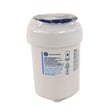
If you need the correct filter for this model, use the GE refrigerator water filter MWFP.
| Feature area | Typical experience | What improves it |
|---|---|---|
| Cooling | Even temps when airflow is unobstructed | Don’t block vents; avoid overpacking |
| Organization | Easy access to fresh and frozen foods | Use adjustable shelves and bins |
| Ice maker | Convenient but can sound loud during harvest | Keep bin seated; maintain water flow |
| Water dispenser | Good flow with a fresh filter | Replace filter; purge air after changes |
A “good” refrigerator is one that holds safe food temperatures and fits your routine. Side-by-sides excel at daily access and dispenser convenience, and they stay dependable longer when filters, airflow, and door sealing are kept in good shape.
Last updated: January 2026
How wide is a 25.6 cubic foot refrigerator?
Most 25.6 cu. ft. refrigerators are about 36 inches wide. For the GE PSE25KSHBHSS side-by-side, plan on a 36-inch opening plus small side clearances for airflow and easier installation; confirm the exact cabinet opening requirements in the PSE25KSHBHSS owner's manual.
For a 25.6 cu. ft. class refrigerator (especially side-by-side designs), these are the common planning numbers:
- Cabinet width: ~36 inches
- Opening width to target: 36 inches plus clearance
- Door swing space: extra room on the hinge side so doors and bins clear nearby walls
- Moving clearance: door removal may be needed for tight entries
GE’s installation guidance for this style of refrigerator calls for small clearances around the cabinet for air circulation and hookups.
| Location | Typical planning clearance | Why it matters |
|---|---|---|
| Sides | 1/8 inch | Airflow and easier fit |
| Top | 1/8 inch | Prevents rubbing against cabinets |
| Back | 1 inch | Room for air circulation and connections |
Even when the cabinet is about 36 inches wide, the space you need can be larger because of:
- Door handles and door swing radius
- Water line routing behind the unit
- Flooring transitions that change how the refrigerator rolls in
- Cabinets above the refrigerator that may need extra clearance to open freely
- Measure the opening width at the front and at the back
- Measure the narrowest doorway on the path to the kitchen
- If an entrance is under about 38 inches, plan on removing doors during moving (a common requirement for this size class)
Last updated: January 2026
What is the most common problem with a GE refrigerator?
Cooling problems are the most common issue we see with GE refrigerators, including the GE PSE25KSHBHSS. In many cases, the root cause is restricted airflow, a dirty condenser area, or a defrost-related problem that lets frost build up and reduces cooling performance; start with basic checks before replacing parts.
- Confirm the temperature settings are at the normal presets (freezer 0°F, refrigerator 37°F) as shown in the PSE25KSHBHSS owner’s manual.
- Give the unit up to 24 hours to stabilize after changing settings or restoring power.
- Make sure food packages are not blocking the rear air tower louvers in the fresh food section or the air tunnel in the freezer.
- Check that doors close fully and the gasket is not folding over or sticking.
- Clean spills and reduce long door openings; humidity and frequent openings can mimic cooling issues.
| Symptom | Most likely cause | What to do next |
|---|---|---|
| Fridge warm, freezer OK | Airflow blocked or damper/duct issue | Clear vents; avoid packing items against louvers |
| Freezer warm, fridge warm | Dirty condenser area or sealed system issue | Clean condenser area; verify fans run |
| Temps swing, food freezes then warms | Sensor or control issue | Check sensor readings; consider GE profile refrigerator temperature sensor WR55X10025 |
| Frost on back wall, weak airflow | Defrost system problem | Inspect defrost heater/thermostat; consider refrigerator defrost heater WR51X10055 |
The PSE25KSHBHSS uses a performance airflow system (air tower and air tunnel) to keep temperatures even. When vents are blocked or components are removed, temperature control suffers and the refrigerator can seem “not cold enough” even if the compressor is running.
Low ice production or slow water flow often points to filtration or water supply, not cooling.
- Replace the filter on schedule; a clogged filter can reduce flow.
- Purge air after filter changes.
- If the dispenser stops dispensing water, the inlet valve can be a suspect.
For filter-related symptoms, use how to replace the water filter in a GE refrigerator and match the correct cartridge such as GE refrigerator water filter MWFP.
Last updated: January 2026