Owner’s manual
 Error Codes


How to read a Kenmore model number?
Kenmore model numbers are a quick way to identify who built the appliance and which parts fit; for Kenmore washer model 11023912100, the 3-digit prefix (110) identifies the manufacturer, and the remaining digits narrow down the exact design and variation. Use the full number anytime you order parts or request service.
What each section of a Kenmore model number means
Most Kenmore model numbers break down like this:
- Prefix (first 3 digits): identifies the manufacturer (example: 110)
- Core model digits (middle group): identifies the base design series
- Suffix/variation digits (ending digits): identifies feature or production variations
- Full model number: the only safe way to match parts, diagrams, and instructions
Where to find the model number on your washer
On Kenmore washer 11023912100, the model and serial information is printed on the model and serial number plate. Our documentation notes you will need the complete model and serial numbers when requesting information.
- Check the model and serial number plate on the washer cabinet
- Write down both the model number and serial number
- Keep them with your purchase records for future reference
Quick reference table
| What you need | Example for this washer | Why we ask for it |
|---|---|---|
| Model number | 11023912100 | Matches the correct parts and diagrams |
| Serial number | (varies by unit) | Helps identify production run details |
Why it matters when ordering parts
Even small model variations can change which parts fit (for example, a lid switch, drain pump, or agitator components). Using the full model number helps prevent ordering the wrong replacement part.
For model-specific operating and identification details, use the 11023912100 owner's manual.
Last updated: January 2026
What is the average lifespan of a Kenmore washer?
A Kenmore washer typically lasts 10 to 15 years with normal household use and basic maintenance. For Kenmore model 11023912100, following the care, loading, and operating guidance in the 11023912100 owner's manual helps reduce wear on key drive and drain components.
Typical lifespan by washer type
Most Kenmore washers fall into these real-world ranges:
- Top-load (traditional agitator): 12 to 15 years
- Top-load (high-efficiency/impeller): 10 to 14 years
- Front-load: 10 to 12 years
What shortens washer life fastest
These are the most common “life reducers” we see across Kenmore washers:
- Overloading or wrapping items around the agitator (can strain the drive system)
- Chronic out-of-balance loads (stresses suspension and basket components)
- Poor draining (pump strain, standing water, odors)
- Hard water and detergent overuse (buildup, valve and tub issues)
- Ignoring early symptoms like burning smell, grinding, or slow spin
Parts that commonly wear over time (and what they affect)
If your 11023912100 is nearing the 10+ year mark, these parts often show up in troubleshooting:
| Symptom | Common wear area | Example part for this model |
|---|---|---|
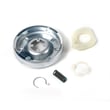
| Won’t spin or agitates weakly | Drive coupling | Washer motor coupling 285753A |
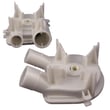
| Won’t drain or drains slowly | Drain pump | Washer drain pump WP3363394 |
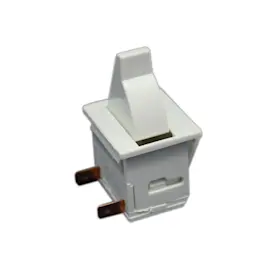
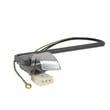
| Won’t start or stops mid-cycle | Lid safety circuit | Washer lid switch WP3949238 |
Why it matters
Knowing the typical lifespan helps you decide whether to repair or replace. A simple fix (like a lid switch or drain pump) can keep a solid Kenmore washer running for years, while repeated drive or gearcase problems often signal end-of-life economics.
Last updated: January 2026
How to hard reset kenmore washer?
To hard reset your Kenmore washer model 11023912100, unplug it (or switch off the breaker) for 1 full minute, then restore power. This clears many temporary control and cycle issues; if the washer still will not run, we focus next on the lid switch and timer.
Hard reset steps (safe and effective)
- Turn the cycle knob to OFF.
- Unplug the washer (or turn OFF the dedicated breaker).
- Wait 60 seconds.
- Plug back in (or turn breaker ON).
- Set a normal cycle and pull the timer knob out to start.
- If it stops mid-cycle, push the timer knob in to stop, then pull it back out to restart.
For model-specific operating and stop/restart details, use the 11023912100 owner's manual.
If it still will not start after a reset
On this style of Kenmore top-load washer, a “won’t start” complaint is often a safety interlock or mechanical timer issue.
- Confirm the lid closes firmly and the strike is not broken.
- Listen for a click at the lid when closing.
- Try a different cycle position on the timer.
- Check the outlet and breaker (a tripped GFCI can mimic a washer failure).
- If the washer fills but will not agitate or spin, the drive system is the next area to check.
Common parts related to “won’t start” or “stops”
| Symptom | Most common check | Part example for this model |
|---|---|---|
| No action at all when started | Lid safety circuit | Washer lid switch WP3949238 |
| Dial advances oddly or won’t run a cycle | Mechanical timer | Washer timer WP3955337 |
| Drains poorly or stalls at drain | Pump or blockage | Washer drain pump WP3363394 |
Why it matters
A hard reset restores power to the control and timer circuit, which can clear a stuck cycle state. If the washer still will not run, the lid switch (safety) and timer (cycle control) are the fastest, most accurate next checks for model 11023912100.
Last updated: January 2026
What is the capacity of a Kenmore Model 11023912100 washer?
Kenmore washer model 11023912100 is a traditional top-load, agitator-style washer; capacity varies by the exact platform and is best confirmed using the model’s specification information in the 11023912100 owner's manual. As a practical guide, most Kenmore top-load agitator washers of this era run about 3.0 to 3.5 cu. ft.
How we recommend confirming the exact capacity
Use the manual first because “capacity” can be listed as basket volume, tub volume, or a rated load size.
- Open the 11023912100 owner's manual
- Check the Specifications or Dimensions and capacity section
- Look for terms such as basket capacity, tub capacity, or cu. ft.
- If capacity is not stated in cu. ft., use the manual’s load size guidance as the usable capacity
- Match your model and serial from the model/serial plate to ensure you are reading the correct document
Quick capacity guidance (for planning loads)
These ranges help when you are comparing washers or estimating load size.
| Washer style | Typical capacity | What it handles well |
|---|---|---|
| Top-load with agitator (standard) | 3.0 to 3.5 cu. ft. | Everyday mixed loads |
| Top-load with agitator (large) | 3.6 to 4.5+ cu. ft. | Bulkier items, fewer cycles |
Why it matters
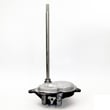
Overloading reduces cleaning performance and increases out-of-balance spinning; that extra strain can accelerate wear on drive components such as the clutch 285785 and gear case 3360629.
Last updated: January 2026