Owner’s manual
 Error Codes


Are all refrigerators 70 inches high?
No. Refrigerator height varies a lot by style and capacity; many popular full-size models land near 70 inches, but plenty are shorter or taller. For your Kenmore 79571609013 bottom-mount refrigerator, use the dimensions listed in the owner's manual to confirm the exact height for your installation space.
Typical refrigerator height ranges (what you’ll see most often)
- Top-freezer: about 61 to 67 inches
- Bottom-freezer / French door: about 67 to 71 inches
- Counter-depth (varies by design): often 67 to 70 inches
- Built-in: commonly 80 inches or more
How to measure height the right way
Measure before you buy or move a refrigerator; small differences can prevent doors from opening fully.
- Measure floor to the top of the hinge (highest point)
- Measure floor to the top of the case (cabinet height)
- Check for leveling leg adjustment (raising the front slightly can change overall height)
- Confirm you have enough front clearance to open doors (this model’s manual calls out 24 inches of space in front for door opening)
- If you must use an extension cord, plan for extra rear clearance (the manual notes it increases the clearance needed behind the refrigerator)
Quick reference: “70 inches” is not a standard
| Refrigerator type | Is ~70 inches common? | Notes |
|---|---|---|
| Top-freezer | Sometimes | Often shorter overall |
| Bottom-freezer | Yes | Many models cluster near 70 inches |
| French door | Yes | Hinges can add height |
| Built-in | No | Typically much taller |
Why it matters
Height affects more than fit under cabinets; it also impacts door swing, leveling, airflow clearances, and whether the refrigerator can be pulled out for service without scraping overhead trim.
Last updated: February 2026
What are the disadvantages of a bottom freezer refrigerator?
Bottom-freezer refrigerators like Kenmore 79571609013 keep fresh food at eye level, but the freezer can be less convenient and more wear-prone. The biggest drawbacks are bending to access frozen items, heavy drawer use, and potentially higher repair costs when drawer hardware or cooling components need service.
Common disadvantages (what you will notice day to day)
- More bending for frozen food: you reach down for the freezer drawer, which is inconvenient if you use frozen items often.
- Heavier, bulkier freezer drawer: a fully loaded drawer takes more effort to open and close.
- Drawer hardware can wear faster: slides, rails, and supports handle a lot of weight and movement.
- Freezer organization can be trickier: stacked baskets and deep drawers can hide items.
- Often costs more than top-freezer designs: both upfront and, in some cases, for major repairs.
Parts that commonly take more stress on bottom-freezer designs
If the freezer drawer starts sticking, sagging, or not closing smoothly, these model-matched parts are typical suspects:
| Symptom | What it often points to | Example part for this model |
|---|---|---|
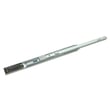
| Drawer feels rough or binds | Worn slide/rail | Refrigerator freezer drawer slide rail 5218JA1010E |
| Drawer sits uneven or rubs | Bent/worn rail on one side | Refrigerator freezer basket support rail, left 4932JA1010A |
| Drawer will not track straight | Right-side rail wear | Refrigerator freezer basket support rail, right 4932JA1010B |
Why it matters
A freezer drawer that does not close tightly can let warm air in, which forces longer run times and can lead to temperature swings. Your manual also notes that door use and warm room conditions increase run time, so a poor seal or hard-closing drawer can make performance complaints worse. For operating and care guidance specific to this refrigerator, use the owner's manual.
Last updated: February 2026
What are the most common problems with Kenmore refrigerators?
The most common issues we see with Kenmore refrigerators like model 79571609013 are cooling problems, ice maker and water supply troubles, leaks, frost buildup, unusual noises or vibration, and lights or controls not working. Many of these trace back to airflow restrictions, dirty condenser coils, door gasket sealing, or a failing fan or compressor.
Common problems and what usually causes them
- Not cooling or weak cooling: dirty condenser coils, blocked vents, evaporator fan issues, or sealed-system/compressor problems
- Compressor runs a lot: frequent door openings, warm room temperature, or heavy food load (often normal under these conditions)
- Ice tastes bad or smells: old ice, unwrapped food odors, new ice maker startup, or water quality issues
- Frost or ice crystals: door not closing fully or doors opened often
- Water in the defrost drain pan: normal during defrost cycles, especially in humid conditions
- Lights do not work: door left open about 7 minutes, loose/burned-out bulb, or power interruption
For model-specific operating and troubleshooting steps, use the owner's manual.
Quick checks we recommend first (before replacing parts)
- Confirm doors close and seal fully; clean sticky gaskets and the surfaces they touch.
- Make sure air vents inside the refrigerator and freezer are not blocked by food packages.
- Clean condenser coils (dust buildup is a top cause of poor cooling and long run times).
- If lights are out, close both doors for 1 second to reset the door-open light shutoff; then check the bulb seating.
- If noise or vibration is new, level the refrigerator so it rests solidly on the floor.
Parts that commonly relate to these symptoms (for this model)
| Symptom | Common part involved | Example part for 79571609013 |
|---|---|---|
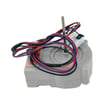
| Warm refrigerator or poor airflow | Evaporator fan motor | Lg refrigerator evaporator fan motor 4681JB1027C |
| Long run time, warm temps | Condenser coil or airflow restriction | Refrigerator condenser coil ACG73784701 |
| No cooling (advanced diagnosis) | Compressor or start protection | Refrigerator compressor TCA38091801, refrigerator compressor overload protector 6750CL0001D |
| Ice maker not producing ice | Ice maker assembly | Ice maker assembly (AEQ72909602) - refrigerator ice maker part by lg AEQ72909602 |
Why it matters
Cooling, ice, and leak symptoms often get worse when airflow is restricted or doors do not seal. Addressing basics like leveling, gasket cleaning, and coil cleaning can prevent food spoilage and reduce compressor wear.
Last updated: February 2026
What is the life expectancy of a bottom freezer refrigerator?
A bottom freezer refrigerator like Kenmore model 79571609013 typically lasts 10 to 15 years. With consistent cleaning, stable temperatures, and good airflow around the cabinet, it commonly reaches the upper end of that range.
Typical lifespan and what affects it
Most bottom-mount (bottom freezer) refrigerators land in this range because the sealed cooling system and fans run frequently, but the design is less complex than many French door models.
Key factors that extend life:
- Keep condenser coils clean so the compressor runs less
- Maintain tight door gaskets to prevent warm air leaks
- Avoid frequent door opening and overloading with warm food
- Keep temperatures steady; wait 24 hours between control changes
- Ensure good airflow inside; do not block vents
Maintenance checklist (high impact)
Use these habits to reduce wear on the compressor and fans:
- Vacuum dust from the condenser coil area regularly (more often with pets)
- Confirm doors close fully and do not bounce open
- Keep the freezer basket and rails moving smoothly and aligned
- Set temperatures, then allow 24 hours for the refrigerator to stabilize before adjusting again
- Clean spills promptly to protect liners, gaskets, and plastic parts
What “normal operation” looks like
Longer run times do not automatically mean the refrigerator is failing. Modern units often run more to hold steady temperatures, especially in warm rooms or after loading groceries.
| Symptom | Often normal when | Worth checking first |
|---|---|---|
| Compressor runs a lot | Hot room, frequent door openings, recently plugged in | Coil cleanliness, door seal, temperature settings |
| Clicking/popping sounds | Control cycling, expansion/contraction | Leveling, items vibrating on cabinet |
| Fan noise | Air circulation through compartments | Frost buildup, blocked vents |
Why it matters
Knowing the expected lifespan helps you decide when maintenance is enough versus when a major repair (like a sealed-system issue) is less cost-effective. If cooling performance drops, start with airflow, coil cleaning, and temperature settings before replacing parts.
For model-specific care and cleaning guidance, follow the maintenance section in the owner's manual.
Last updated: February 2026