Owner’s manual
 Error Codes


Are bottom mount fridges better?
Bottom-mount refrigerators like the GE PGSS5RKZHSS are “better” when you want everyday fresh-food items at eye and waist level; the freezer stays in a lower drawer. This layout improves ergonomics for most households and works especially well if you cook often.
When a bottom-mount refrigerator is the better choice
- You use the refrigerator section more than the freezer (produce, dairy, drinks).
- You want less bending to reach fresh-food shelves and crisper drawers.
- You like freezer organization in pull-out baskets and lower drawers.
- You prefer a wide refrigerator compartment for platters and meal prep.
- You want a layout that supports frequent door openings without constant crouching.
When it might not be “better” for your home
Bottom-mount designs are not a universal upgrade. They can be a worse fit if your household is freezer-heavy or you want quick access to frozen items at chest height.
- You rely heavily on frozen foods and want them at eye level.
- You have limited clearance for a deep freezer drawer to pull out fully.
- You prefer a single open freezer cavity instead of stacked baskets.
Quick comparison: bottom-mount vs top-freezer
| Feature | Bottom-mount (like PGSS5RKZHSS) | Top-freezer |
|---|---|---|
| Fresh-food access | Higher, easier reach | Lower, more bending |
| Freezer access | Lower drawer | Upper door |
| Best for | Fresh-food focused cooking | Freezer-heavy households |
| Organization style | Drawers and baskets | Open shelves/bins |
Why it matters
The “best” refrigerator style is the one that matches how you actually use food storage. If you open the fresh-food doors far more often than the freezer, a bottom-mount layout reduces daily strain and makes common items easier to grab.
Model-specific tips for keeping performance strong
A bottom-mount refrigerator still depends on good airflow, stable temperatures, and clean water filtration.
- Follow temperature and airflow guidance in the PGSS5RKZHSS owner's manual.
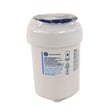
- Replace the water filter on schedule to protect taste and flow; use the GE refrigerator water filter MWFP.
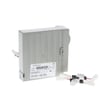
- If temperatures swing, a common fix path is checking sensors and airflow components such as the temperature sensor WR55X10025.
Last updated: February 2026
What is the most common problem with GE refrigerators?
The most common GE refrigerator problem is not cooling correctly (fresh food warm, freezer not holding temperature). On the GE PGSS5RKZHSS, this usually traces back to airflow issues (dirty condenser coils, blocked vents) or a failing cooling component such as a fan motor or temperature sensor; see the PGSS5RKZHSS owner's manual for model-specific checks.
Most common symptoms we see
- Refrigerator section warm but freezer still cold
- Freezer warming up or thawing
- Loud humming, rattling, or intermittent fan noise
- Frost buildup on the back wall of the freezer
- Temperature swings (food freezing in the fridge or spoiling early)
Quick checks before replacing parts
- Confirm settings: Set fresh food to about 37°F and freezer to about 0°F.
- Check airflow: Make sure packages are not blocking return vents and damper openings.
- Clean condenser area: Dust on the condenser coil and fan area reduces cooling efficiency.
- Listen for fans: You should typically hear the evaporator fan when the compressor is running.
- Look for frost patterns: Heavy frost can point to a defrost problem.
Parts that commonly fix “not cooling” on this model
If basic checks do not help, these model-matched parts are frequent solutions:
| Problem pattern | Common suspect | Example part for PGSS5RKZHSS |
|---|---|---|
| Warm temps, erratic readings | Temperature sensing issue | Temperature sensor WR55X10025 |
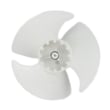
| Warm fridge, weak airflow | Evaporator fan not moving air | Refrigerator evaporator fan motor WR60X10277 |
| Frost buildup, airflow blocked by ice | Defrost control issue | Refrigerator defrost bi-metal thermostat WR50X10065 |
Why it matters
Cooling problems get worse fast: poor airflow and incorrect temperature feedback can force longer run times, cause food-safety issues, and lead to ice buildup that blocks circulation even more.
Related troubleshooting help
Last updated: February 2026
How to remove bottom grille on GE refrigerator?
On the GE PGSS5RKZHSS bottom-mount refrigerator, the bottom grille (base grille/toe grille) typically comes off by releasing the retaining clips or removing a couple of screws, then pulling the grille straight out from the cabinet. Use steady, even pressure so the tabs do not crack.
Steps to remove the bottom grille
- Unplug the refrigerator or switch off power at the breaker (safer when working near wiring and fans).
- Open both fresh food doors for better access.
- Look along the top edge and corners of the grille for screws; if present, remove them with a Phillips screwdriver.
- If there are no screws, grip the grille near both ends and pull straight outward to pop it off the clips.
- If it feels stuck, work from one end to the other, releasing one clip at a time (do not twist hard).
- Set the grille aside on a towel to avoid scratching the finish.
Reinstall tips (so it stays secure)
To reinstall, align the tabs with the slots, press the grille in until it snaps flush, then reinstall any screws you removed.
| What you see | What to do | What to avoid |
|---|---|---|
| Screws at corners/top edge | Remove screws first, then pull grille out | Forcing it before screws are out |
| No screws, grille sits tight | Pull straight out to release clips | Bending the grille to “pry” it off |
Why it matters
Removing the bottom grille gives you access for cleaning dust from the condenser area and checking airflow. Better airflow helps the compressor and condenser fan run cooler and can improve temperature stability.
Related help for GE refrigerators
If you are working in this area because of alarms or dispenser issues, our DIY guides can help:
For model-specific diagrams and any grille fastener notes, use the PGSS5RKZHSS manual.
Last updated: February 2026