Installation guide
 Owner’s manual



How do I know if my GE dryer heating element is bad?
On the GE GTDP220GF0WW gas dryer, a “bad heating element” usually is not the issue because gas dryers heat with a burner system. If the dryer tumbles but has no heat, we focus on airflow and gas-heat components (igniter, gas valve, thermostats) rather than an electric heater.
Quick checks first (most common)
- Confirm the dryer is vented outdoors and the vent is not crushed or clogged.
- Clean the lint screen and check the exhaust hood flap outside for strong airflow.
- Make sure the gas shutoff valve is fully open.
- Run a timed dry cycle and listen for ignition: you may hear a click, then a brief whoosh.
- If the dryer heats for a few minutes then stops, suspect airflow restriction or a thermostat issue.
What to test (and what it means)
Use the wiring diagram in the control console and the steps in the GTDP220GF0WW installation guide to access panels safely and confirm proper venting.
| Symptom | Most likely area | Typical next step |
|---|---|---|
| Tumbles, no heat at all | Ignition system | Check igniter glow and burner ignition |
| Heats briefly, then no heat | Venting or thermostat | Clear vent; test operating thermostat |
| No start, no heat | Door/start circuit | Check door switch and start switch |
Parts that commonly cause “no heat” on this model
If you find the burner never ignites, these model-matched parts are common suspects:
- Dryer burner igniter WE4M449 (if it never glows or is open)
- Gas valve WE11X20711 (if igniter glows but burner will not light)
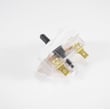
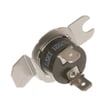
- Dryer operating thermostat WE4M216 (if it opens early or fails open)
Why it matters
A gas dryer that is not heating is often an airflow problem first. The installation instructions specify the dryer must be exhausted outdoors and recommend 4-inch rigid metal ducting; restricted venting can cause poor drying, overheating, and repeated shutdowns.
Last updated: February 2026
What is the most common problem with a GE electric dryer?
The most common GE electric dryer complaint is no heat or long dry times, usually caused by restricted airflow (lint buildup or a crushed vent) or a failed heating circuit part (thermal fuse, thermostat, or heating element). On GE GTDP220GF0WW, venting setup is a top priority for reliable drying.
Quick checks we recommend first
- Clean the lint screen before every load.
- Check that the exhaust duct is 4-inch (102 mm) diameter and vents outdoors.
- Replace any plastic or foil-style transition duct with UL-listed metal duct.
- Confirm the vent run is not longer than the maximum length for the number of elbows.
- Make sure the dryer is installed where the temperature stays above 50°F.
Most common symptoms and what they usually point to
| Symptom | Most common cause | What to do next |
|---|---|---|
| Runs but no heat | Heating circuit failure or airflow restriction | Verify airflow first; then test heat components |
| Takes too long to dry | Vent restriction or excessive duct length | Clean/shorten venting; confirm 4-inch rigid metal duct |
| Drum will not tumble | Broken belt or a drive system issue | Inspect belt and idler system |
| Shuts off or overheats | Lint buildup restricting airflow | Clean lint housing and venting thoroughly |
Parts that commonly fail when the drum will not spin
If the motor runs but the drum does not turn, the belt and tension system are common culprits on this model.
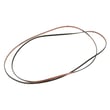
- Dryer drum belt WE03X29897 (broken or stretched belt)
- Idler pulley and idler arm (loss of belt tension)
- Drum glides or felt seal (drag that strains the drive system)
Why it matters
Poor airflow is a root cause behind many “no heat” and “not drying” complaints because it increases drying time, raises operating temperatures, and can trigger safety shutoffs. The installation requirements for venting and ducting in the installation guide are the baseline for safe, consistent performance.
Last updated: February 2026
Where to find part number on GE dryer?
On a GE gas dryer like model GTDP220GF0WW, the model and serial tag (often used to look up the correct part number) is typically located inside the dryer door opening on the door frame or on the inside of the door. Confirm the exact location in the GTDP220GF0WW owner's manual.
What to look for on the label
The tag usually includes several identifiers; we use these to match the right GE dryer parts.
- Model number (example: GTDP220GF0WW)
- Serial number (helps identify production run)
- Electrical rating (volts/amps)
- Gas type and other safety information (on many gas dryers)
- Sometimes a manufacturing date or code
Common label locations on GE dryers
If you do not see it immediately at the door opening, check these other common spots.
- Inside the door opening on the front panel
- On the inside of the door itself
- On the rear panel of the cabinet
- Behind the lower front access panel (if equipped)
| What you need | Why we need it | Example format |
|---|---|---|
| Model number | Ensures parts fit your exact dryer design | GTDP220GF0WW |
| Serial number | Helps confirm version changes within a model | Letters + numbers |
| Part number | Identifies the exact replacement component | WE12M29 |
Why it matters
GE often uses similar-looking parts across multiple dryers, but small design changes can affect fit and wiring. Using the exact model number from the tag helps us match parts like the dryer push-to-start switch WE4M416 or the correct drum belt the first time.
Last updated: February 2026