Owner’s manual



What is the most common problem with LG dryers?
For the LG DLE3170W dryer, the most common issue we see is long dry times or “not heating/not drying” symptoms caused by restricted airflow (lint buildup, crushed duct, or a clogged vent hood). The next most common complaint is noise from normal wear parts in the drum support system.
Most common symptoms and what they usually mean
- Clothes take too long to dry: airflow restriction, lint buildup, or incorrect cycle/heat setting
- Dryer runs but no heat: heating circuit problem (electric) or gas ignition/heating problem (gas)
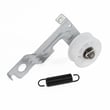
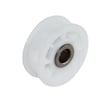
- Rumbling, thumping, squealing: worn drum support roller, idler pulley, or belt
- “Check Filter” or Flow Sense bars: venting restriction that needs attention
- Intermittent temperature or error codes: sensor-related issue (thermistor or moisture sensing)
For model-specific operating and venting requirements, we follow the guidance in the DLE3170W owner’s manual.
Quick checks we recommend first (fastest wins)
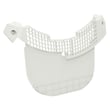
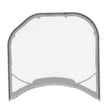
- Clean the lint screen before every load; replace it if it’s damaged or won’t seat correctly (see lint filter - dryer part by LG ADQ56656401).
- Confirm strong airflow at the outside vent hood while the dryer is running.
- Inspect the vent run for crushed flex duct, long runs, or too many elbows.
- Run the built-in duct check (Flow Sense) if your model displays restriction bars.
Common causes by symptom (at-a-glance)
| Symptom | Most likely cause | Parts that may be involved |
|---|---|---|
| Long dry times | Restricted venting/airflow | Lint screen, blower wheel |
| No heat (electric) | Failed heater or safety thermostat | Dryer heating element 5301EL1001J, high-limit thermostat |
| Loud rumble/thump | Worn drum support components | Drum support roller, belt, idler pulley |
| Error code tE1/tE2 | Temperature sensing issue | Dryer thermistor AGM30045804 |
Why it matters
Airflow problems do more than slow drying; they can overheat components, trigger safety shutoffs, and shorten the life of parts like the heating element, thermostats, and blower wheel.
Last updated: January 2026
How do I hard reset my LG dryer?
To hard reset your LG dryer model DLE3170W, we recommend disconnecting power for a few minutes, then restoring power and turning the dryer back on. This clears many control glitches without changing any cycle settings; see the DLE3170W owner’s manual for operating details.
Hard reset steps (DLE3170W)
- Press Power to turn the dryer off.
- Unplug the dryer (or switch the dryer breaker OFF).
- Wait 3 to 5 minutes.
- Restore power.
- Press Power, then start a cycle.
If the dryer still won’t start after a reset
These checks solve the most common “dead” or “won’t run” complaints:
- Make sure the door is fully closed and the latch clicks.
- Confirm the outlet has power (try a lamp or meter).
- Check the home breaker; reset it fully OFF then ON.
- If the display is on but the dryer won’t run, the door switch could be the issue.
- If the dryer starts then stops, reduce load size and check airflow.
Quick symptom-to-next-step table
| What you see | Most likely next step | Why it matters |
|---|---|---|
| No lights, no response | Check breaker/outlet | The control needs stable power |
| Lights on, won’t start | Check door closure and door switch | The dryer won’t run if it “thinks” the door is open |
| Long dry times, Flow Sense alerts | Clean venting and lint path | Restricted airflow can cause shutdowns and poor drying |
Why it matters
A proper hard reset is a safe first step for DLE3170W control-board glitches. If the problem returns quickly, it usually points to a power supply issue, a door/Start circuit problem, or airflow restriction rather than a one-time software hiccup.
Parts that commonly relate to “won’t start” or airflow issues
If troubleshooting points to a specific component, these are common on this model:
- Dryer door switch EBF61496102 (detects door closed)
- Lint filter - dryer part by LG ADQ56656401 (keeps lint out of the blower and duct)
Last updated: January 2026
Is 7.4 cubic feet a large dryer?
Yes. For the LG DLE3170W, 7.4 cubic feet is a large-capacity dryer drum size, and it is designed to handle bigger loads and bulky items more comfortably than standard-capacity dryers.
What “7.4 cu. ft.” means on this model
In the LG DLE3170W specifications, the normal cycle drying capacity is listed as IEC 7.4 cu. ft. That capacity typically supports fewer loads per week because you can dry more items at once. For cycle and loading guidance, use the DLE3170W owner’s manual.
What you can usually fit in a large-capacity dryer
Load size still depends on fabric type and how wet the laundry is, but 7.4 cu. ft. is commonly used for:
- Larger family loads (mixed cottons, towels, everyday clothing)
- Bulky items like comforters and blankets (dry best with room to tumble)
- Bedding loads (sheets plus pillowcases)
- Heavier fabrics that need more airflow to dry evenly
Capacity comparison (quick reference)
| Dryer capacity | Typical label | Best for |
|---|---|---|
| 5.0 to 6.9 cu. ft. | Standard | Smaller households, lighter weekly laundry |
| 7.0 to 7.5 cu. ft. | Large | Families, towels, bedding, bulkier loads |
| 7.6 cu. ft. and up | Extra-large | Frequent bulky loads and high-volume laundry |
Why it matters
A large drum helps clothes tumble more freely, which improves airflow and can reduce long dry times. To keep performance strong, we recommend cleaning the lint screen every load and replacing it if it is damaged or not fitting correctly. The correct replacement for this model is the lint filter - dryer part by LG ADQ56656401.
Last updated: January 2026
Why does an LG dryer take so long to dry?
An LG DLE3170W dryer that takes too long to dry is almost always dealing with restricted airflow (lint screen, blower housing, or vent duct), an overloaded load, or a sensor/heat-control issue that reduces heat or shuts heat off early. Start with airflow checks first because they cause the biggest slow-dry problems.
Quick checks that fix most long-dry complaints
- Clean the lint screen before every load; wash and fully dry it if it has fabric-softener residue. If it’s torn or warped, replace the lint filter - dryer part by LG ADQ56656401.
- Confirm strong airflow outside at the vent hood while the dryer runs on a heated cycle.
- Check for crushed, kinked, or extra-long venting; rigid or semi-rigid metal ducting performs best.
- Reduce load size; heavy items (towels, jeans, comforters) need more space to tumble.
- If your display shows duct restriction bars or “d80/d90/d95,” address venting before replacing parts.
Model-specific features to use
Your DLE3170W includes LG’s Flow Sense duct blockage sensing and an Installation Test (Duct Check). Follow the steps in the DLE3170W owner’s manual to run the duct check and interpret the bar display.
When airflow is good but drying is still slow
If venting is clear and loads are sized correctly, the issue is often heat regulation or moisture sensing:
- Moisture sensor not reading correctly (can end cycles early or extend time); inspect/clean the sensor bars and consider the dryer moisture sensor 6500EL3001A.
- Temperature sensing problems; a failing thermistor can cause poor heat control. Consider the dryer thermistor AGM30045804.
- Electric heat output issues; if the dryer tumbles but heat is weak or inconsistent, the heating circuit may be involved, including the dryer heating element 5301EL1001J.
What to check first (fast decision table)
| What you notice | Most likely cause | Best first action |
|---|---|---|
| Clothes hot but still damp | Poor airflow | Clean lint screen and verify outside vent airflow |
| Cycle time keeps increasing | Vent restriction or sensor recalculating | Run Flow Sense/duct check and shorten/clean vent |
| Clothes barely warm | Heating problem | Verify power supply (electric) or heat components |
| Sensor cycle ends too soon | Moisture sensor issue | Clean sensor bars; inspect sensor wiring/part |
Why it matters
Long dry times waste energy, overheat fabrics, and can lead to repeated cycling that increases wear on components like the blower wheel, thermostats, and heating system.
Last updated: January 2026