Owner’s manual
 Error Codes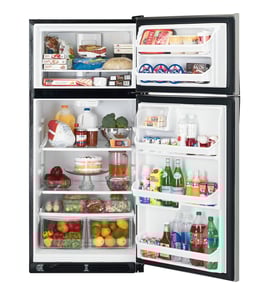

How to tell what model Kenmore refrigerator?
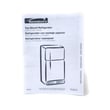
You can tell the model of your Kenmore refrigerator by finding the model and serial number label inside the fresh food (refrigerator) compartment; on Kenmore model 10674232400, the label is located on an inside wall of the refrigerator compartment. Use that exact model number when looking up parts and instructions in the owner's manual.
Where to look for the model number label
Check these common spots on a Kenmore top-mount refrigerator:
- Inside the refrigerator compartment on an interior side wall (most common)
- Near the crisper area on the side wall (look above or beside the drawers)
- On the ceiling area inside the refrigerator compartment (less common)
- Behind the toe grille or kick plate (some designs)
What to write down (and why)
Record the information exactly as shown on the label:
- Model number (example format: 106.XXXXXXX)
- Serial number
- Purchase date (if available)
Why it matters
The model number narrows your appliance to the correct parts list and diagrams. For example, a top-mount refrigerator ice maker, door gasket, or water inlet valve can look similar across Kenmore models but use different mounting points, wiring, or water tube routing.
Quick reference: model vs. serial
| Item on the label | What it tells us | When you need it |
|---|---|---|
| Model number | Exact design and parts match | Ordering parts, using diagrams, checking features |
| Serial number | Production run details | Service history, confirming version changes |
If the label is hard to read
Try these steps:
- Wipe the label gently with a damp cloth and dry it
- Use your phone camera and zoom in for clarity
- Copy the model number character-for-character (including dots and dashes)
Last updated: February 2026
What are the most common problems with Kenmore refrigerators?
The most common problems we see with Kenmore refrigerators like model 10674232400 are cooling issues (warm fridge or freezer), ice maker or water supply problems, and defrost-related frost buildup. Many symptoms trace back to airflow, fans, door sealing, or the ice maker fill system described in the owner's manual.
Most common symptoms and what they usually point to
- Fridge warm, freezer cold: restricted airflow, evaporator fan issue, or frost buildup on the evaporator
- Both sections warm: condenser fan problem, compressor start components, or dirty condenser area
- Ice maker not making ice: water supply issue, inlet valve problem, or ice maker assembly fault
- Frost on back wall or heavy ice in freezer: defrost system issue (timer, defrost thermostat/bi-metal)
- No interior light when door opens: door/light switch problem
- Unusual buzzing, dripping, popping, or fan noise: often normal operating sounds, especially during ice maker fill and defrost cycles
Quick checks we recommend first (no tools)
- Confirm controls and airflow: keep vents clear and avoid overpacking; proper air circulation is critical.
- Listen for fans: you should typically hear the evaporator fan moving air; fan speed can change when doors open.
- Check door sealing: gaps or a warped gasket cause temperature swings and moisture.
- If the ice maker is the issue: verify the household water supply is on and the fill tube is not frozen.
Common parts that match these problems on 10674232400
| Symptom | Likely system | Example part on this model |
|---|---|---|
| Ice maker not filling or slow fill | Water supply | Refrigerator inlet valve WP2315576 |
| No ice production (mechanical failure) | Ice maker | Ice maker assembly 4317943 |
| Frost buildup, warm temps | Defrost system | Defrost bi-metal WP4387503 |
| Warm temps, poor heat removal | Condenser airflow | Condenser motor W10124096 |
| No light when door opens | Door switch | Refrigerator light switch W11384469 |
Why it matters
Cooling, ice production, and moisture control all depend on steady airflow and correct cycling. A weak fan, a leaking door seal, or a defrost failure can make the refrigerator run longer, warm up, or create frost that blocks airflow.
Related DIY help
Last updated: February 2026
What is a fridge with freezer on top called?
A fridge with the freezer on top is called a top-freezer refrigerator (also commonly called a top-mount refrigerator). Your Kenmore 10674232400 is this style: the freezer compartment sits above the fresh-food section, with a separate side-swing door for each compartment.
Common names you will see
- Top-freezer refrigerator
- Top-mount refrigerator
- Freezer-on-top refrigerator
- Traditional two-door top freezer
How it’s different from other refrigerator styles
| Style name | Freezer location | Typical door layout |
|---|---|---|
| Top-freezer (top-mount) | Top | Two side-swing doors |
| Bottom-freezer | Bottom | Upper fridge door(s), lower freezer drawer/door |
| Side-by-side | Left side | Two tall doors |
| French door | Bottom | Two upper fridge doors, lower freezer drawer |
Why it matters (parts and troubleshooting)
Knowing the style helps you match the right parts and repair steps for airflow, door alignment, and ice maker or water system issues. For example, top-freezer models rely on clear vents between the freezer and refrigerator sections; blocking vents can cause temperature and moisture problems.
Helpful next steps for owners of Kenmore 10674232400
- Use the owner's manual to confirm control locations, airflow vent locations, and door alignment steps.
- Keep freezer and refrigerator vents clear to maintain even cooling.
- If doors look uneven, follow the manual’s door-alignment procedure (top hinge cover and hinge screws).
- If you are adding or replacing an ice maker, match the correct assembly for this model.
Related part commonly used on this style
Last updated: February 2026
What is the life expectancy of a Kenmore refrigerator freezer?
Most Kenmore top-mount refrigerators like model 10674232400 last 12 to 15 years with normal household use. Keeping the condenser area clean, maintaining good airflow, and fixing door-seal or cooling issues quickly helps you reach the full expected lifespan (and avoid premature compressor wear). See the owner's manual for model-specific care and maintenance guidance.
Typical lifespan and what affects it
A refrigerator’s life is mainly driven by how hard the sealed system and fans have to work.
- Ventilation: blocked airflow around the cabinet makes the compressor run hotter and longer
- Condenser cleanliness: dust buildup raises operating temperatures and run time
- Door sealing: warm air leaks create frost and longer run cycles
- Ice maker and water system leaks: can cause icing, corrosion, or floor damage
- Temperature settings: overly cold settings increase run time and wear
Quick maintenance checklist (best ROI)
Use this routine to keep a Kenmore 106-series top-mount running efficiently:
- Vacuum and brush the condenser area regularly
- Keep food from blocking interior air vents
- Confirm doors close fully and don’t pop open
- Clean and dry door gaskets; correct gaps and warping
- Address unusual noises quickly (often a fan or airflow issue)
Common “wear” parts that can shorten lifespan if ignored
If performance drops, these parts are frequent culprits on top-mount refrigerators:
| Symptom | Common cause | Example part for this model |
|---|---|---|
| Warm fridge, freezer OK | Weak/no evaporator airflow | Evaporator motor WPW10189703 |
| Warm temps, loud by back | Condenser fan not running | Condenser motor W10124096 |
| Frost buildup, warming | Defrost control failure | Defrost bi-metal WP4387503 |
Why it matters
A refrigerator that runs longer to hold temperature uses more electricity and puts extra stress on the compressor. Simple airflow and sealing maintenance often prevents the “runs constantly” pattern that shortens service life.
Last updated: February 2026