Installation guide
 Owner’s manual
 Error Codes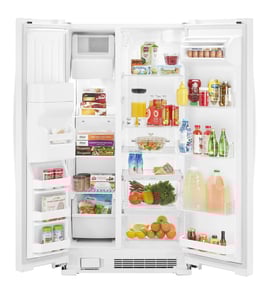


How to troubleshoot a Frigidaire refrigerator?
For a Frigidaire PLHS267ZDB7 side-by-side refrigerator, we troubleshoot by starting with power and temperature controls, then checking door sealing and airflow, and finally looking at common ice and water issues. Use the PLHS267ZDB7 owner's manual to match symptoms to the correct checks and settings.
Step-by-step troubleshooting checklist
- Confirm the refrigerator is plugged directly into a properly grounded 3-prong outlet (no extension cord or adapter).
- Make sure the Freezer and Fresh Food controls are not set to "0" (that stops cooling but does not remove power).
- Allow 8 to 12 hours for a full cool-down after plugging in or changing settings.
- Check that doors close fully and seals touch the cabinet on all sides.
- Clean the condenser area; a dirty condenser can make the unit run longer and cool poorly.
- If ice or water performance is weak, check the water filter and purge air from the dispenser.
Most common symptoms and what to check first
| Symptom | Most likely quick checks | Next step if it persists |
|---|---|---|
| Not cooling or weak cooling | Controls not at “0”, doors closing, allow 8 to 12 hours | Clean condenser; check airflow and fans |
| Runs a lot | Doors opened often, dirty condenser, gasket leaks | Inspect/replace gasket if torn or not sealing |
| Too cold in freezer | Freezer control set too cold | Adjust and wait 24 hours to stabilize |
| Ice/water issues | Filter condition, air in line | Replace filter; purge dispenser |
Water filter and dispenser checks
If water tastes off, flow is slow, or ice production drops, the filter is a top suspect. On this model, the filter housing is in the upper right front corner of the fresh food compartment.
- Replace the filter on schedule (many households use a 6-month routine).
- After replacing, run and discard several glasses of water to clear air and carbon fines.
- If you see leaks at the filter, remove and reinstall it firmly.
Helpful references:
- How to replace the water filter in a Frigidaire refrigerator
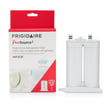
- Consider the model-compatible filter: Frigidaire puresource2 refrigerator water filter WF2CB
Why it matters
Starting with power, controls, door sealing, and condenser cleanliness prevents unnecessary part replacement and protects major components like the compressor from low-voltage or poor airflow conditions.
Last updated: January 2026
What is the most common problem with Frigidaire refrigerators?
The most common Frigidaire refrigerator issues are temperature and cooling complaints, often tied to airflow restrictions, dirty condenser coils, or doors not sealing tightly. On the Frigidaire PLHS267ZDB7, the troubleshooting chart focuses heavily on long run times, warm temperatures, and moisture caused by door openings and condenser cleanliness (see the PLHS267ZDB7 owner's manual).
Most common symptoms we see
- Refrigerator runs too much or too long
- Fresh food section too warm or too cold
- Freezer too warm (ice cream soft, ice maker struggles)
- Moisture or frost inside the cabinet
- Ice maker not making ice (often water supply or filter related)
Quick checks that fix many “common problems”
- Check door sealing and door closure: Make sure bins and food are not preventing the door from closing fully.
- Reduce door openings: Frequent or long openings add warm, humid air and drive longer run times.
- Clean the condenser: A dirty condenser is a top cause of warm temps and long run times.
- Confirm control settings: If temps are off, adjust controls and allow about 24 hours to stabilize.
- If ice maker is slow or empty: Verify the household water valve is open and replace a clogged filter such as the Frigidaire puresource2 refrigerator water filter WF2CB.
Common causes and what they usually point to
| Symptom | Most likely cause | What to do first |
|---|---|---|
| Runs constantly | Dirty condenser, door slightly open | Clean condenser; check door seal |
| Fresh food too warm | Doors opened often, condenser dirty | Reduce openings; clean condenser |
| Moisture inside | Humid air from door openings | Open less; cover containers |
| Ice maker not making ice | Freezer not cold enough, clogged filter | Correct temps; replace filter |
Why it matters
When airflow and heat removal are compromised (dirty condenser, warm air leaks at the gasket, frequent door openings), the compressor runs longer, temperatures drift, and you can see secondary problems like moisture buildup and ice maker performance issues.
Helpful DIY references
Last updated: January 2026
What is the H1 code on a Frigidaire side by side refrigerator?
On a Frigidaire PLHS267ZDB7 side-by-side refrigerator, an H1 code typically points to a temperature-related problem (the refrigerator is not sensing normal cooling). Start by confirming the unit is actually cooling, then check airflow, door sealing, and basic power reset steps in the PLHS267ZDB7 owner's manual.
What to check first (fast, no tools)
- Make sure both temperature controls are set to a normal cooling setting (not “0/OFF”).
- Confirm the doors close fully and the gaskets seal on all sides.
- Listen for normal operation sounds (fan airflow, compressor hum, occasional clicks).
- Check for blocked vents inside the fresh food and freezer compartments.
- If the unit recently lost power, allow several hours for temperatures to stabilize.
Quick reset and cooling verification
- Turn the fresh food and freezer controls to “0” (OFF) to stop cooling.
- Unplug the refrigerator from the wall outlet for 5 minutes.
- Plug it back in and return controls to a normal setting.
- Verify cooling over the next 4 to 24 hours.
Why unplugging matters
On this model, turning the controls to “0” stops the compressor but does not disconnect power to the refrigerator. Unplugging fully resets the electronics and safely removes power for checks like light bulb replacement. See the PLHS267ZDB7 owner's manual.
Common causes and the most likely fixes
| What you notice | Most likely cause | What we recommend |
|---|---|---|
| Warm fridge and warm freezer | Cooling system not running consistently | Reset power; confirm controls not at “0”; check condenser airflow |
| Freezer cold, fridge warm | Airflow/damper issue or frost restriction | Clear vents; check for heavy frost; verify door sealing |
| Code returns after reset | Sensor/control issue or ongoing cooling problem | Use diagnostics guidance; consider service if temps do not recover |
If you suspect a temperature sensing issue, the refrigerator temperature sensor is a common part involved in temperature feedback, such as the refrigerator sensor 240597220.
Why it matters
An H1 temperature alert is important because food safety and ice maker performance depend on stable freezer and fresh food temperatures. Catching airflow restrictions, door seal leaks, or control settings early prevents longer run times and poor cooling.
For model-specific diagnostic steps and any displayed error code behavior, use Frigidaire refrigerator error codes.
Last updated: January 2026
Where is the defrost timer located on a Frigidaire side by side?
On the Frigidaire PLHS267ZDB7 side-by-side refrigerator, defrost is handled by an automatic defrost control system rather than a simple, easy-to-spot “dial” timer on the cabinet. Use the PLHS267ZDB7 owner's manual to identify the exact defrost control location and access steps for your configuration.
Where defrost controls are commonly found on side-by-side refrigerators
On many Frigidaire side-by-side designs, the defrost control is mounted in one of these areas (the exact spot varies by version):
- Inside the temperature control housing in the fresh food section
- Behind an interior rear panel (freezer side) near the evaporator area
- In a control box area at the back of the unit
- Less commonly, near the compressor compartment (older mechanical-timer designs)
How to check safely (basic access steps)
Before removing any covers or panels:
- Unplug the refrigerator or switch off the circuit breaker
- Use a flashlight and a nut driver or screwdriver; do not force plastic tabs
- Keep screws organized so panels reseal correctly
- Reinstall all covers before restoring power to maintain proper airflow
Defrost timer vs. automatic defrost control
| Item | Mechanical defrost timer | Automatic defrost control (electronic) |
|---|---|---|
| What it looks like | Small timer body, sometimes with a turnable shaft | Small circuit board or module |
| Typical access | Service area or control housing | Control housing or control box |
| Common failure clues | Stuck in defrost or never enters defrost | Heavy frost buildup, warming, intermittent defrost |
Why it matters
If you are troubleshooting frost buildup or warm temperatures, the “defrost timer” question often leads to the wrong part. Many defrost problems are caused by failed defrost components such as the refrigerator defrost bi-metal thermostat 5303918214, a heater issue, or airflow restrictions around the evaporator.
Last updated: January 2026