Owner’s manual
 Error Codes


How many cubic feet is my Kenmore Elite refrigerator?
For Kenmore Elite model 10657713701, the exact cubic-foot capacity is listed on the model’s rating label and in the specifications section of the 10657713701 owner's manual. Use those specs to match the correct storage capacity for your kitchen layout and food-storage needs.
Check these common places first:
- The specifications section in the 10657713701 owner's manual
- The model and serial tag inside the fresh food compartment (often on a side wall)
- The product data/spec label area referenced in the manual
- If you have the original sales paperwork, it may list total capacity
Refrigerator capacity is typically shown as total cubic feet, sometimes broken into fresh food and freezer sections.
| Spec label term | What it includes | Why it matters |
|---|---|---|
| Total capacity (cu. ft.) | Fresh food + freezer | Overall storage planning |
| Refrigerator (cu. ft.) | Fresh food section only | Grocery and shelf space |
| Freezer (cu. ft.) | Freezer section only | Frozen food storage |
Capacity affects how much food you can store, how you organize shelves and bins, and whether replacement items (like door bins) fit your storage plan. If you are comparing models, always compare total cubic feet and the refrigerator/freezer split.
If you are already reviewing your refrigerator’s setup, these are common fit and function items for this model:
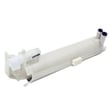
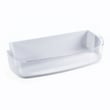
- Refrigerator cantilever bin WPW10160952 (door storage and organization)
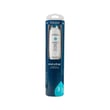
- Genuine Kenmore refrigerator water filter EDR3RXD1 (water and ice quality)
Last updated: January 2026
What are the common problems with Kenmore Elite refrigerators?
Common problems on the Kenmore Elite 10657713701 side-by-side refrigerator include warm temperatures from restricted airflow or dirty condenser coils, frost buildup from a defrost or door-seal issue, and ice or water dispenser problems tied to the water system or filter. Use the 10657713701 owner's manual troubleshooting section to match symptoms to checks.
- Not cooling or weak cooling: blocked vents, dirty condenser coils, failed evaporator fan motor, or sealed-system/compressor issues
- Too much frost or ice buildup: defrost heater/thermostat problem, door left ajar, or worn door gasket
- No ice or slow ice production: water supply issue, clogged filter, or ice maker problem
- Water dispenser slow or tastes off: filter overdue, air in the line after a filter change, or low supply pressure
- Unusual noises: normal operating sounds, fan blade rubbing ice, or compressor/start components struggling
- Confirm controls are set correctly and allow time for temperatures to stabilize after changes.
- Make sure air can circulate; do not block interior vents with food packages.
- Clean condenser coils and verify the condenser fan area is clear of dust.
- Check doors close fully; inspect gaskets for gaps, tears, or warping.
- If water or ice is acting up, flush the water system after a filter change (the manual notes flushing the system and that dispenser water is only chilled to about 50°F).
| Symptom | Common part area | Example part for this model |
|---|---|---|
| Bad taste/slow water flow | Water filter | Genuine Kenmore refrigerator water filter EDR3RXD1 |
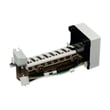
| No ice (with good water supply) | Ice maker assembly | Refrigerator ice maker 2198597 |
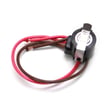
| Frost buildup | Defrost system | Refrigerator heater WP2323198 and refrigerator defrost bi-metal thermostat WPW10225581 |
| Warm fridge section | Airflow control | Refrigerator air damper WP2301101 |
Catching airflow, defrost, and water-supply problems early helps prevent food spoilage, recurring ice buildup, and extra strain on the compressor and sealed refrigeration system.
Last updated: January 2026
What is the average lifespan of a Kenmore Elite refrigerator?
Most Kenmore Elite refrigerators, including model 10657713701, typically last 10 to 15 years with normal household use. Consistent maintenance (especially cleaning condenser coils and keeping door gaskets sealing well) is what most often separates a 10-year refrigerator from a 15-year one; see the 10657713701 owner's manual for the care and cleaning schedule.
- Condenser coil cleanliness (dirty coils make the compressor run hotter and longer)
- Door gasket condition (air leaks cause longer run times and moisture issues)
- Room temperature and ventilation around the cabinet
- Ice maker and water system upkeep (filter changes, flushing after service)
- Power interruptions and surges (can stress controls and compressor components)
| Appliance type | Typical lifespan | Notes |
|---|---|---|
| Side-by-side refrigerator | 10 to 15 years | Most common range for modern units |
| Sealed system components (compressor, evaporator, condenser) | 10+ years | Failures are less common early, more common as the unit ages |
| Wear items (gaskets, bins, ice maker) | 5 to 10 years | Often replaced to extend overall refrigerator life |
- Vacuum and brush the condenser area regularly (frequency depends on pets and dust)
- Keep doors closing fully; avoid overloading door bins
- Replace the water filter on schedule and flush the water system after a filter change
- Confirm freezer temperature is cold enough for steady ice production
- Clean spills and food residue so air vents stay clear
If cooling is fine but convenience features are failing, replacing a common wear part can be a cost-effective way to keep the refrigerator going:
A refrigerator that is running longer than normal to hold temperature uses more energy and puts extra load on the compressor and fans. Basic upkeep (coils, seals, airflow, filter care) helps stabilize temperatures and reduces long run times, which is the biggest driver of premature wear.
Last updated: January 2026