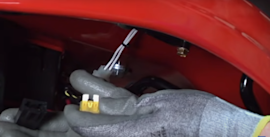
Installation guide
 Owner’s manual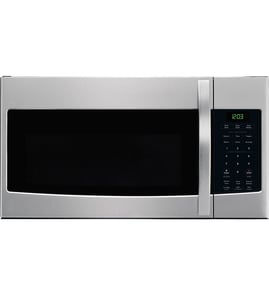



Does Kenmore make microwaves?
Yes. Kenmore sells microwaves, including over-the-range microwave/hood combos like model 40185042010; these units combine microwave cooking with a built-in vent hood for the cooktop below. For model-specific features and operation details, use the 40185042010 owner's manual.
Kenmore is the brand on the appliance; the microwave is built and supported through Kenmore’s product line and service ecosystem. For your Kenmore 40185042010 microwave/hood combo, the documentation and parts list are the best way to confirm fit, installation requirements, and replacement parts.
- Over-the-range microwave/hood combo (microwave plus vent hood)
- Countertop microwave
- Built-in microwave (cabinet or wall installation)
- Microwave drawer (in some product lines)
The installation instructions for 40185042010 call out key requirements that affect safety and performance:
- Plan for a dedicated 20 amp electrical outlet
- Keep the microwave level during mounting
- Use two people for installation
- Avoid lifting by the door handle
- Install the turntable and ring before first use
| What you are doing | Best reference | Why it helps |
|---|---|---|
| Confirming features and how it operates | 40185042010 owner's manual | Ensures correct use and settings |
| Mounting and venting the unit | 40185042010 installation guide | Prevents fit issues and venting problems |
Kenmore microwave/hood combos are designed to fit specific cabinet spacing, venting setups, and electrical requirements. Using the correct model documentation helps you avoid installation problems and ensures you order parts that match 40185042010.
Last updated: February 2026
Can I replace a range hood with a microwave?
Yes, you can replace a range hood with an over-the-range microwave like Kenmore model 40185042010 as long as your cabinet opening, mounting surface, and electrical supply meet the installation requirements. Plan for proper support, correct clearances, and the right venting setup (recirculating or ducted) using the 40185042010 installation guide.
- 30-inch cabinet opening: The space between cabinets must be 30 inches wide and unobstructed.
- Cooktop clearance: The cabinet bottom needs to be 30 inches or more above the cooking surface.
- Grounded outlet: The microwave requires a 3-prong grounded outlet; verify grounding before installation.
- Solid mounting: Use at least one wood screw into a stud to support the microwave’s weight.
- Level mounting surface: The microwave must be installed level; decorative trim may need removal.
This Kenmore microwave/hood combo supports these common configurations:
| Venting type | Where air goes | Typical when replacing a hood |
|---|---|---|
| Recirculating (ductless) | Back into the kitchen through filters | No existing duct, or duct not usable |
| Outside top exhaust | Up through a vertical duct | Existing duct goes up into cabinet/attic |
| Outside back exhaust | Out through the wall behind | Existing duct exits through exterior wall |
If you vent outside, you will also need to align the exhaust adaptor with your home duct and seal duct joints with duct tape.
- Turn off power at the breaker; remove the existing range hood.
- Verify the cabinet opening and mark the centerline.
- Use the templates and drill the specified mounting holes (toggle bolts where no stud is present).
- Install the mounting plate and hang the microwave; confirm it is level.
- Connect power and set up venting (recirculating, top exhaust, or back exhaust).
A microwave/hood combo is heavier than many standard range hoods and needs stud support, correct clearances, and a properly grounded outlet. Getting these right prevents vibration, poor venting performance, and installation issues.
Last updated: February 2026
How to change over stove Kenmore microwave light bulb?
To change the cooktop (surface) light bulb on your Kenmore over-the-range microwave model 40185042010, first shut off power at the breaker, remove the light lens/cover from the bottom of the microwave, swap in the correct bulb, then reinstall the cover and restore power. See the 40185042010 owner's manual for the exact bulb type and cover removal details.
- Turn off power at the circuit breaker; do not rely on the keypad Off setting.
- Let the bulb cool completely.
- Use a step stool and have a second person steady it if needed.
- Wear gloves to improve grip and avoid skin oils on halogen bulbs.
- If the lens is greasy, clean it so it seats flat when reinstalled.
- Remove the screw(s) holding the bottom light lens/cover in place.
- Lower the lens carefully.
- Unscrew the old bulb (or pull straight out if it is a pin-base style).
- Install the new bulb:
- Screw-in bulb: thread it in until snug (do not overtighten).
- Pin-base bulb: align pins and press in firmly.
- Reinstall the lens/cover and tighten the screw(s) until secure.
- Restore power and test the cooktop light.
- Confirm the bulb matches the wattage and base type listed in the manual.
- Make sure the lens/cover is not pinching wiring.
- If both cooktop lights are out, check the house breaker first.
- If the microwave runs but lights stay dead, a fuse or control issue is possible; follow the how to replace a microwave fuse guide.
| Microwave hood combo light location | Most common bulb style | Typical wattage range |
|---|---|---|
| Cooktop/surface light (bottom) | Screw-in or pin-base halogen/incandescent | 20W to 40W |
| Cavity light (inside) | Appliance bulb | 20W to 40W |
Using the correct bulb type and wattage helps prevent melted lenses, premature bulb failure, and heat damage around the light housing on your Kenmore 40185042010 microwave/hood combo.
Last updated: February 2026
Is there a reset on a Kenmore microwave?
Yes. On many Kenmore microwaves (including model 40185042010), a “reset” is done by power-cycling the unit; unplug it (or switch the breaker off) for about 1 minute, then restore power to clear minor control glitches and restart the control board.
- Unplug the microwave or turn OFF the dedicated breaker.
- Wait 60 seconds.
- Restore power.
- Set the clock if it prompts.
- Test with a 1-cup water heat test for 60 seconds.
A reset will not fix a door-safety or heating circuit problem. Check these common causes first:
- Door not closing fully or latch not engaging
- Failed door switch (interlock)
- Blown internal fuse (often after a surge)
- Overheat condition that opened a thermal cut-off
- Control lock or demo mode (varies by model)
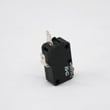
If the door feels “normal” but the unit will not start, the door switch is a frequent failure point; see microwave door interlock switch 3405-001034.
| Situation | Reset helps? | What to do next |
|---|---|---|
| Random keypad/display glitch | Yes | Power-cycle and retest |
| Unit dead (no display) | Sometimes | Check outlet, breaker, then fuse |
| Runs but does not heat | No | Diagnose heating circuit |
| Trips breaker when starting | No | Stop using and diagnose safely |
A power reset clears temporary logic errors in the control board, but it does not repair failed components like a door interlock, thermal cut-off, or high-voltage parts.
- Use the 40185042010 installation guide for electrical and mounting basics (power source, safe installation, venting setup).
- For heating problems, follow why is my microwave not heating to narrow down likely causes (magnetron, diode, capacitor, transformer).
Last updated: February 2026
How to find Kenmore microwave model?
For a Kenmore microwave like model 40185042010, the model number is printed on the rating label. On most over-the-range microwave/hood combos, we find it inside the door opening (on the frame) or along the edge of the control panel. Confirm the exact label location and format in the 40185042010 installation guide.
- Inside the door opening on the front frame (most common)
- Along the side edge of the control panel (door open)
- On the interior side wall (less common)
- On the back panel (you may need a flashlight)
- On the upper cabinet area above the microwave (sometimes visible after installation)
Write down the full model number exactly as shown, including any dots or extra digits. For Kenmore over-the-range units, you may also see a manufacturing or serial number.
| Label item | What it’s used for | Example |
|---|---|---|
| Model number | Matching parts and diagrams | 40185042010 |
| Serial number | Identifying production run | Letters and numbers |
| Electrical rating | Verifying power requirements | Volts/amps |
The model number is the fastest way to get the right Kenmore parts the first time, especially for fit-sensitive items like a door assembly, vent grille, or turntable components.
Last updated: February 2026
Are all range hood microwaves the same size?
No. Over-the-range (range hood) microwaves are often similar in width, but they are not all the same size. For Kenmore model 40185042010, the installation requirements call for a 30-inch-wide cabinet opening and installation over ranges up to 30 inches wide, with the microwave mounted at least 30 inches above the cooktop (to the cabinet bottom). See the 40185042010 installation guide for the exact fit rules.
Most over-the-range microwaves are designed to match a 30-inch range, so many units are close in overall width. Height and depth vary more, and cabinet and venting layouts can change what fits.
Common size expectations:
- Width: typically around 30 inches
- Height: varies by model and vent design
- Depth: varies by door style and handle
- Mounting height: depends on cabinet height and cooktop clearance
- Venting: recirculating vs outside venting can affect duct and space needs
Based on the installation instructions, this model is intended for a standard 30-inch range space and has specific clearance and mounting rules.
Key requirements called out in the install guide:
- Cabinet opening between upper cabinets must be 30 inches wide and unobstructed
- Designed for installation over ranges up to 30 inches wide
- Cabinet bottom must be 30 inches or more above the cooking surface
- Microwave must be secured to at least one wall stud
- Use a properly grounded 3-prong outlet in the cabinet above; no extension cord
| What to measure | What we look for | Why it matters |
|---|---|---|
| Space between cabinets | 30 inches wide | Ensures the unit physically fits |
| Cooktop-to-cabinet bottom | 30 inches minimum | Prevents heat and clearance issues |
| Wall structure | At least one stud available | Supports safe mounting |
| Power | Dedicated grounded outlet | Prevents electrical problems |
Even when two over-the-range microwaves are both “30-inch models,” differences in height, depth, mounting plate position, and venting (top or back exhaust) can prevent a clean swap. Confirming the cabinet opening, mounting height, and vent plan avoids rework and installation problems.
Last updated: February 2026
How big is a Kenmore microwave model 40185042010 in inches?
For Kenmore microwave/hood combo model 40185042010, the installation requirements call for a 30-inch-wide cabinet opening and at least 30 inches from the cooktop to the bottom of the cabinet. For the exact outside width, height, and depth of the microwave itself, use the dimensions listed in the 40185042010 installation guide.
These measurements come straight from the install requirements for model 40185042010:
- Cabinet opening width: 30 inches (space between cabinets)
- Range compatibility: installs over ranges up to 30 inches wide
- Minimum mounting height: bottom of cabinet needs to be 30 inches or more from the cooking surface
- Weight for mounting planning: microwave is 59 lb (mounting surface must support more with load)
Most over-the-range microwaves that fit a 30-inch opening measure approximately:
- Width: 29 7/8 inches to 30 inches
- Height: 16 inches to 17 1/4 inches
- Depth: 15 inches to 17 inches
Use these as a planning range for cabinetry and clearance; use the 40185042010 installation guide for the exact spec for your unit.
- Measure the space between cabinets (should be 30 inches)
- Measure cooktop to cabinet bottom (should be 30 inches or more)
- Confirm the cabinet bottom is level (important for door alignment)
- Check for decorative trim that could interfere with the microwave sitting level
- Verify you have a cabinet above for the outlet box and power cord routing
| What you are measuring | What to use | Typical value |
|---|---|---|
| Opening between cabinets | Install requirement | 30 inches |
| Cooktop to cabinet bottom | Install requirement | 30 inches or more |
| Microwave outside width | Product spec | About 29 7/8 inches to 30 inches |
Microwave/hood combos are sized to fit a 30-inch range area, but small differences in depth and height affect door swing, venting alignment, and whether the unit sits level. Using the model-specific install specs prevents clearance and mounting problems.
Last updated: February 2026
At what height must a microwave hood combo be above a stove at minimum?
For Kenmore microwave/hood combo model 40185042010, install the unit so the bottom of the upper cabinet is at least 30 inches above the cooking surface. That 30-inch minimum is the key mounting reference for safe clearance and proper fit; use the 40185042010 installation guide for the exact template and wall-plate placement.
The installation instructions for model 40185042010 call out “30 in. to cooktop” as the minimum mounting space reference.
- Measure from the top of the cooktop/range surface straight up.
- The 30-inch minimum is to the bottom surface of the cabinet above the range.
- Keep the 30-inch-wide space between cabinets clear so the microwave can mount correctly.
- If your cabinet bottom is recessed or has a front overhang, follow the template steps so the microwave installs level.
- Plan venting (rectangular or 6-inch round duct) before final mounting if you are exhausting outdoors.
- Measure in multiple spots (left, center, right) from cooktop to cabinet bottom.
- Confirm the cabinet bottom is level before marking the template.
- Verify the opening is 30 inches wide and free of trim or obstructions.
| Measurement | Minimum | What it affects |
|---|---|---|
| Cooktop to bottom of upper cabinet | 30 in. | Heat clearance, fit, and mounting reference |
| Space between cabinets | 30 in. wide | Ensures the microwave fits and mounts square |
This clearance helps protect cabinets from heat, keeps the microwave level on the wall plate, and supports proper airflow for the hood exhaust.
Last updated: February 2026
What is the life expectancy of a Kenmore microwave?
Most Kenmore microwaves, including the Kenmore 40185042010 microwave/hood combo, last 9 to 10 years with normal household use. Heavy daily use and poor airflow shorten service life; keeping the unit clean and installed correctly helps it reach the full lifespan.
- Daily run time: multiple long heat cycles per day wear components faster.
- Heat and airflow: blocked vents or grease buildup traps heat in the cabinet.
- Door use: slamming the door can damage interlock switches and latches.
- Power quality: frequent surges can stress the control board and noise filter.
- Cleaning habits: grease and food splatter increase arcing risk and heat retention.
- Food takes noticeably longer to heat than it used to.
- Loud humming or buzzing that is new or getting worse.
- Burning smell, repeated shutoffs, or the unit goes dead mid-cycle.
- Turntable stops rotating or rotates intermittently.
- Door does not close smoothly or you have to push hard to start.
If the microwave runs but does not heat, the issue is typically in the high-voltage system.
| Symptom | Common cause | Typical fix |
|---|---|---|
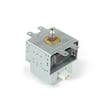
| Runs, no heat | Failed magnetron | Replace microwave magnetron OM75P-21-ESGN |
| Runs, no heat | Bad high-voltage diode | Replace microwave high-voltage diode DE91-70063D |
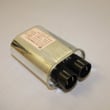
| Runs, no heat | Weak/failed capacitor | Replace the correct high-voltage capacitor for model 40185042010 |
For ventilation setup and mounting details that protect airflow and reduce heat stress, follow the 40185042010 installation guide.
A microwave/hood combo also handles cooktop ventilation. Good airflow and a clean grease filter reduce internal heat, which protects high-voltage parts and helps your Kenmore 40185042010 reach the typical 9 to 10 year lifespan.
Last updated: February 2026
How many cubic feet is a Kenmore Model 40185042010 microwave?
The cubic-foot capacity for Kenmore model 40185042010 is listed in the product specifications for that exact model. The fastest way to get the correct number is to check the specifications section in the 40185042010 owner's manual or the rating label on the microwave.
Use these checks to get the published capacity for your exact unit.
- Open the door and look for the model and rating label (often on the door frame or inside the cavity edge)
- In the manual, look for Specifications, Product information, or Model specifications
- If you have the installation paperwork, compare it with the 40185042010 installation guide to confirm you are matching the correct model
- Match the full model number exactly: 40185042010
- If the unit was replaced under a service call, always trust the label on the microwave over the box or paperwork
Microwave capacity (cu. ft.) is the approximate interior cooking cavity volume, not the outside dimensions. Features like rack supports, sensor housings, and interior contours can reduce usable space even when the exterior size looks similar.
| Spec you see | What it describes | Why it matters |
|---|---|---|
| Capacity (cu. ft.) | Interior cavity volume | Fit for plates, casserole dishes, and covers |
| Exterior width | Outside cabinet size | Fit between cabinets (common OTR width is 30 in.) |
| Turntable diameter | Glass tray size | How well larger dishes rotate |
Knowing the correct cubic-foot capacity helps you compare replacement microwave/hood combos and avoid losing usable cooking space, especially if you regularly heat larger plates or cookware.
Last updated: February 2026