Owner’s manual
 Error Codes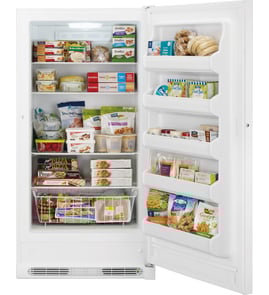


Why is my Kenmore Elite freezer not freezing?
If your Kenmore Elite upright freezer 25328712809 isn’t freezing, the most common causes are a temperature control set incorrectly, poor airflow from frequent door openings or a door not sealing, or a cooling-system problem such as a failed evaporator fan motor, defrost heater issue, or compressor trouble. Start with the quick checks below.
- Confirm the temperature control is not set to OFF and is set colder.
- Make sure the freezer is fully plugged in and the plug is tight in the outlet.
- Check your home breaker or fuse if the freezer is completely dead.
- Limit door openings; warm air quickly raises cabinet temperature.
- Inspect the door seal for gaps, dirt, or damage.
- Verify the freezer is level so the door closes and seals correctly.
| What you notice | Most likely area | What it points to |
|---|---|---|
| Runs a lot but still warm | Door seal or airflow | Door slightly open, gasket not sealing, warm room conditions |
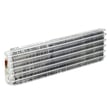
| Frost buildup, weak cooling | Defrost system | Defrost heater or airflow restriction from ice |
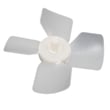
| Warm, little or no air movement inside | Evaporator fan | Fan motor not running or fan blade issue |
| No cooling at all, clicking/humming | Sealed system | Compressor or refrigerant system problem |
If your checks point to a component issue, these model-matched parts are often involved:
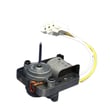
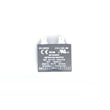
- Freezer evaporator fan motor 297309000 (moves cold air through the cabinet)
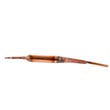
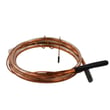
- Defrost heat 5304496284 (melts frost off the evaporator during defrost)
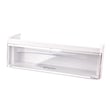
- Freezer door gasket 5304507200 (keeps warm air out so temperatures stay stable)
A freezer that is slightly warm can be caused by simple issues (door sealing, leveling, settings), but ongoing warm temps can also indicate airflow or defrost problems that lead to heavy frost and poor cooling performance.
For model-specific operating and troubleshooting steps (including “Freezer does not run” and door/leveling guidance), follow the 25328712809 use & care guide.
Last updated: January 2026
What is the most common problem on a freezer?
The most common freezer problems are temperature issues caused by warm air getting in (door not sealing) or restricted airflow from frost buildup. On Kenmore model 25328712809, the manual highlights frequent door openings, a door not seating properly, and a worn gasket as common causes of long run times and moisture or frost.
- Freezer runs too much/too long: door slightly open, control set too cold, or gasket leaking
- Interior too warm: door opened often, door not seating, or warm food loaded recently
- Frost or moisture inside: humid conditions plus door not sealing or being opened frequently
- Moisture on the outside: cold air leaking out and meeting warm, humid room air
- Door will not close: freezer not level or floor uneven, which can misalign the door
Start with the items that cause the most “everyday” freezer complaints: door seal, door alignment, and basic airflow.
- Confirm the door closes fully and doesn’t pop back open
- Check the gasket for dirt, gaps, cracks, or areas that look flattened
- Clean the gasket and sealing surface; residue can prevent a tight seal
- Reduce long door openings and avoid frequent “quick checks”
- After changing the temperature control, allow several hours for temperatures to stabilize
- If the cabinet rocks, level the freezer so the door aligns and seals correctly
| What you notice | Most likely cause | Best next step |
|---|---|---|
| Runs constantly | Door leak or control set too cold | Inspect/clean gasket; adjust control warmer |
| Frost inside | Door not sealing or frequent openings | Check door seating; limit openings |
| Outside sweating | Air leak at door | Inspect gasket and door alignment |
| Door won’t close | Not level, floor uneven | Level unit; shim as needed |
A small air leak at the door makes the compressor run longer, increases frost and moisture, and can lead to uneven temperatures. Fixing sealing and leveling issues first is the fastest way to restore normal cooling and reduce energy use.
For model-specific operating and troubleshooting steps, use the 25328712809 owner's manual. If you find the seal is damaged or poorly fitted, replacing the freezer door gasket 5304507200 is a common fix for warm temperatures, moisture, and long run times.
Last updated: January 2026
How many cubic feet is a Kenmore freezer model 25328712809?
Kenmore Elite upright freezer model 25328712809 has an approximate capacity of 17.6 cubic feet. For the exact published capacity and any model-variant notes, confirm the specification listing in the 25328712809 owner's manual.
| Item | Value |
|---|---|
| Model | 25328712809 |
| Freezer type | Upright (freestanding) |
| Capacity | 17.6 cu. ft. |
Use these checks to match the capacity to your exact unit and serial range.
- Verify the model number on the serial plate (commonly on the upper left interior wall on upright freezers).
- Look for “capacity”, “cu. ft.”, or “specifications” in the manual.
- If you see both “total” and “usable” capacity, use total for comparing freezer sizes.
- Keep the door gasket sealing well; air leaks can reduce real-world usable space and performance.
Your freezer’s capacity ties directly to safe loading guidance and temperature recovery.
- Plan bulk freezing so you do not overload the cabinet at one time.
- Expect longer run times after large warm loads or frequent door openings.
- Organize shelves and door bins to reduce search time and keep temperatures stable.
The Use & Care Guide notes a common rule for freezing fresh food: freeze about 3 lb of fresh food per cubic foot at one time. For a 17.6 cu. ft. freezer, that equals:
| Capacity | Guideline | Approx. fresh food per batch |
|---|---|---|
| 17.6 cu. ft. | 3 lb per cu. ft. | about 53 lb |
Knowing the 17.6 cu. ft. capacity helps you compare storage size accurately and avoid warm-ups by freezing fresh food in manageable batches.
Last updated: January 2026