Installation guide
 Owner’s manual


What is the average lifespan of a KitchenAid dishwasher?
A KitchenAid dishwasher typically lasts 9 to 12 years. For your KitchenAid KDFE104DSS5, lifespan depends most on water quality, detergent use, and keeping the filter and spray system clean; consistent maintenance helps you reach the upper end of that range.
What affects how long your KDFE104DSS5 lasts
- Water temperature: We recommend at least 120°F (49°C) incoming water for proper cleaning.
- Detergent and suds control: Use fresh automatic dishwasher detergent only; suds from the wrong soap can cause poor operation.
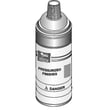
- Rinse aid use: Rinse aid improves drying and helps control hard-water deposits.
- Cycle length expectations: Many loads run 2 to 5 hours on energy-efficient designs; longer cycles are normal and reduce strain from repeated rewashing.
- Rack wear and loading habits: Overloading and forcing racks can break adjusters and wheels.
Maintenance checklist that adds years
Use this routine as a simple “lifespan extender”:
- Run hot water at the sink until it’s hot before starting a cycle.
- Keep the rinse aid dispenser filled and cap secured.
- Scrape food off dishes (skip heavy pre-rinsing).
- Clean the filter area and check spray arms for debris monthly.
- Fix rack issues early (wobbling racks cause extra wear on rails and rollers).
Common wear items vs. “big” repairs
| What you notice | Likely area | Typical fix |
|---|---|---|
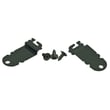
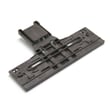
| Upper rack won’t stay level | Rack adjuster | Replace dishwasher dishrack adjuster WPW10546503 |
| Poor drying | Heater, rinse aid, cycle choice | Verify rinse aid; check heating performance |
| Not draining | Drain path or pump | Clear hose/air gap; test drain pump |
Why it matters
Most “short lifespan” complaints come from repeat washing, hard-water buildup, and detergent or suds issues. Keeping wash chemistry correct and the wash system clean reduces motor load and helps the tub, pump, and controls last longer.
For model-specific operating and care details, follow the KDFE104DSS5 owner's manual.
Last updated: February 2026
Can I replace dishwasher parts myself?
Yes, for KitchenAid dishwasher model KDFE104DSS5, we can replace many common parts ourselves if we’re comfortable turning off power and water and following the correct steps. Rack hardware, door balance parts, and some hoses are typically DIY-friendly; electrical and leak-related repairs take more care.
What we can usually replace ourselves
- Rack hardware such as the dishwasher dishrack adjuster WPW10546503
- Lower rack rollers/wheels (if the rack is hard to slide)
- Door balance components such as the dishwasher door balance link 8194001
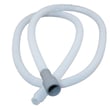
- Drain hose (when it’s split, kinked, or clogged)
- Some fill and drain components after shutting off water and power
Safety and prep checklist (do this first)
- Turn off power at the breaker (dishwashers are hard-wired or cord-connected)
- Shut off the water supply valve under the sink
- Protect the floor; keep towels and a shallow pan ready
- Take photos of wire and hose routing before disconnecting anything
- Follow the KDFE104DSS5 installation guide for connection and routing details
DIY difficulty guide
| Repair type | Typical difficulty | What can go wrong |
|---|---|---|
| Rack adjusters/wheels | Easy | Rack won’t align or roll smoothly |
| Door balance/spring tension | Medium | Door drops or won’t stay open |
| Drain hose replacement | Medium | Leaks, poor draining if routed wrong |
| Water inlet valve replacement | Medium to hard | Leaks, fill problems if debris enters valve |
| Console/control wiring | Hard | Miswiring, damaged connectors |
Why it matters
Replacing the right part the right way prevents leaks, protects the wiring harness, and keeps wash performance and drying consistent. For example, the installation instructions call out details like avoiding soldering close to the water inlet valve and routing the drain hose correctly, which directly affects reliability.
Last updated: February 2026
What is the most common problem with KitchenAid dishwashers?
For the KitchenAid KDFE104DSS5 dishwasher, the most common issue we see is poor cleaning performance (dishes come out with food residue). It usually traces back to water temperature, loading, detergent and rinse aid use, or wash system flow problems such as a clogged filter or restricted spray.
Quick checks that fix most “not cleaning” complaints
- Confirm incoming hot water is at least 120°F (49°C).
- Use fresh automatic dishwasher detergent (not hand soap or laundry detergent).
- Avoid overloading; keep tall items from blocking spray.
- Clean the filter area and check spray arms for debris.
- Use rinse aid and select a heated drying option when needed (helps overall results).
- If you see foam, stop and correct the detergent type and amount (suds can prevent proper operation).
For cycle and option guidance specific to this model, follow the steps in the KDFE104DSS5 owner’s manual.
What to check based on the symptom
| Symptom | Most likely cause | What to do first |
|---|---|---|
| Food left on dishes | Low water temp, blocked spray, dirty filter | Verify 120°F water; clear spray paths; clean filter |
| Cloudy film | Hard water, too much detergent | Reduce detergent; use rinse aid |
| Suds/foam | Wrong detergent or too much detergent | Switch to dishwasher detergent; reduce amount |
| Poor drying | No rinse aid, plastics | Add rinse aid; use heated dry; improve loading |
Parts that commonly relate to cleaning and wash performance
If the dishwasher fills but wash action seems weak or inconsistent, these model-compatible parts are often involved:
- Dishwasher detergent dispenser W10861000 (cup not opening or not dispensing correctly)
- Element assembly W10703867 (water not heating well, which hurts cleaning and drying)
- Dishwasher water inlet valve W11175771 (slow fill or low water level)
Why it matters
Dishwashers rely on the right water temperature, detergent chemistry, and spray pressure to break down soils. When any one of those is off, the unit can run a full cycle but still leave residue.
If you’re also seeing a flashing Clean light or a stored fault, use the KitchenAid microclean he dishwasher error codes guide to narrow the cause quickly.
Last updated: February 2026
Is it worth fixing a KitchenAid dishwasher?
Yes, it’s usually worth fixing a KitchenAid dishwasher like model KDFE104DSS5 because many common failures are part-level repairs (latch, valve, drain pump, heater) that cost far less than replacing the entire dishwasher, and the manual-backed warranty coverage can make repair an even better value.
Quick way to decide (repair vs. replace)
Use these checkpoints before you buy parts:
- Age and condition: If the tub is solid and racks are usable, repair is typically the better value.
- Symptom type: No-drain, no-fill, won’t start, and poor drying are often straightforward fixes.
- Leak location: Door-edge leaks are often seal-related; base leaks can be pump, hose, or sump related.
- Parts cost vs. replacement: If the repair is a single part and labor is reasonable, repair wins.
- Warranty coverage: KitchenAid coverage can apply to certain components depending on purchase date (details in the KDFE104DSS5 owner’s manual).
Common repairs that are often “worth it” on KDFE104DSS5
These are frequent, fixable issues and the parts are available for this model:
- Door won’t latch or starts then stops: check the dishwasher door latch WPW10653840
- Not filling with water: check the dishwasher water inlet valve W11175771
- Not draining: check the dishwasher drain pump W10876537 and drain hose routing
- Not drying well: check the element assembly W10703867 and rinse aid use
- Door drops open or won’t stay up: check the dishwasher door balance link 8194001
Cost and effort comparison
| Situation | Typical best choice | Why |
|---|---|---|
| One failed part (latch, valve, drain pump) | Repair | Targeted fix, minimal disruption |
| Multiple major leaks from the base | Repair only after diagnosis | Could involve hoses, sump, or motor |
| Stainless tub is damaged | Replace | Tub repairs are rarely practical |
| Repeated control problems | Repair if covered/confirmed | Electronics can be costlier |
Why it matters
A correct diagnosis prevents repeat failures and wasted parts. For example, the manual notes that suds from the wrong detergent or too much detergent can cause poor operation or filling problems; fixing the detergent issue can restore normal performance without replacing parts. Review detergent, water temperature (at least 120°F), and loading guidance in the KDFE104DSS5 owner’s manual.
If you want the fastest “go/no-go” test
- Confirm the dishwasher has proper power and the door closes firmly
- Run a short cycle and listen for fill, wash motor, then drain
- Check for standing water after cancel/drain
- Inspect for visible leaks at the door and under the unit
Last updated: February 2026
Where are KitchenAid dishwasher parts made?
KitchenAid dishwasher parts for model KDFE104DSS5 are sourced from multiple manufacturing locations, so there is no single country or factory that applies to every replacement part. The most reliable way to confirm origin is to check the packaging label or the part itself after you match the correct part number for your dishwasher.
How to check where a specific part was made
We recommend verifying origin at the part level because components like racks, pumps, controls, and hoses are often produced in different plants.
- Match the correct replacement using the model number KDFE104DSS5 in the KDFE104DSS5 owner’s manual
- Look for a “Made in …” or “Country of origin” statement on the part carton label
- Check molded or stamped markings on the part (common on plastic housings and metal panels)
- Keep the model and serial label info handy (it is typically inside the tub near the door edge)
- If you are comparing two similar parts, confirm the part ID and not just the description
Examples of parts that can have different origins
Different part types commonly come from different suppliers, even within the same dishwasher model.
| Part type | Example for KDFE104DSS5 | What to look for |
|---|---|---|
| Rack hardware | Dishwasher dishrack adjuster WPW10546503 | Markings on plastic body, carton label |
| Water fill components | Dishwasher water inlet valve W11175771 | Label on valve body or box |
| Drain components | Dishwasher drain pump W10876537 | Sticker on motor housing |
| Electronic controls | Control board/console assemblies | Carton label, revision tag |
Why it matters
Country of origin does not change fit for KDFE104DSS5, but it can help when you are comparing supplier versions, tracking a warranty claim, or matching an older part revision to the correct replacement.
Last updated: February 2026
What are the commonly replaced parts in a dishwasher?
On the KitchenAid KDFE104DSS5 dishwasher, the most commonly replaced parts are the ones that affect filling, draining, heating/drying, door closing, and rack movement. In our experience, wear, clogs, leaks, and normal mechanical fatigue drive most replacements, especially in the wash and drain system.
Commonly replaced dishwasher parts (and what they do)
- Water inlet valve: lets water into the tub; failures cause no-fill or under-fill symptoms (see dishwasher water inlet valve W11175771).
- Drain pump and drain hose: removes water; problems show up as standing water or slow draining (see dishwasher drain pump W10876537 and dishwasher drain hose 8269144A).
- Heating element: heats water and supports drying; issues can cause poor drying or cooler wash temperatures (see element assembly W10703867).
- Door latch and door seals: keeps the door closed and helps prevent leaks (see dishwasher door latch WPW10653840 and dishwasher door seal, lower W10909089).
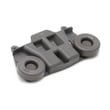
- Rack hardware (adjusters, wheels, clips): restores smooth rack movement and proper rack height (see dishwasher dishrack adjuster WPW10546503 and whirlpool dishwasher dishrack wheel W10195416V).
Quick symptom-to-part guide
| Symptom | Most likely part area | Example part for KDFE104DSS5 |
|---|---|---|
| Won’t fill or fills slowly | Fill system | Water inlet valve |
| Water left in bottom | Drain system | Drain pump, drain hose |
| Not drying well | Heat system | Heating element |
| Door won’t latch | Door closing | Door latch |
| Rack won’t roll or sits crooked | Rack hardware | Wheels, adjuster, clips |
Why these parts fail most often
Your KDFE104DSS5 uses a filtration system (upper filter assembly and lower filter) designed to optimize cleaning and reduce noise. When filters and spray paths get restricted, the dishwasher works harder, which can accelerate wear on pumps and reduce cleaning performance. For filter care and correct reassembly, follow the KDFE104DSS5 owner’s manual.
Installation-related items that are often replaced during a swap
When replacing an existing dishwasher, it’s common to install a new water line and drain hose, and to follow the guide’s cautions (for example, avoid soldering close to the inlet valve). For connection details and door spring tension adjustment, use the KDFE104DSS5 installation guide.
Last updated: February 2026