Installation guide
 Owner’s manual



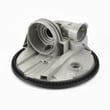
What's the average lifespan of a KitchenAid dishwasher?
Most KitchenAid dishwashers, including the KitchenAid KUDS35FXSS4 undercounter dishwasher, typically last 10 to 14 years with normal household use. Consistent cleaning, correct installation, and good drying practices (rinse aid) help you reach the high end of that range; heavy use and hard water shorten it.
- Water quality: hard water speeds up mineral buildup on the heater and internal parts.
- Maintenance habits: cleaning filters and checking spray arms prevents poor washing and strain on the pump.
- Installation quality: proper leveling and centering prevents door rubbing and leaks over time.
- Usage frequency: multiple loads daily wear the circulation and drain systems faster.
- Detergent and rinse aid use: rinse aid improves drying and helps control hard-water deposits.
- Clean the filter area and remove debris regularly.
- Use rinse aid consistently for drying and to reduce mineral deposits.
- Run hot water at the sink before starting a cycle when water is slow to heat.
- Keep the door sealing surfaces clean; replace worn seals if leaking starts.
- If the door starts rubbing or not latching smoothly, re-check leveling and centering per the installation guide.
| Symptom | What it often points to | Example part for KUDS35FXSS4 |
|---|---|---|
| Won’t drain or leaves water | Drain pump or drain hose restriction | Dishwasher drain pump WPW10348269 |
| Poor drying, wet dishes | Heater performance, rinse aid use, airflow | Dishwasher heater (varies by symptom) |
| Loud grinding or weak wash | Sump and motor or circulation pump wear | Sump and motor assembly (model-specific) |
A dishwasher near the end of its lifespan often shows up as longer cycle times, weaker cleaning, and more frequent draining or drying complaints. Staying ahead of buildup and door alignment reduces stress on the motor, heater, and seals, which are the parts that most often drive major repairs.
Last updated: February 2026
How to fix rubber seal on KitchenAid dishwasher?
On KitchenAid dishwasher model KUDS35FXSS4, fixing a rubber seal usually means reseating or replacing the door gasket so it sits fully in the channel with no twists or gaps. Press it in evenly by hand, then keep the door closed for several hours so the seal “sets.” See the KUDS35FXSS4 installation guide for handling and safety notes while working around the door.
- Turn off power at the breaker; the door area is close to wiring and controls.
- Inspect the gasket for tears, hardening, or flattened sections.
- Check for food debris, detergent buildup, or broken glass in the gasket channel.
- Confirm the door closes squarely and latches without forcing.
- Look for rack interference; a misaligned rack can prevent a full seal.
- Open the door and wipe the gasket and channel with warm water and a mild detergent; dry completely.
- Starting at the top center, press the gasket into the channel using your fingers, working evenly down both sides.
- Make sure corners are fully seated and the gasket is not stretched.
- Close and latch the door; keep it closed for 2 to 4 hours.
If the gasket is split, permanently deformed, or won’t stay in the channel, replacement is the reliable solution.
| What you see | What it usually means | Best next step |
|---|---|---|
| Drips at bottom corners | Gasket not seated or door not centered | Reseat gasket; check door alignment |
| Leak along one side | Door rubbing or tub not centered | Re-center dishwasher; check mounting |
| Gasket looks wavy or stretched | Gasket installed unevenly | Reinstall from top center |
A properly seated door gasket prevents leaks that can damage flooring and cabinets, and it helps the wash system maintain correct water level and spray pressure for better cleaning.
Last updated: February 2026
Is KitchenAid higher end than Whirlpool?
Yes. KitchenAid is positioned as a more premium line than Whirlpool, even though both brands are part of the same parent company; KitchenAid typically emphasizes upgraded styling, quieter operation, and more feature-rich options compared with Whirlpool.
When customers compare KitchenAid vs. Whirlpool dishwashers like the KitchenAid KUDS35FXSS4, “higher end” usually shows up in these areas:
- Design and finishes: more design-forward exterior and handle options
- Noise control: more emphasis on insulation and sound-dampening
- Wash features: more cycle and option combinations (for example, targeted cleaning and drying options)
- Rack systems: more adjustability and premium rack hardware
- Price tier: typically higher MSRP and replacement-part costs
| Category | KitchenAid | Whirlpool |
|---|---|---|
| Brand tier | Premium | Mainstream |
| Feature focus | More options and refinement | Value and practicality |
| Styling | More design-forward | More basic, broad appeal |
| Ownership | Same parent company | Same parent company |
If you are maintaining a KitchenAid KUDS35FXSS4, the “premium” positioning often means you will see more rack adjustability and specialized components. For example, if your upper rack height adjusters are worn or broken, a model-correct kit such as the dishrack adjuster kit (W10712394) - dishwasher rack component by whirlpool W10712394 is a common type of repair that restores smooth rack movement and proper spray coverage.
Brand positioning is general; the exact cycles, options, and rack configuration depend on the specific model and series. We recommend checking the KUDS35FXSS4 installation guide for model-specific details that affect fit, hookups, and what features your unit was built with.
Last updated: February 2026
What are the commonly replaced parts in a dishwasher?
In a KitchenAid KUDS35FXSS4 dishwasher, the most commonly replaced parts are the ones that handle draining, filling, heating, and rack movement. When you see leaks, poor cleaning, no-drain symptoms, or a rack that won’t roll smoothly, these parts are the first places we check. For model-specific diagrams and procedures, use the KUDS35FXSS4 installation guide.
- Drain system: drain pump and drain hose (standing water, slow drain, bad odors)
- Fill system: water inlet valve (won’t fill, fills slowly, poor wash performance)
- Wash and circulation: sump and motor assembly or circulation pump motor (weak spray, poor cleaning)
- Heating: heater (water not heating, poor drying)
- Door sealing and balance: door seal and door balance link (leaks, door won’t stay open)
- Racks and rails: dishrack wheels, adjusters, rail stops, tine clips (rack falls, binds, won’t adjust)
| Symptom | Likely part category | Example part for this model |
|---|---|---|
| Water left in bottom | Drain | Dishwasher drain pump WPW10348269 or drain hose |
| Not filling or weak wash | Fill | Water inlet valve |
| Poor drying or cool water | Heating | Heater |
| Door leaks | Sealing | Lower door seal |
| Upper rack won’t adjust | Rack hardware | Adjuster kit |
- Confirm the dishwasher is getting power and the cycle is actually running.
- Check the drain hose routing for kinks or pinches; the install guide warns not to kink or pinch the drain hose when sliding the unit into the cabinet.
- Clean out obvious debris in the tub area and verify the rack is seated on the rails.
- If the door won’t stay open or drops, check spring tension and the balance hardware; the install guide shows how door spring tension is adjusted.
Replacing the right part first saves time and prevents repeat problems. For example, a “won’t drain” complaint can be a drain pump issue, but it can also be a kinked hose or installation routing problem, so a quick inspection helps you avoid unnecessary returns.
Last updated: February 2026
What is the most common problem with a KitchenAid dishwasher?
The most common KitchenAid dishwasher issue we see on models like KUDS35FXSS4 is poor cleaning (dirty dishes) caused by restricted water flow from a clogged filter, blocked spray arms, or low fill. Close behind are drain problems and “won’t start” symptoms tied to latching, power, or controls; use the KUDS35FXSS4 owner’s manual for model-specific checks.
- Dirty dishes or film left behind: clogged filter, blocked spray arm holes, low water temperature, overloaded racks
- Not draining: kinked/blocked drain hose, drain pump issue, disposer plug not removed (new install), sink drain restriction
- Won’t start: door not fully latched, tripped breaker, cycle not set correctly, water supply turned off
- Leaks: door seal wear, loose hose connections, over-sudsing from wrong detergent
- No heat or poor drying: heater circuit issue, rinse aid empty, heater problem
From the installation checks, the basics matter most: confirm power, door latch, cycle selection, and water supply. Also run a short cycle and verify water enters the tub early in the cycle.
- Reset the breaker, then try a normal cycle
- Press the door firmly until it latches; don’t start with the door “resting” closed
- Confirm the shutoff valve is fully open
- Start the shortest cycle; after about 2 minutes, open the door and confirm there’s water in the bottom of the tub
- Inspect the drain hose routing for kinks and proper connection (high loop/air gap as installed)
If the quick checks point to a hardware failure, these are frequent repair paths for this model:
| Symptom | Common part to inspect/replace | Why it matters |
|---|---|---|
| Not draining | Dishwasher drain pump WPW10348269 | Pushes water out; a weak or jammed pump leaves standing water |
| Leaking at bottom of door | Seal WPW10497235 | A worn lower door seal lets water escape during wash |
| No heat, poor drying | Dishwasher heater W10703867 | Heats water and supports drying performance |
| Poor wash action/noisy wash | Dishwasher sump and motor assembly WPW10780877 | Drives circulation and spray pressure |
Most “KitchenAid dishwasher problems” start as a water flow issue. When fill, circulation, heating, or draining is even slightly restricted, cleaning drops quickly and cycles can stop mid-stream.
For installation-related causes (water supply, drain connection, leveling), follow the KUDS35FXSS4 installation guide.
Last updated: February 2026
Does the KitchenAid dishwasher KUDS35FXSS4 have a filter?
Yes. The KitchenAid KUDS35FXSS4 dishwasher uses a filter system in the bottom of the tub (sump area) to help keep food soil from recirculating during the wash cycle. You can access it from inside the dishwasher by removing the lower rack.
Most KitchenAid undercounter dishwashers like the KUDS35FXSS4 place the filter at the bottom center of the tub, under or near the lower spray arm.
- Turn off power at the breaker before reaching into the sump area
- Pull out the lower dish rack
- Look at the bottom of the tub around the lower spray arm and sump cover
- Remove any visible debris (glass, labels, bones) before trying to lift or twist anything
- Follow the removal and cleaning steps in the KUDS35FXSS4 owner’s manual
A dirty filter can cause poor cleaning, gritty residue, and drainage issues.
- Rinse the filter under hot running water
- Use a soft brush (old toothbrush) to remove grease and fine particles
- Avoid harsh scraping tools that can tear mesh or damage plastic
- Reinstall the filter fully seated to prevent leaks and wash performance problems
If the dishwasher has standing water or drains slowly, the filter may be clogged, but the drain path can also be restricted.
| Symptom | Most common cause | What to check first |
|---|---|---|
| Standing water after cycle | Drain restriction or failed pump | Air gap/garbage disposal inlet, drain hose routing |
| Grit on dishes | Filter/sump soil buildup | Filter and sump area cleaning |
| Humming but not draining | Pump jam or pump failure | Debris in sump, then drain pump |
If you confirm the drain system is the issue, a common replacement is the dishwasher drain pump WPW10348269.
A clean, properly installed filter protects the wash pump and helps the spray arms maintain pressure, which directly improves cleaning and reduces the chance of clogs in the drain hose.
Last updated: February 2026