 Installation guide
 Owner’s manual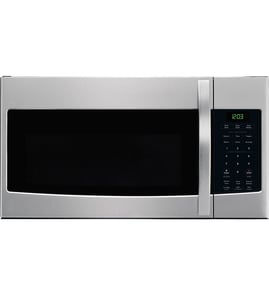



Why can stainless steel go in the microwave?
Stainless steel usually should not go in a Kenmore 72180049700 microwave because microwaves bounce off metal, which can cause arcing (sparking) and poor heating. The safe exceptions are limited cases like small, smooth pieces used correctly and kept from touching the oven walls or door (see the 72180049700 owner's manual).
What’s happening inside the microwave
Microwaves pass through materials like glass and many plastics, but they reflect off metal. That reflection can:
- Prevent food from heating evenly (energy does not get absorbed well)
- Create arcing if metal edges, thin areas, or contact points concentrate energy
- Damage the oven cavity finish or waveguide area over time
When metal can be used (and when it should not)
Your model’s guidance allows some metal use, but only in controlled ways.
- OK sometimes: small, flat pieces of aluminum foil used for shielding
- OK sometimes: shallow foil trays if they are no taller than 3/4 in. (1.9 cm) and filled with food
- Not OK: stainless steel bowls, cups, travel mugs, or containers used like regular cookware
- Not OK: any metal that can touch the oven walls or door
- Stop immediately: if you see sparks, hear popping, or smell burning
Quick decision table
| Item | Use in microwave? | Notes |
|---|---|---|
| Stainless steel container | No | High arcing risk; blocks heating |
| Aluminum foil (small, flat) | Limited | Shielding only; keep away from walls |
| Shallow foil tray | Limited | Must be under 3/4 in. deep and filled |
| Glass or microwave-safe ceramic | Yes | Best for even heating |
Why it matters
Arcing is more than a nuisance; it is a spark that can damage the microwave interior and can lead to poor cooking results. Following the metal-use limits in the 72180049700 owner's manual helps protect the magnetron and the oven cavity.
Last updated: February 2026
What is the thing inside the microwave called?
In a Kenmore 72180049700 microwave/hood combo, the main “thing inside” that actually creates the microwaves is the magnetron. Inside the cooking cavity you will also see the glass turntable, which helps heat food evenly as it rotates (details are shown in the 72180049700 owner's manual).
Common “inside the microwave” parts (and what they do)
- Magnetron: generates microwave energy that heats the food.
- Oven cavity: the metal cooking box that contains the microwave energy.
- Glass turntable tray: lets microwaves pass through and rotates food for more even heating.
- Turntable support/coupler: transfers motion from the motor to the tray.
- Waveguide cover: protects the waveguide opening from splatter.
Which part name matches what you are describing?
| What you see/mean | Common name | Example part for model 72180049700 |
|---|---|---|
| The component that makes heat happen (not visible during normal use) | Magnetron | Microwave magnetron 2B71165R |
| The round glass plate food sits on | Glass turntable tray | Microwave glass turntable tray MJS65336701 |
| The plastic ring/wheels under the glass | Turntable tray support | Microwave turntable tray support 5889W2A012F |
Quick tips to identify it correctly
- If the microwave runs but does not heat, the magnetron or other high-voltage parts are common suspects.
- If the tray wobbles, drags, or will not rotate, check the tray and support first.
- If you see burn marks or arcing, stop using the microwave until the cause is corrected.
Why it matters
Using the right part name helps you match the correct replacement for Kenmore 72180049700 and avoid ordering a turntable part when the real issue is a heating component like the magnetron.
Last updated: February 2026
How do I reset a Kenmore microwave?
To reset your Kenmore microwave model 72180049700, we recommend doing a simple power reset first: unplug the microwave (or switch off the breaker) for about 1 minute, then restore power and set the clock. This clears most control glitches after a power interruption.
Quick reset options (most common)
- Power reset: unplug for 60 seconds, then plug back in
- Clear the control: press STOP to cancel a cooking program and clear the display
- Exit Child Lock: press and hold the LOCK pad until LOCKED disappears (about 4 seconds)
- After reset: set the time of day using the Clock pad
Step-by-step: power reset and re-setup
- Unplug the microwave or turn OFF the circuit breaker.
- Wait 60 seconds.
- Restore power.
- When prompted to set the time, set the clock using the steps in the 72180049700 owner's manual.
What you should see after power is restored
| Display behavior | What it means | What to do |
|---|---|---|
| “PLEASE SET TIME OF DAY” | Power was interrupted or just restored | Set the clock |
| “:” on the display | Time is not set yet | Touch Clock and enter time |
| “LOCKED” | Child Lock is enabled | Hold LOCK pad about 4 seconds |
If the microwave still will not run
These checks help separate a control issue from a door-safety or power problem:
- Make sure the door closes firmly; a misaligned latch can prevent starting
- Try a different outlet (if accessible) or confirm the breaker is fully reset
- If the display is dead, a blown internal fuse is common
- If it runs but does not heat, a high-voltage component issue is likely
If you suspect a blown fuse, use the how to replace a microwave fuse guide for the correct repair approach and safety steps.
Why it matters
A “reset” on a microwave is usually about clearing the control board state after a power event or canceling a stuck program. If the issue is caused by a door interlock, fuse, or heating circuit, resetting will not fix the root cause.
Last updated: February 2026
How many cubic feet is a Kenmore Model 72180049700 microwave?
The Kenmore 72180049700 microwave/hood combo has an oven cavity capacity of 1.6 cubic feet, as listed in the specifications section of the 72180049700 use and care guide.
Where to confirm the capacity
We recommend verifying capacity in the specifications table because it matches how the manufacturer rates the oven cavity.
- Look for “Specifications” in the manual
- Find the line labeled “Capacity of oven cavity”
- Use the capacity value when comparing replacement units or planning cookware fit
- If you are measuring interior space yourself, measure width x height x depth of the cavity (not the exterior)
Capacity vs. dimensions (what the numbers mean)
Capacity is the internal cooking space; overall dimensions are the outside size of the microwave/hood combo.
| Spec type | What it describes | Why it matters |
|---|---|---|
| Capacity (cu. ft.) | Interior oven cavity volume | Helps you compare usable cooking space |
| Oven cavity dimensions | Interior width, height, depth | Helps confirm if a dish will fit |
| Overall dimensions | Exterior width, height, depth | Helps confirm cabinet and mounting fit |
Why it matters
A 1.6 cu. ft. cavity is a common size for over-the-range microwave/hood combos; it affects what cookware fits, how evenly food heats, and whether a replacement microwave will feel larger or smaller in daily use.
Last updated: February 2026
How big is a Kenmore microwave model 72180049700 in inches?
The Kenmore microwave/hood combo model 72180049700 measures 29 15/16 inches wide x 16 7/16 inches high x 15 11/16 inches deep (overall exterior dimensions). These measurements match the specifications listed in the 72180049700 owner's manual and the installation guide.
Quick size specs (overall)
- Width: 29 15/16 in.
- Height: 16 7/16 in.
- Depth: 15 11/16 in.
- Weight: 31.8 lb (helpful for install planning)
Dimensions at a glance
| Measurement | Size (inches) | What it helps with |
|---|---|---|
| Width | 29 15/16 | Cabinet opening and alignment over the range |
| Height | 16 7/16 | Clearance between cabinets and mounting height |
| Depth | 15 11/16 | How far the unit projects from the wall/cabinets |
What to double-check before you buy or install
- Measure the cabinet opening width and confirm you have a true 30-inch space.
- Confirm depth clearance for doors, trim, and backsplash.
- Verify your mounting setup (wall studs and cabinet bottom) matches the mounting plate layout.
- Plan for two-person handling; over-the-range units are heavy and awkward to lift.
- Confirm the electrical supply is appropriate (this model is rated 120V, 60Hz).
Why it matters
Correct dimensions prevent fit issues like cabinet interference, improper vent alignment, and mounting plate misalignment. Using the model-specific specs also helps you avoid ordering an over-the-range microwave that looks similar but mounts differently.
Last updated: February 2026
Where is the fuse on a Kenmore microwave model 72180049700?
On the Kenmore microwave/hood combo model 72180049700, the internal microwave fuse is typically mounted on or near the noise filter/control area just behind the top grille and outer cover. Accessing it requires removing the grille and cabinet, so we recommend using the 72180049700 installation guide for safe access steps and clearances.
Before you look for the fuse (important safety)
Microwaves contain high-voltage components that can store a dangerous charge even when unplugged. If you are not trained for microwave service, we recommend having a technician handle internal electrical checks.
- Unplug the microwave or switch off the dedicated circuit before removing any panels
- Confirm the outlet has power (try a small lamp)
- If the unit is hardwired or on a dedicated circuit, turn off the breaker and verify power is off
- Never touch high-voltage wiring or components (capacitor, transformer, magnetron area)
- If you see burning, melted wiring, or a strong electrical smell, stop and schedule service
Common access location on this model style
On over-the-range Kenmore units like 72180049700, the fuse is commonly found:
- Behind the top vent grille (the grille across the top front)
- Under the outer cabinet cover after the grille is removed
- Near the line fuse holder, often close to the power cord entry/noise filter area
If the microwave is completely dead (no display, no interior light), the fuse is one of the first internal parts checked after verifying the outlet and household breaker.
Parts you may see while diagnosing
| Symptom | Most common area to check | Example part for this model |
|---|---|---|
| Completely dead | Fuse and door interlock circuit | Microwave fuse 3B74133Q |
| Runs but does not heat | High-voltage circuit | Microwave magnetron 2B71165R |
| Blows fuse when door closes/starts | Door switch mounts/switches | Microwave door interlock switch 6600W1K001R |
Why it matters
Finding the fuse location helps you diagnose a “dead” microwave quickly, but the underlying cause is just as important. A blown fuse can be a one-time event, or it can be triggered by a failing door interlock switch, wiring issue, or a problem in the high-voltage circuit.
For step-by-step guidance, we also recommend how to replace a microwave fuse.
Last updated: February 2026


