Owner’s manual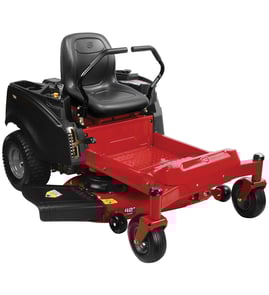

What is the difference between a front engine and rear engine riding lawn mower?
A front-engine rider carries the engine ahead of the operator, while a rear-engine rider places the engine behind the seat. On a Swisher ZT2250 zero-turn riding lawn mower, the rear-mounted layout typically improves forward visibility and keeps weight over the drive wheels for traction.
Quick comparison
| Feature | Front-engine riding mower | Rear-engine riding mower |
|---|---|---|
| Engine location | In front of the operator | Behind the operator |
| Typical feel | More like a small tractor | More compact, tighter package |
| Visibility | Hood can block some view | Usually clearer view ahead |
| Common use | Larger lawns, towing, attachments | Smaller to mid-size lawns, maneuvering |
What changes in real-world mowing
- Visibility and trimming: Rear-engine designs usually let you see closer to the front edge of the cutting path, which helps around trees and beds.
- Traction and balance: With the engine weight toward the rear, rear-engine riders often feel planted on flat ground; always use extra caution on slopes.
- Service access: Front-engine models often have easier access under the hood; rear-engine models may require lifting the seat or rear cover for routine checks.
- Power and capability: Front-engine riders are commonly built in larger frames and are often paired with higher horsepower options and heavier-duty drivetrains.
- Maneuverability: Rear-engine riders are typically shorter overall; your ZT2250 is a zero-turn style, so steering levers and hydro drive make tight turns easier.
Safety and handling notes (especially on slopes)
Our ZT2250 manual emphasizes avoiding sudden turns on slopes and not mowing near drop-offs or ditches. Wet grass reduces traction and can cause sliding; set the parking brake and chock wheels if you must park on a slope. See the owner's manual for the full operating and slope-safety guidance.
Why it matters
Engine placement affects how the mower balances, how well you can see the cutting area, and what the machine is best suited to do (tight mowing vs heavier-duty work). Matching the layout to your yard size, obstacles, and terrain helps you mow faster and safer.
To look up diagrams and order replacement parts by model number, start with the parts list for Swisher ZT2250, or search by model on Sears PartsDirect.
Last updated: February 2026
How to manually push a zero turn mower?
To manually push a Swisher ZT2250 zero-turn riding lawn mower, you open the transmission bypass valves so the transaxles release; then the mower will roll forward or backward by hand on a flat surface. Use the procedure in the owner's manual.
Steps to push the mower safely (Swisher ZT2250)
- Park on a level area and remove the key.
- Disconnect the spark plug wire and position it so it cannot contact the spark plug (prevents accidental starting).
- Set the parking brake as needed to keep the mower from rolling while you prepare.
- From behind the mower, push in on each transmission valve lever until it stops.
- Rotate each lever to the locked (left) position (this is the bypass position that releases the transaxles).
- Release the parking brake and carefully push the mower to where you need it.
What the bypass valves do (and why it matters)
When the bypass valves are opened, the hydrostatic drive is disengaged so you are not forcing fluid through the transaxles. This prevents drive damage and makes the mower much easier to move by hand.
Quick checks if it still will not roll
- Parking brake: Confirm it is fully released.
- Valve levers: Make sure both sides are pushed in and rotated to the locked (left) position.
- Surface: Move only on flat ground; avoid slopes.
- Front caster wheels: Verify they swivel freely and are not jammed with debris.
Bypass position vs drive position
| Setting | What you do | Result |
|---|---|---|
| Bypass (push mode) | Push in levers; rotate to locked (left) | Mower rolls by hand |
| Drive (normal mowing) | Return levers to the normal position | Mower drives under engine power |
Parts and diagrams
If you need to identify the transmission valve levers or related hardware, use the diagrams for model ZT2250 on the parts list, or search by model on Sears PartsDirect.
Last updated: February 2026
Is 200 hours on a riding mower a lot?
No, 200 hours is not a lot for a Swisher ZT2250 zero-turn riding lawn mower; it is a normal amount of use for a machine that has been maintained (oil changes, clean air filter, sharp blades, and proper belt and tire condition). At 200 hours, we focus on maintenance history and wear items, not “end of life.”
What 200 hours usually means
Most riding mowers and zero-turn mowers are built to run well past 200 hours when they are serviced on schedule. At this hour level, you typically see normal wear in cutting and drive components rather than major engine or hydrostatic failures.
Common “200-hour” wear areas:
- Mower blades: dulling, nicks, and balance issues
- Deck belt and idler pulleys: glazing, cracking, squeal
- Spindles and deck bearings: noise, heat, wobble
- Battery: weaker cranking, especially after storage
- Tires: low pressure, uneven wear affecting cut quality
Quick checks we recommend at 200 hours
Use these checks to judge condition fast before you buy, sell, or plan repairs:
- Cold start: it should start cleanly and idle smoothly after warm-up
- Blade engagement (PTO): should engage without excessive squeal or vibration
- Cut quality: look for streaking, scalping, or uneven height
- Hydro drive response: forward and reverse should feel consistent side-to-side
- Safety systems: operator presence system should shut the engine off if you leave the seat with PTO engaged (as designed)
Maintenance priorities (what matters most)
The best indicator of whether 200 hours is “a lot” is whether routine service was done.
| Item | What to look for | Why it matters |
|---|---|---|
| Engine oil level/condition | Correct level, not black and gritty | Protects engine from accelerated wear |
| Air filter | Not packed with debris | Prevents power loss and cylinder wear |
| Blades and deck | Sharp, balanced, deck clean | Improves cut and reduces vibration |
| Battery/charging | Strong crank, clean terminals | Prevents no-start issues |
For model-specific operating and safety guidance (including safe mowing practices and operator presence system behavior), use the ZT2250 owner's manual.
Why it matters
Hour count alone does not determine value or reliability. A well-maintained ZT2250 at 200 hours is typically a solid mower; a neglected mower at 200 hours can already have belt, spindle, blade, and battery problems.
If you need replacement parts, start with the parts list for your ZT2250, or search by model number on Sears PartsDirect.
Last updated: February 2026