 Installation guide
 Owner’s manual




How to clear error code on Maytag dryer?
To clear an error code on your Maytag dryer model SDE3606AYW, we reset power to the control so it can reboot and clear temporary faults. Unplug the dryer (or switch the breaker off), wait about 1 to 5 minutes, then restore power and try a cycle again.
Quick reset steps (most common)
- Turn the dryer OFF.
- Unplug the power cord (or turn both dryer breakers OFF if hardwired).
- Wait 1 to 5 minutes.
- Restore power.
- Select a cycle and press Start.
- If the code returns immediately, stop the cycle and troubleshoot the cause.
If the code comes back: what to check next
Many error codes are triggered by airflow restrictions, overheating, or an electrical part that is opening under load.
- Airflow and venting: Clean the lint screen and confirm the exhaust duct is short, clear, and not crushed.
- Overheating symptoms: Clothes feel very hot, cabinet feels unusually warm, or cycles stop early.
- Heating circuit suspects: A failing thermostat or heater can trigger repeat faults.
- Door and controls: Make sure the door closes firmly and the cycle/timer is set correctly.
Common parts related to repeat heat or airflow faults
| Symptom | What it often points to | Example part for SDE3606AYW |
|---|---|---|
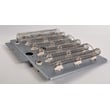
| No heat or intermittent heat | Heater or temperature control issue | Heat element WPY503978 |
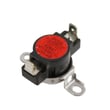
| Overheats, shuts down, or repeats a heat-related code | Thermostat opening too soon or stuck | Dryer operating thermostat WP37001136 |
| Long dry times, lint buildup | Restricted airflow (venting, lint screen, blower path) | Lint screen WP37001142 |
Why it matters
Resetting clears temporary control memory, but a repeating error code usually means the dryer is protecting itself from a real condition (most often poor venting or a heat-control problem). Fixing the root cause helps prevent long dry times and overheating.
For model-specific control use and troubleshooting guidance, follow the steps in the SDE3606AYW owner's manual.
Last updated: February 2026
Is 6.7 cubic feet a big dryer?
Yes. A 6.7 cu. ft. dryer is considered a large-capacity home dryer; it comfortably handles family-size loads and many bulky items (like towels and bedding) with fewer cycles, as long as you avoid overloading so air can circulate properly (see the owner's manual).
What “6.7 cu. ft.” means in real use
A larger drum helps with tumbling and airflow, which improves drying performance when loads are sized correctly.
- Fits most everyday family laundry loads in one cycle
- Handles bulky items better than mid-size drums (comforters, blankets, jackets)
- Reduces wrinkling when you leave room for clothes to tumble
- Helps drying efficiency when you do fewer, properly sized loads
Load size tips for the Maytag SDE3606AYW
Our guidance matches the operating tips for this model.
- Clean the lint screen after every load to keep airflow strong
- Dry one wash load at a time (avoid mixing very heavy and very light items)
- Do not pack the drum full; overloading restricts tumbling and causes uneven drying
- For large bulky items, pause and reposition the load mid-cycle for even drying
Quick capacity comparison
| Dryer capacity | Typical label | Best for |
|---|---|---|
| 3.4 to 4.4 cu. ft. | Compact | Small loads, tight spaces |
| 5.0 to 6.0 cu. ft. | Medium | Most households, regular loads |
| 6.5 to 7.4 cu. ft. | Large | Families, towels, bedding |
| 7.5+ cu. ft. | Extra-large | Frequent bulky loads |
Why it matters
Capacity affects drying results. Even with a large 6.7 cu. ft. drum, drying slows down and wrinkles increase if the load is overfilled because warm air cannot move through the fabrics.
Last updated: February 2026
What's the average lifespan of a Maytag washer?
Maytag washers typically last 10 to 13 years with normal household use. Lifespan depends most on load size, cycle frequency, water quality, and routine care; consistent maintenance and avoiding overloads are the biggest factors that keep a washer running longer.
Typical lifespan and what affects it
Most Maytag washers fall into this range when they are installed correctly and used as intended.
- Usage volume: multiple loads per day shortens life faster than a few loads per week
- Overloading: strains the drive system, suspension, and tub bearings
- Detergent habits: too much detergent can cause residue buildup and odors
- Water conditions: hard water can accelerate valve and hose wear
- Maintenance: cleaning and inspection prevent small issues from becoming major repairs
Maintenance checklist to help it last longer
Use these habits to reduce wear on key components.
- Keep loads balanced; mix large and small items
- Use the right amount of HE detergent (especially in high-efficiency models)
- Leave the lid or door ajar after use to help the tub dry
- Inspect fill hoses for bulges or cracking and replace as needed
- Level the washer to reduce vibration and stress on the suspension
Quick guide: what “normal use” looks like
| Household use pattern | Typical outcome | What to watch |
|---|---|---|
| 3 to 5 loads per week | Often reaches 10 to 13 years | Hoses, vibration, draining speed |
| 1 to 2 loads per day | Often wears sooner | Noise, spin issues, leaks |
| Heavy items often (blankets, rugs) | Higher strain | Out-of-balance, tub movement |
Why it matters
A washer that is overloaded or left unlevel wears out the drive and support components faster, which can lead to louder operation, poor spinning, and leaks. Following the care and operating tips in your owner's manual helps you get the full expected service life.
Last updated: February 2026





