Owner’s manual
 Error Codes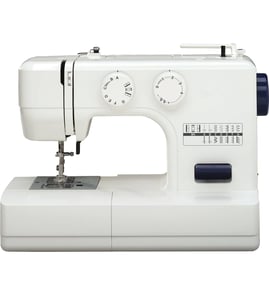

Are older sewing machines worth anything?
Yes. Older sewing machines can be worth money, but most common vintage machines sell for modest amounts unless they are rare, complete, and sew smoothly. For a Kenmore 1581561281, value is driven most by condition, included accessories, and whether it runs quietly without binding.
Use this checklist to place your machine in a realistic range before you price it:
- Does it sew a balanced stitch? Test straight stitch and zigzag with correct threading and tension.
- Does it run smoothly? No grinding, knocking, or “lock up” when turning the handwheel.
- Is it complete? Foot control, power cord, extension table/free arm parts, bobbin case, presser feet, and attachments.
- Is it clean and maintained? Light lint, no heavy corrosion, no cracked wiring.
- Is it documented? Having the owner's manual and original accessories increases buyer confidence.
These ranges fit most older mechanical sewing machines in today’s secondhand market.
| Condition | What it means | Typical value range |
|---|---|---|
| Parts/repair | Won’t run, seized, missing key pieces | $0 to $50 |
| Working | Runs and stitches, cosmetic wear | $50 to $150 |
| Excellent/serviced | Clean, smooth, complete accessories | $150 to $300 |
| Collectible/rare | Sought-after model, exceptional condition | $300+ |
- Thread it correctly and verify stitch formation (top and bobbin thread).
- Wind a bobbin and confirm the bobbin case is installed properly.
- Clean lint from the bobbin/shuttle area and under the needle plate.
- Confirm free-arm/extension table fit and function (if equipped).
- List included accessories clearly (feet, bobbins, needles, case).
Most “value disputes” come down to usability. A vintage Kenmore that stitches consistently and includes the foot control and accessories is worth significantly more than the same machine sold “untested” or missing parts.
Last updated: February 2026
What are the 7 common sewing machine troubles?
On the Kenmore 1581561281 mechanical sewing machine, the 7 most common troubles are irregular stitches, skipped stitches, thread bunching (birdnesting), upper thread breaking, bobbin thread breaking, puckering seams, and needle breaking. Most are caused by threading, tension, needle condition/size, lint buildup, or pulling the fabric.
- Thread bunching (birdnesting): pull both threads under the presser foot before starting; confirm the presser foot is down.
- Skipped stitches: install a new needle and make sure it is seated correctly.
- Irregular stitches: rethread the upper path and check upper tension; use a correctly wound bobbin.
- Upper thread breaking: rethread, reduce upper tension slightly, and replace a nicked needle.
- Bobbin thread breaking: remove lint from the shuttle/bobbin area; use a smoothly wound bobbin.
- Puckering seams: balance thread tension and use the right needle and thread for the fabric.
- Needle breaking: stop pulling fabric; tighten the presser foot and use the correct needle size.
- Turn the power switch on and sew a test seam on double-thickness scrap fabric.
- Rethread the upper thread with the presser foot up; then lower the presser foot to sew.
- Insert a fresh needle (bent or blunt needles cause multiple symptoms).
- Pull both thread tails to the back under the presser foot before you start stitching.
- Clean lint from the feed dogs and shuttle area; then oil only where the manual shows.
| Symptom | Most common cause | Best first action |
|---|---|---|
| Birdnesting under fabric | Thread tails not held back, loose presser foot | Pull threads back; tighten/seat presser foot |
| Skipped stitches | Wrong/bent needle, needle not set correctly | Replace and reseat needle |
| Puckering | Tension imbalance, needle/thread mismatch | Adjust tension; match needle/thread to fabric |
| Needle breaks | Pulling fabric, wrong needle size | Guide gently; use correct needle size |
These issues usually come from setup, not major failures. Correct threading, proper needle choice, and keeping the feed dogs and shuttle clean prevents jams, broken needles, and uneven seams.
For model-specific needle, thread, and fabric guidance plus the performance problem chart, use the owner's manual.
Last updated: February 2026
When was the Kenmore 1581561281 sewing machine made?
The Kenmore 1581561281 sewing machine was made in the early 1990s; the documentation for this machine family shows a manual print date of June 1991. For the most accurate confirmation, match the model number on the machine’s nomenclature plate to the details in the owner's manual.
Use these quick checks on your Kenmore sewing machine:
- Locate the nomenclature plate on the back of the machine (the manual notes the model number is shown there).
- Confirm the model number reads 1581561281 exactly.
- Check your manual’s back pages for a print date (this manual shows 6/91).
- If your machine is installed in a cabinet or case, tilt or reposition it so you can read the plate clearly.
- Keep the model number handy when you look up parts or service information.
A manual print date is a strong clue for when a model was sold, but it is not always the exact build date of your specific unit.
| Item you find | What it tells you | How to use it |
|---|---|---|
| Manual print date (example: 6/91) | Approximate era the model was supported | Use it to place the machine in a timeframe |
| Model number on nomenclature plate | Exact model identification | Use it to match parts and instructions |
| Accessories/attachments listed in the manual | What the machine was designed to use | Use it to verify compatibility |
Knowing the approximate build era helps you choose compatible items like needles, bobbins, and presser feet, and it also helps when troubleshooting issues such as sluggish running, fabric not feeding, or a machine that locks up.
If you are dating the machine because it is not sewing correctly, these guides help with common symptoms:
Last updated: February 2026