Installation guide
 Owner’s manual


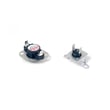
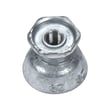

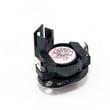
Where can I get Maytag replacement parts?
For your Maytag MED8100DC0 electric dryer, we recommend buying factory specified replacement parts through Sears PartsDirect or directly from Maytag. Using the exact model number helps ensure the part fits and performs correctly; see the parts and service details in the MED8100DC0 owner's manual.
- Sears PartsDirect: model-specific diagrams and verified fit by model number
- Maytag (Whirlpool) customer assistance and accessories: factory specified parts and accessories
- Local appliance parts distributors: good option when you need a part quickly
- Authorized service providers: helpful when diagnosis and installation are needed
- Match the model number exactly: MED8100DC0
- Use the part ID when available (it reduces mix-ups across similar-looking parts)
- Confirm the part’s location on the dryer (front, rear, blower housing, drum support area)
- Compare symptoms to common wear items before ordering (rollers, idler, blower wheel, fuses)
| Symptom | Common part to check | Example part for this model |
|---|---|---|
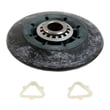
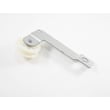
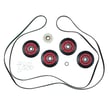
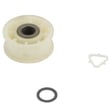
| Squealing, thumping, rumbling | Drum support rollers, idler components | Dryer drum support roller WPW10314173 |
| No heat or overheating shutdown | Thermal cut-off, thermostats, wiring | Dryer thermal cut-off fuse kit 279973 |
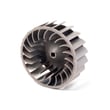
| Long dry times, weak airflow | Blower wheel, venting restrictions | Dryer blower wheel WP697772 |
Factory specified parts are built to the same tolerances as the original components, so your MED8100DC0 runs quieter, heats correctly, and avoids repeat failures caused by poor fit or incorrect temperature control.
Last updated: February 2026
Why is my Maytag dryer not drying clothes completely?
When our Maytag MED8100DC0 electric dryer doesn’t dry a load in one cycle, the most common cause is restricted airflow (lint screen or venting) or an incorrect cycle or temperature selection. Fixing airflow first usually restores normal drying performance.
- Clean the lint screen before every load; a blocked screen increases drying time.
- If you use dryer sheets or fabric softener, scrub lint screen residue with hot water and a nylon brush (about every 6 months).
- Check airflow outside: run the dryer 5 to 10 minutes and feel for strong air at the exterior hood.
- Make sure the vent is 4-inch (102 mm) diameter metal venting and not crushed.
- Reduce load size; tightly packed loads cannot tumble freely and dry slowly.
- Confirm you did not select Air Only/Air Dry for a load that needs heat.
For model-specific cycle guidance and cleaning steps, follow the MED8100DC0 owner's manual.
Restricted venting is the top reason clothes stay damp. Long vent runs, too many turns, or a clogged outside hood all slow airflow and extend dry times.
| What you notice | Likely cause | What to do first |
|---|---|---|
| Loads take much longer than normal | Exhaust vent or hood clogged | Clean the full vent path to the outside |
| Dryer feels hot but clothes stay damp | Poor airflow through drum | Clean lint screen and check vent for kinks |
| Auto/sensor cycles end early | Clothes not contacting sensors or dryer not level | Level the dryer and avoid overloading |
Venting length and routing details are covered in the MED8100DC0 installation guide.
If airflow is strong and the dryer still under-dries, heat control parts can be involved. On this model, a failing dryer thermistor WP8577274 can cause temperature regulation issues that affect drying results.
Poor airflow can cause overheating, longer run times, and unnecessary wear on the heating system. Keeping the lint screen and exhaust vent clear is the fastest way to improve drying and protect the dryer.
Last updated: February 2026
What's the life expectancy of a Maytag dryer?
A Maytag electric dryer like model MED8100DC0 typically lasts 12 to 15 years with normal household use. With consistent venting and lint maintenance, it’s common to reach the upper end of that range and avoid early failures of wear parts.
- Airflow and venting: restricted venting overheats the heater circuit and shortens component life.
- Lint removal: clean the lint screen every load; lint buildup raises temperatures and strain.
- Load size: chronic overloading wears the drum support system and drive components faster.
- Heat settings: frequent high-heat cycles increase stress on thermostats and thermal fuses.
- Preventive service: periodic internal and vent cleaning helps the dryer run cooler and longer.
Use the care and cleaning guidance in the MED8100DC0 owner's manual.
- Clean the lint screen before or after each load.
- Keep the area around the exhaust outlet free of lint and dust.
- Have the interior cabinet and exhaust vent cleaned periodically (especially if drying times increase).
- Confirm the vent is not crushed, kinked, or excessively long.
- Stop using the dryer if you smell burning or notice repeated overheating symptoms.
| Symptom | Common wear area | Example part for this model |
|---|---|---|
| Squealing, thumping, rumbling | Drum support rollers and shafts | Dryer drum support roller WPW10314173 |
| Long dry times, weak airflow | Blower wheel and seals | Dryer blower wheel WP697772 |
| Overheats, shuts off, no heat | Heater safety circuit | Dryer thermal cut-off fuse kit 279973 |
Most dryers don’t “wear out” all at once; they lose airflow or develop friction and heat stress first. Keeping MED8100DC0 running cool and moving air properly is the most reliable way to hit a full 12 to 15 year service life.
Last updated: February 2026
Where is the model number on a Maytag dryer?
On your Maytag dryer model MED8100DC0, the model and serial number are typically printed on a rating label located on the cabinet frame around the door opening. We use that exact model number to match the correct parts, diagrams, and troubleshooting steps.
- Open the dryer door and look along the door opening on the cabinet frame
- Check the inside edge of the door itself
- Look on the back of the dryer near the top
- If your dryer is stacked or in a tight closet, use a flashlight and check the upper rear panel area
The rating label usually includes both identifiers. Record them exactly as shown.
| Item on label | What it’s used for | Example format |
|---|---|---|
| Model number | Finds the correct parts list and diagrams | MED8100DC0 |
| Serial number | Helps confirm production series and revisions | Letters and numbers |
Maytag often uses similar-looking cabinets across multiple dryer series. Using the exact model number helps us avoid mismatched items like a control panel, moisture sensor, or drum support parts.
- Use the model number to confirm you are shopping the correct parts list for MED8100DC0
- If you’re troubleshooting an “F# / E#” style display code, check the troubleshooting section in the MED8100DC0 owner’s manual
- For noise or thumping issues, common wear items include the dryer drum support roller WPW10314173 and related drum support hardware
Last updated: February 2026
What are common dryer part failures?
On the Maytag MED8100DC0 electric dryer, the most common part failures fall into four groups: heating parts (no heat), drum-drive parts (won’t tumble or squeals), airflow parts (long dry times and overheating), and control or power issues (won’t start or stops mid-cycle). See the MED8100DC0 owner's manual for model-specific troubleshooting steps and codes.
- No heat but drum turns: heating circuit issue, often tied to power supply, thermostats, or safety cutoffs
- Dryer won’t start: door not fully closed, START/PAUSE not held long enough, Control Lock enabled, or a home power issue
- Long dry times or “Check Vent” light: lint screen or vent restriction, crushed or kinked vent, too many elbows
- Squealing, thumping, or rumbling: worn drum support rollers, idler pulley, or belt wear
- Overheating or shutting off: restricted airflow or a failed high-limit safety component
These are frequent wear items we see on MED8100DC0 dryers:
| Symptom | Common suspect part | Example part for this model |
|---|---|---|
| Squeal or rumble while tumbling | Drum support roller | Dryer drum support roller WPW10314173 |
| Dryer runs but clothes stay damp | Airflow restriction or blower issue | Dryer blower wheel WP697772 |
| Dryer overheats or stops heating | High-limit safety device | Dryer high-limit thermostat WP8557403 |
| No heat after overheating event | Safety cutoff opened | Dryer thermal cut-off fuse kit 279973 |
| Auto cycles end too soon or act erratic | Temperature sensing issue | Dryer thermistor WP8577274 |
We recommend these fast checks first because they solve many “failed part” symptoms:
- Clean the lint screen and confirm strong airflow at the exterior vent hood
- Inspect the vent run for kinks, crushing, lint buildup, and excessive elbows
- For “won’t run,” press and hold START/PAUSE for 2 to 5 seconds and confirm the door is fully closed
- Verify the dryer has 240V supply (electric dryers often use two breakers or fuses)
- If Control Lock is on, press and hold CONTROL LOCK for at least 3 seconds to unlock
Most dryer “part failures” start as airflow or power problems. A restricted vent can cause overheating, repeated thermal cutoffs, and longer dry times, which increases wear on the motor, heater circuit, and drum support system. For vent layout limits and best practices, use the MED8100DC0 installation guide.
Last updated: February 2026
How do I know if my Maytag dryer thermal fuse is bad?
On a Maytag MED8100DC0 electric dryer, a bad (blown) thermal fuse most often shows up as a dryer that will not run at all, or a dryer that runs but will not heat. The fuse opens when the dryer overheats, so the root cause is usually restricted airflow.
- Dryer will not start even though the door is fully closed and you press and hold Start
- Drum turns but there is no heat (electric dryers need full 240V supply)
- Drying times suddenly get much longer
- Outside vent hood has weak airflow when the dryer is running
- The fuse blows again soon after replacement (overheating problem still present)
Use the troubleshooting steps in the MED8100DC0 owner's manual and focus on airflow and power:
- Clean the lint screen before every load
- Check the vent run behind the dryer for crushing or kinks
- Confirm strong airflow at the outside exhaust hood (run dryer 5 to 10 minutes and feel for airflow)
- Clean lint from the entire exhaust system and the exterior hood
- Verify both household fuses or both circuit breakers are good (electric dryers use two)
| What you notice | Most common cause | What usually fixes it |
|---|---|---|
| Dryer will not run | Overheat protection opened, or power issue | Clear vent restriction; verify both breakers/fuses |
| Dryer runs but no heat | One leg of power missing, or overheat protection opened | Restore 240V supply; clear vent restriction |
| Long dry times | Exhaust vent too long, clogged, or wrong venting | Shorten/clean vent; use 4 inch venting |
If airflow is good and the dryer still overheats, these parts are commonly checked or replaced during repair:
- Dryer thermal cut-off fuse kit 279973 (overheat protection components)
- Dryer high-limit thermostat WP8557403 (limits heater temperature)
- Dryer thermistor WP8577274 (helps regulate temperature)
- Dryer blower wheel WP697772 (moves air through the drum and vent)
A thermal fuse is a safety device; when it opens, it is reacting to overheating. Replacing the fuse without fixing the airflow restriction (lint buildup, crushed vent, clogged hood) often leads to another failure and longer dry times.
Last updated: February 2026