Installation guide
 Owner’s manual
 Error Codes


What are the common problems with Whirlpool dryers?
For the Whirlpool WED9500TW3 electric dryer, the most common problems are no start, no heat, not tumbling, long dry times, and vibration/noise. Many issues trace back to power supply (240V and 2 breakers), airflow restrictions, or normal wear parts like rollers and the idler pulley.
Most common symptoms and what they usually mean
- Dryer will not start: door not fully closed, Start not pressed firmly, control not set to “On”, or a tripped breaker.
- Drum turns but no heat: one of the two household fuses/breakers is open, or low line voltage (often shown as an L2 code).
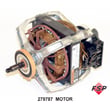
- Dryer not spinning/tumbling: worn belt, failed idler pulley, worn drum support rollers, or a motor issue.
- Takes too long to dry: restricted venting, clogged lint screen, crushed duct, or a weak blower wheel.
- Vibrates or thumps: dryer not level, load is balled up, or small objects are caught at the drum edges.
Quick checks we recommend first (fast, no tools)
- Confirm the dryer is plugged in and the door is fully closed.
- Verify the dryer has 240V power and that both household fuses/circuit breakers are set (electric dryers commonly use two).
- Run a Timed Dry heated cycle (not Air Only) and check for heat after about 5 minutes.
- Clean the lint screen and check the vent path for restrictions.
- Level the dryer and re-run with a properly sized load.
Common wear parts for “no tumble”, squeal, or thump
If the WED9500TW3 runs but tumbles poorly or makes noise, these parts are frequent fixes:
| Symptom | Likely area | Example part for this model |
|---|---|---|
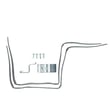
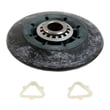
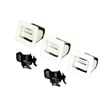
| Squealing, rumbling, thumping | Drum support system | Support WPW10314173 |
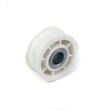
| Drum not turning, belt slack | Belt tension system | Dryer idler pulley 279640 |
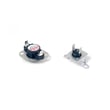
| Runs but overheats or shuts down | Temperature safety circuit | Dryer thermal cut-off fuse kit 279973 |
Why it matters
Power and airflow problems can look like “bad heat” or “bad dryer” even when the heating element is fine. Checking the two-breaker 240V supply and venting first prevents unnecessary parts replacement and helps the dryer dry faster and safer.
For model-specific troubleshooting steps and display codes like PF (power failure) or L2 (low/no line voltage), use the WED9500TW3 owner's manual. For installation and leveling guidance that helps prevent vibration, use the WED9500TW3 installation guide.
Last updated: February 2026
What's the average lifespan of a Whirlpool Duet dryer?
A Whirlpool Duet electric dryer like model WED9500TW3 typically lasts 10 to 13 years with normal household use. With consistent lint and vent maintenance and prompt replacement of wear items (rollers, belt, idler), many units reach 15 years before major repairs become common.
Typical lifespan range (what we see most often)
- Average: 10 to 13 years
- Often achievable with good care: 13 to 15 years
- Shortened lifespan drivers: heavy daily loads, restricted venting, repeated overheating
| Usage and care level | Typical outcome | What usually fails first |
|---|---|---|
| Light to normal use, vent kept clear | 10 to 13 years | Drum support rollers, idler pulley, belt-related wear |
| Heavy use or poor airflow | 8 to 12 years | Heating system safeties, motor strain, thermal cut-off events |
| Proactive maintenance and timely part replacement | 13 to 15+ years | Gradual wear items, occasional sensor or heat component |
Maintenance that extends life
Use these habits and the WED9500TW3 care steps in the WED9500TW3 owner's manual to reduce heat stress and mechanical wear:
- Clean the lint screen every load; wash and dry it periodically if residue builds up.
- Keep the exhaust vent run short and smooth; remove lint buildup from the duct and outside hood.
- Avoid overloading; heavy loads accelerate drum roller and idler wear.
- Stop using the dryer if you smell burning or notice weak airflow; correct venting before continued use.
- Address squealing, thumping, or scraping early; worn supports can damage the drum over time.
Parts that commonly determine “end of life”
When a Duet dryer is otherwise in good shape, replacing wear parts often restores quiet, reliable operation:
- Support WPW10314173 (drum support roller type wear)
- Dryer idler pulley 279640 (belt tension and drum rotation)
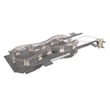
- Dryer heating element WP8544771 (no-heat or weak-heat complaints)
- Dryer thermal cut-off fuse kit 279973 (overheat protection that can open if airflow is restricted)
Why it matters
Most “dryer died early” situations trace back to restricted airflow or ignored wear noises. Good venting keeps temperatures stable, and replacing rollers or an idler before they seize helps protect the motor, drum, and heater circuit.
Last updated: February 2026
How much does it cost to replace the control board on a Whirlpool dryer?
For a Whirlpool electric dryer like model WED9500TW3, replacing the electronic control board typically costs about $150 to $450 total: roughly $100 to $300 for the part plus $100 to $200+ for labor if you hire service. Exact pricing depends on the board version and local rates.
Typical cost breakdown
- Control board part: $100 to $300 (varies by model and supplier)
- Service call / diagnostic: often $75 to $125 (may be applied to repair)
- Labor to replace board: commonly $100 to $200+ (access time varies)
- Optional add-ons: wiring repair, console overlay, or harness work if damaged
| Cost item | Typical range | What changes the price |
|---|---|---|
| Control board (part only) | $100 to $300 | Model-specific board, availability |
| Labor (board swap) | $100 to $200+ | Disassembly time, stacked install |
| Total installed | $150 to $450 | Part price + local labor + trip fees |
What to check before buying a control board
A “dead” dryer or odd behavior is not always the control board. We recommend these quick checks first:
- Confirm the dryer has full power (electric dryers need proper 240V supply)
- Check for a tripped breaker (often a 2-pole breaker)
- Inspect the terminal block area for loose or overheated connections
- Look for airflow restrictions that can trigger heat-related shutdowns
- Review any displayed fault codes and run the built-in diagnostics in the WED9500TW3 owner's manual
Why it matters
Control boards are one of the higher-cost electrical parts. Verifying power, wiring, and error codes first helps avoid replacing an expensive part when the real issue is a supply problem, overheating from poor venting, or a failed sensor.
When a different part is more likely
If the dryer runs but has heat problems or cycles off early, these parts are commonly involved:
- Dryer thermistor (temperature sensing): dryer thermistor WP8577274
- Dryer thermal cut-off fuse kit (overheat protection): dryer thermal cut-off fuse kit 279973
- Dryer heating element (no heat): dryer heating element WP8544771
Last updated: February 2026