Installation guide
 Owner’s manual
 Error Codes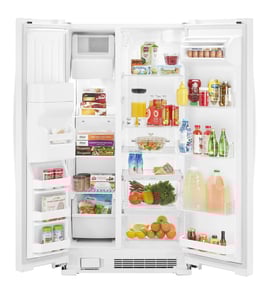


How tall is a Kenmore Elite refrigerator?
For Kenmore model 10656922600 (a side-by-side refrigerator), the cabinet height is typically about 69 inches. For the exact height for your specific unit (and whether it is measured to the top of the case or top of the hinge), confirm the dimensions in the 10656922600 owner's manual.
Use a tape measure and check both of these common reference points; retailers and spec sheets may list either one.
- Top of case: floor to the top of the refrigerator cabinet (not including the hinge)
- Top of hinge: floor to the highest point of the top hinge cover
- Measure with the refrigerator standing level (front-to-back and side-to-side)
- If the unit has adjustable front leveling legs, re-check height after leveling
- Allow for installation clearance above the unit (see the 10656922600 installation guide)
Most Kenmore side-by-side refrigerators in this style land in a narrow range.
| Measurement point | Typical range | Why it varies |
|---|---|---|
| To top of case | 68 to 70 in. | Cabinet design and trim |
| To top of hinge | 69 to 71 in. | Hinge cover and hinge style |
Height affects whether the refrigerator fits under upper cabinets and whether you can tilt or roll it into place without scraping. It also impacts the ventilation space you need above the cabinet for proper airflow.
Last updated: January 2026
How can I tell how many cubic feet my Kenmore refrigerator is?
For Kenmore model 10656922600, the most reliable way to confirm cubic-foot capacity is to look it up by model number in the specifications section of the 10656922600 owner's manual. If you need a quick estimate, we can calculate it from the interior measurements.
- Check the manual/specs first: Capacity is listed with the model’s specifications in the 10656922600 owner's manual.
- Use the model tag: Confirm the model number on the rating label inside the fresh food section, then match it to the manual.
- Calculate it yourself: Measure usable interior space and convert cubic inches to cubic feet.
- Empty the section you’re measuring (fresh food and freezer are often calculated separately).
- Measure width x depth x height of the usable interior space in inches.
- Multiply the three numbers to get cubic inches.
- Divide by 1,728 to convert to cubic feet.
| What you have | What to do | Result |
|---|---|---|
| Inches (W x D x H) | Multiply | Cubic inches |
| Cubic inches | Divide by 1,728 | Cubic feet |
- Measure to the inside liner, not the door bins.
- Exclude space taken up by fixed components (ice maker housing, air towers, light covers).
- Use the largest rectangular “usable” area; shelves and drawers reduce usable space but not the cabinet volume.
Knowing cubic feet helps us match the right Kenmore refrigerator parts and accessories (like shelves, bins, and water filtration items) and it also helps when comparing replacement refrigerators or planning kitchen fit.
Last updated: January 2026
What are the dimensions of a Kenmore refrigerator model 10656922600?
For Kenmore side-by-side refrigerator model 10656922600, the cabinet dimensions are 32 in. wide, 65-3/4 in. high, and 26-5/8 in. deep. For a proper fit, we also recommend planning extra clearance for ventilation and door swing as shown in the 10656922600 owner's manual.
Use the dimensions below for space planning; then add the recommended clearances so the refrigerator can breathe and the doors can open fully.
- Width: 32 in.
- Height: 65-3/4 in.
- Depth: 26-5/8 in.
- Ventilation clearance: 1/2 in. on each side and at the top
- Door swing clearance (next to a fixed wall): 2 in. minimum on each side (varies by setup)
- Back clearance: allow extra space if you have an ice maker water line connection
| Measurement | Refrigerator size | What to plan for |
|---|---|---|
| Width | 32 in. | Add side clearance for airflow and door swing |
| Height | 65-3/4 in. | Add top clearance for airflow |
| Depth | 26-5/8 in. | Add space behind for water line (if equipped) |
Correct dimensions help prevent installation problems like restricted airflow (warm temperatures), doors that cannot open fully, and pinched water lines that can cause ice maker or dispenser issues.
If you are troubleshooting fit-related issues (doors not closing smoothly, gaps, or rubbing), these parts are commonly involved:
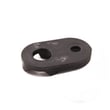
- Refrigerator door cam (black) WP2182179 (helps the door close and align properly)
- Door gaskets (inspect for tears, warping, or gaps)
- Leveling feet/rollers (ensure the cabinet is level front-to-back and side-to-side)
Last updated: January 2026
How wide is a Kenmore side by side refrigerator?
Most Kenmore side-by-side refrigerators are about 32 to 36 inches wide; your Kenmore 10656922600 is in that typical range. For the exact cabinet width and required clearances for installation, use the measurements and spacing guidance in the 10656922600 owner's manual.
Most Kenmore side-by-side models fall into these common width groups:
- 32 to 33 inches: space-saving or smaller-capacity models
- 35 to 36 inches: most full-size side-by-side refrigerators
- 36+ inches: larger or specialty configurations
| Refrigerator type | Typical width | Best for |
|---|---|---|
| Compact side-by-side | 32 to 33 in. | tighter kitchens, smaller households |
| Full-size side-by-side | 35 to 36 in. | most standard cutouts |
| Oversize side-by-side | 36+ in. | maximum storage, wider openings |
Width is not just the cabinet measurement. You also need room for airflow and door swing.
Use these clearance checks before you commit to a space:
- Leave about 1/2 inch on each side and at the top for ventilation
- If installed next to a fixed wall, plan for about 2 inches minimum on the hinge side so doors can swing open
- Allow extra space behind the refrigerator if you have an ice maker water line connection
- Confirm the floor is level so the cabinet does not twist and change door alignment
- Measure the narrowest path for delivery (doorways, hallways, turns)
If the refrigerator is too wide for the opening or lacks side clearance, doors may not open fully, bins can hit the wall, and restricted ventilation can reduce cooling performance and efficiency.
Last updated: January 2026