Owner’s manual
 Error Codes


How do I tell what model my Kenmore dryer is?
Your Kenmore dryer’s model number is printed on the model and serial number plate; on model 11076702693, that plate is typically found around the door opening (door frame) or just inside the door area. Use the full model number when looking up parts and the correct owner's manual.
Check these common locations first:
- Along the door opening on the cabinet (door frame)
- Just inside the door area near the opening
- On the back panel (less common, but possible)
- On the inside of the front panel area if the door opening label is missing
Record both numbers exactly as shown:
- Model number: identifies the exact dryer design and which parts fit
- Serial number: helps identify production details and can be useful for service history
- Date of purchase (if you have it): helpful for maintenance records
| Item | What it’s used for | Example format |
|---|---|---|
| Model number | Matching parts, diagrams, and instructions | 110XXXXXXXX |
| Serial number | Production tracking and service reference | Letters and numbers |
Many Kenmore model numbers start with a 3-digit prefix that identifies the manufacturer series. For example, 110 is commonly associated with Whirlpool-built Kenmore dryers. For your dryer, the full model number is 11076702693; use all digits when searching parts.
Using the exact model number prevents ordering the wrong items (like a door switch, belt, or gas ignition parts) and helps you follow the correct operating and safety instructions for your specific gas dryer.
Last updated: February 2026
What is the cubic foot of my Kenmore dryer model 11076702693?
We treat the Kenmore gas dryer model 11076702693 as a full-size 29-inch dryer; most Kenmore 29-inch gas dryers of this design are approximately 7.0 cubic feet. For the exact capacity listed for your specific unit, check the specifications section in the owner's manual.
Use these quick checks so you are working from the model-specific spec:
- Look for a “Capacity” or “Drum volume” line in the specs pages of the owner's manual
- Verify the model number on the model and serial number plate matches 11076702693
- If your dryer has multiple versions, match the series and feature set (cycle selector, options) to the manual illustrations
- If you are measuring for space planning, use the cabinet dimensions in the manual, not capacity
Capacity affects how the dryer performs and how you should load it:
- Larger capacity dries bulky items (comforters, towels) with better tumbling
- Overloading reduces airflow and can increase dry time
- Underloading can cause items to ball up and dry unevenly
If you just need a practical estimate for loading and cycle selection, this is the common range for this style of Kenmore gas dryer.
| Dryer type | Typical capacity range | Best use |
|---|---|---|
| 29-inch full-size gas dryer (like 11076702693) | ~6.5 to 7.5 cu. ft. | Family loads, towels, bedding |
| Compact dryer | ~3.5 to 4.5 cu. ft. | Small loads, apartments |
For best results on a full-size drum:
- Fill the drum about 2/3 full for mixed cotton loads
- Dry heavy items (towels) separately from lightweight items
- Clean the lint screen every load and keep venting clear
Last updated: February 2026
Is it worth repairing an old Kenmore dryer?
Yes, repairing an older Kenmore gas dryer like model 11076702693 is usually worth it when the problem is a common wear item (belt, door switch, gas ignition parts) because the repair is straightforward and parts cost is typically low compared with replacement.
We recommend repairing when the dryer still tumbles well, the cabinet is solid, and the issue is isolated to a normal failure part.
- The drum will not turn but the motor runs (often a worn belt)
- The dryer will not start (door switch or push-to-start switch issues)
- The dryer tumbles but will not heat consistently (common gas ignition components)
- You have no unusual grinding, squealing, or heavy vibration
- The venting is clear and airflow is strong (poor airflow can mimic “bad dryer” symptoms)
These are frequent, cost-effective repairs for this model:
- Drum belt 341241
- Door switch WP3406107
- Dryer push-to-start switch WP3395382
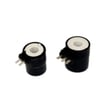
- Dryer gas valve coil kit 279834
- Igniter 279311
| Symptom | Common fix | Typical “worth it” signal |
|---|---|---|
| Drum not turning | Belt replacement | Low part cost, big improvement |
| No start | Door or start switch | Simple electrical part swap |
| No heat or heat cuts out | Gas coils or igniter | Restores heat without major teardown |
| Loud thumping at first | Rollers settling | Often normal and fades after minutes |
Replacement is usually the better value when a major component fails or multiple expensive issues stack up.
- Drive motor failure (higher part cost and labor)
- Repeated breakdowns in a short period
- Severe rust, damaged drum supports, or chronic overheating from vent restrictions
A well-maintained gas dryer can run for years, and many “old dryer” complaints trace back to airflow and routine wear parts. Your owner's manual also calls out periodic lint removal and vent cleaning practices that help prevent heat and performance problems.
Last updated: February 2026
What size belt does a Kenmore dryer take?
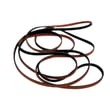
For Kenmore gas dryer model 11076702693, the correct drum belt is drum belt 341241. This belt is the standard 4-rib dryer drum belt used on many Kenmore 110-series style dryers; match by model to ensure proper length and rib profile. See the 11076702693 owner's manual for model identification and service safety basics.
For this specific model, we recommend ordering:
- Drum belt 341241 (drives the drum by connecting the motor pulley to the drum)
If your dryer runs but the drum does not turn, a broken or slipped belt is one of the most common causes.
Unplug the dryer before inspecting anything.
- If the motor runs but the drum stays still, the belt is likely broken or off the pulley
- If the drum turns by hand with very little resistance, the belt may be snapped
- If you hear a thump or slapping sound, the belt may be frayed or stretched
- If the dryer will not start at all, also check the door switch and start switch
A belt replacement is a good time to inspect other wear items that affect drum support and noise.
| Symptom | Common related part | Example from this model |
|---|---|---|
| Squealing, rumbling | Drum support components | Support 349241T, bearing ring 279441 |
| Won’t start when door closes | Door safety circuit | Door switch WP3406107 |
| Clicks but won’t run | Start circuit | Dryer push-to-start switch WP3395382 |
Using the correct belt size and rib style prevents slipping, overheating, and premature wear on the motor pulley and drum support system. A mismatched belt can also cause poor tumbling, longer dry times, and extra noise.
Last updated: February 2026
What are common problems with Kenmore dryers?
Common problems on Kenmore gas dryers like model 11076702693 include no heat or weak heat (airflow restriction or burner issue), won’t start (door switch or start switch), drum not turning (belt or motor problem), and overheating or stopping mid-cycle (lint buildup). Use the 11076702693 owner's manual troubleshooting and care sections to match symptoms to the right checks.
- Clothes take too long to dry: clogged lint screen, crushed/blocked vent, lint buildup in ducting
- Runs but won’t heat: failed igniter, bad gas valve coils, faulty radiant sensor, restricted exhaust
- Won’t start: door not fully closed, failed door switch, failed push-to-start switch
- Drum won’t tumble: broken belt, seized drum rollers/supports, failed drive motor
- Loud thumping/squealing: worn drum supports/rollers, blower wheel issue, loose debris
- Clean the lint screen and confirm strong airflow at the outside vent hood.
- Inspect the vent path for kinks, crushing, or long runs that trap lint.
- Confirm the door fully closes; opening the door stops the dryer and it will not restart until the door is closed and Start is pressed.
- If drying is poor or the dryer runs hot, remove accumulated lint from the exhaust vent sections as outlined in the manual.
| Symptom | Common fix | Example part for 11076702693 |
|---|---|---|
| Drum not turning | Replace worn/broken belt | Drum belt 341241 |
| Won’t start when door is shut | Replace door switch | Door switch WP3406107 |
| Runs but no heat | Replace gas valve coils | Dryer gas valve coil kit 279834 |
| Runs but no heat (no ignition) | Replace igniter | Igniter 279311 |
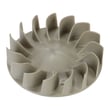
| Loud noise, poor airflow | Replace blower wheel | Dryer blower wheel WP694089 |
Most “dryer problems” trace back to airflow and lint. Restricted venting makes clothes dry slowly, can cause overheating and shutdowns, and can also lead to repeated burner cycling on a gas dryer. Regular vent cleaning and periodic lint removal keep performance steady and reduce breakdowns.
Last updated: February 2026