Owner’s manual


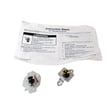
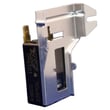
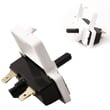
How do I know if my Kenmore dryer thermal fuse is blown?
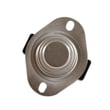
On your Kenmore gas dryer model 11072602100, a blown thermal fuse typically shows up as a dryer that will not run at all (no motor operation) even though power is available. The most reliable way to know is to test the fuse for continuity with a multimeter; an open reading means it’s blown.
Quick symptoms that point to a blown thermal fuse
- Dryer won’t start, but the outlet has power
- Drum light may work (if equipped), but motor will not run
- Start button is pressed and nothing happens
- House breaker is not tripped and the door is fully closed
- Lint screen and venting may be restricted (common root cause)
How we test it (simple continuity check)
- Unplug the dryer (or switch off the breaker).
- Access the thermal fuse area (location varies by design); follow the access steps in the 11072602100 owner’s manual.
- Pull one wire off the fuse terminal (so you do not read through the circuit).
- Set your multimeter to continuity (or lowest ohms).
- Touch a probe to each terminal.
What the meter should show
| Meter result | What it means | What to do next |
|---|---|---|
| Beep or near 0 Ω | Fuse is good | Keep troubleshooting start circuit and airflow |
| No beep or OL/open | Fuse is blown | Replace the fuse and correct the airflow restriction |
Why it matters (and what usually causes it)
A thermal fuse is a one-time safety device that opens when the dryer overheats. Overheating is commonly caused by poor airflow, such as a clogged lint screen, crushed vent hose, or blocked exterior vent hood. Your manual’s troubleshooting section also highlights basic “won’t run” checks like power supply, fuse/breaker, and door closure.
Related checks we recommend before replacing parts
- Confirm the dryer is plugged into a grounded 3-prong outlet and power is on
- Verify the door closes firmly; a failed door switch can also prevent starting (see door switch WPW10237959)
- Clean the lint screen and check for strong airflow at the outside vent
- If the dryer runs but has heat issues, gas models can involve burner components (see gas burner W10823508)
Last updated: February 2026
How do I tell what model my Kenmore dryer is?
Your Kenmore dryer’s model number is printed on the model and serial number plate; on Kenmore model 11072602100, that plate is on the cabinet and is typically visible when you open the dryer door. Record both the model and serial number for parts and service.
Where to look on Kenmore model 11072602100
Check these common label locations first:
- Open the dryer door and look on the door opening (cabinet frame) for the model/serial plate
- Look just inside the door area on the front panel edge
- If you do not see it inside the door, check the back of the cabinet near the top
- Write down the full model number and the serial number exactly as shown
For the exact label location and how Kenmore references it, use the 11072602100 owner's manual.
What the model number helps us match
The model number identifies the correct gas dryer parts list and the exact configuration (controls, burner system, drum support, and door switch style). That prevents ordering a look-alike part that does not fit.
| You need | Why we ask for it | Example format |
|---|---|---|
| Model number | Matches the correct parts diagram and revisions | 11072602100 |
| Serial number | Helps confirm production series and compatible updates | Letters and numbers |
Quick tips to avoid mix-ups
- Use the full model number, not just “Kenmore 110”
- Copy every digit; one missing number can point to a different dryer
- If the label is worn, take a clear photo and zoom in to read it
- Keep the model and serial number with your purchase records for future repairs
Why it matters
Kenmore gas dryers can share similar cabinets across multiple models, but internal components (like the motor, thermostats, and gas burner assembly) can vary by series. Using the correct model number keeps troubleshooting and part selection accurate.
Last updated: February 2026
What is the average lifespan of 11072602100?
A Kenmore gas dryer like model 11072602100 typically lasts 13 years with normal household use. Keeping airflow clear (lint screen and venting) and replacing wear items like the belt when needed helps you reach that lifespan.
What affects lifespan the most
- Airflow and venting: restricted exhaust makes the dryer run hotter and work harder
- Lint buildup inside the cabinet: the manual recommends removing accumulated lint about every 2 years (more often with heavy use)
- Overloading: strains the drum support system, belt, and motor
- Heat system health: gas burner and thermostats must cycle correctly to prevent overheating
- Routine cleaning: regular care reduces service calls and extends life
Maintenance schedule we recommend
Use this as a simple baseline; follow your owner's manual for model-specific details.
| Task | How often | Why it matters |
|---|---|---|
| Clean lint screen | Every load | Prevents overheating and improves drying |
| Check/clean outside vent hood | Monthly | Keeps exhaust moving freely |
| Deep-clean exhaust vent duct | About every 2 years | Reduces heat stress and drying time |
| Remove lint inside cabinet (qualified service) | About every 2 years | Helps prevent overheating and performance issues |
Parts that commonly determine “end of life” (and what to do)
If the dryer still heats and the drum is solid, replacing a few parts often restores reliable operation.
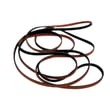
- Squealing, thumping, or poor tumbling: inspect the belt and drum support parts; consider the dryer drum belt 341241
- No start or intermittent running: check door switch and start switch
- Runs but dries slowly: address venting first, then check cycling components like the operating thermostat
- Overheating or shutting down: clean lint and venting, then check high-limit protection
Why it matters
Most “short lifespan” complaints come from restricted airflow and lint accumulation, which increase heat and wear on the motor, belt, and thermostats. Good airflow is the single biggest factor in keeping a gas dryer running for its full service life.
Last updated: March 2026