Owner’s manual
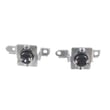


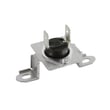
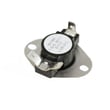
How do I know if my Kenmore dryer thermal fuse is blown?
On Kenmore dryer model 79680441900, a blown thermal fuse usually shows up as a dryer that will not start or a dryer that runs but does not heat. The sure way to confirm is a continuity test with a multimeter after unplugging the dryer.
Quick symptoms to look for
- Dryer will not turn on (no motor run)
- Dryer tumbles but there is no heat (common on electric models with a power supply issue or safety open)
- Cycle ends with clothes still damp and drying time is much longer than normal
- Vent indicator is blinking and drying performance is poor (often points to restricted airflow, which can lead to overheating)
How to test the thermal fuse (basic continuity check)
- Unplug the dryer (or switch off the breaker) before opening any panels.
- Access the fuse location shown in the 79680441900 owner's manual.
- Remove at least one wire from the fuse terminal.
- Set a multimeter to continuity or lowest ohms.
- Touch probes to the fuse terminals.
Typical meter results
| Test result | What it means | What to do next |
|---|---|---|
| Beep or near 0 ohms | Fuse is good | Check airflow, thermostats, and power supply |
| No beep or OL/infinite | Fuse is blown (open) | Replace the fuse and correct the overheating cause |
Why the fuse blows (and what to fix so it does not happen again)
A thermal fuse is a one-time safety device; it opens when the dryer overheats. Overheating is most often caused by restricted airflow.
- Clean the lint screen every load (a damaged screen can also reduce airflow; see dryer lint filter 5231EL1003B)
- Inspect and clean the vent duct and outside damper; long runs and too many turns restrict airflow
- Check for crushed or kinked flexible venting behind the dryer
- If the vent indicator is blinking, address the duct restriction right away
- If you are also chasing a no-heat complaint, test related temperature controls such as the dryer high-limit thermostat 6931EL3003D
Why it matters
A blown thermal fuse stops heat or stops the dryer to prevent overheating. Replacing the fuse without fixing the venting or airflow problem often leads to repeat failures and longer dry times.
Last updated: February 2026
What model number is the Kenmore 79680441900 dryer?
The model number for this Kenmore dryer is 79680441900. On the appliance itself, we find the model and serial number on the identification plate inside the dryer door, which is the best place to confirm you are ordering the correct parts and using the right instructions.
Where to find the model number on the dryer
Check these common locations on Kenmore dryers like model 79680441900:
- Inside the dryer door opening on the cabinet frame (most common)
- On the door itself near the hinge area
- Along the front panel opening near the lint filter housing
- In your paperwork, such as the purchase receipt or product registration
For the exact location and what the ID plate looks like, use the 79680441900 owner's manual.
Why the model number matters
Kenmore model numbers can look similar, and small differences change the correct fit for parts like a heating element, control board, or drum belt. Using 79680441900 helps us match the right diagrams, troubleshooting steps, and replacement parts.
Quick examples (what the model number affects)
| What you are doing | Why the exact model number matters |
|---|---|
| Ordering a drum belt | Belt length and rib profile must match the drum and motor pulley |
| Replacing a thermostat or thermistor | Temperature ratings and wiring connectors vary by design |
| Looking up error codes | Code meanings and resets can differ by series |
Helpful tip when ordering parts
When you search parts for 79680441900, match the model number from the door label exactly, then verify the part by name and ID.
- Common wear item: dryer drum belt 4400EL2001F
- If the dryer tumbles poorly or squeals, also check drum rollers and idler pulleys
- If drying performance is inconsistent, check airflow and heating components
Last updated: February 2026
Where is the part number on a Kenmore dryer?
On Kenmore dryer model 79680441900, the model and serial number (often needed to look up the correct part number) are printed on an identification plate located inside the dryer door opening. Use that information to match the exact replacement part for your dryer in our parts list.
What to look for on the label
The identification plate typically includes:
- Model number (for example, 79680441900)
- Serial number
- Electrical or gas rating information (varies by version)
- Sometimes a type or production code used for parts lookups
For the exact label location and what each field means, use the 79680441900 owner's manual.
How we recommend finding the right part number
Once you have the model and serial number from the door label, use this approach:
- Match the model number exactly (all digits)
- Use the symptom to narrow the part category (heat, noise, no start, long dry times)
- Confirm the part name and part ID before ordering
- If the dryer is noisy or not tumbling, check common wear items like the dryer drum belt 4400EL2001F and idler pulley
Common label vs. part number confusion
| What you have | Where you find it | What it’s used for |
|---|---|---|
| Model/serial number | Inside the dryer door | Identifies the exact dryer version |
| Part number / part ID | On the part listing or the part itself | Identifies the replacement component |
| Rating info | On the same label | Confirms electrical or gas requirements |
Why it matters
Kenmore dryers can have multiple versions that look similar; using the model and serial number from the door label helps us match the correct Kenmore parts (like a heating element, thermistor, or lint filter) to your exact 79680441900 configuration.
Last updated: February 2026
What is the life expectancy of a Kenmore dryer?
A Kenmore dryer like model 79680441900 typically lasts 10 to 13 years. With consistent lint and vent cleaning, correct installation, and avoiding overloads, it’s common for a well-maintained dryer to reach 15 years or more. See the maintenance guidance in the 79680441900 owner's manual.
What affects dryer lifespan the most
The biggest drivers are heat, airflow, and mechanical wear. We see the longest-lasting dryers when these basics are handled routinely:
- Clean the lint screen before every load; restricted airflow overheats components
- Clean the exhaust vent ductwork at least yearly (more often with heavy use)
- Keep the area around the exhaust opening free of lint and dust
- Avoid overloading; it strains the drum belt, rollers, and motor
- Keep the dryer level so the drum rides evenly on its supports
Typical lifespan by use pattern
These ranges help set expectations for a Kenmore electric or gas dryer.
| Use pattern | Typical life expectancy | What usually wears first |
|---|---|---|
| Light (1 to 3 loads/week) | 12 to 16 years | Belt, rollers |
| Average (4 to 7 loads/week) | 10 to 13 years | Belt, idler pulley, thermostats |
| Heavy (8+ loads/week) | 7 to 10 years | Rollers, motor, heating system |
Parts that commonly shorten life when worn
If you hear squealing, thumping, or the drum stops turning, addressing wear parts early prevents bigger damage.
- Dryer drum belt 4400EL2001F (drum won’t turn, burning rubber smell)
- Dryer drum support roller 4581EL2002L (thumping, flat spots, vibration)
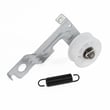
- Dryer idler pulley 4560EL3001A (squeal, belt slipping)
- Dryer heating element 5301EL1001J (no heat on electric models)
Why it matters
A dryer that runs hot or can’t move air efficiently takes longer to dry, uses more energy, and overheats safety components like thermostats. Keeping airflow and drum support parts in good shape is the simplest way to extend the service life of your Kenmore 79680441900.
Last updated: February 2026
What does F40 mean on a Kenmore dryer?
On Kenmore dryer model 79680441900, the F40 code points to a control communication problem, most often between the main control and a motor or blower-related control circuit. We fix it by checking power, wiring connections, and heat-related safety parts that can trigger shutdowns.
What to check first (fast, no parts)
- Unplug the dryer (or switch off the breaker) for 2 minutes, then restore power and retry.
- Confirm the dryer is on the correct electrical supply; electric dryers use a dedicated 240 VAC circuit.
- Check the terminal block area for loose connections or heat damage (power off first).
- Reseat any accessible wire plugs you can reach without disassembling major components.
- If the code returns immediately, stop and move to the electrical and heat checks below.
For model-specific electrical requirements and grounding details, follow the 79680441900 owner's manual.
Heat and airflow issues that can lead to F40 symptoms
Overheating and restricted airflow can cause the dryer to shut down and create “communication” style faults.
- Clean the lint screen and the lint duct path.
- Verify strong airflow at the outside vent hood.
- Inspect the blower area for lint buildup or a damaged wheel.
If you suspect a failed temperature sensor, the dryer thermistor AGM30045804 is the correct thermistor listed for this model.
Quick symptom-to-likely-cause guide
| What you notice | Most likely area | What we do next |
|---|---|---|
| F40 appears soon after start | Power or wiring | Check terminal block, harness plugs, supply voltage |
| Dryer runs but shuts off, clothes still damp | Airflow or overheating | Clear venting, check thermostats, check thermistor |
| No heat or weak heat | Heating circuit | Test heater, thermostats, wiring to heater |
Why it matters
When the controls lose reliable feedback from the motor or temperature circuits, the dryer can stop mid-cycle, overheat, or fail to heat. Fixing airflow and electrical connection issues first prevents repeat failures and protects key parts like the control board and heating element.
For code lookups and related Kenmore guidance, use Kenmore 796 model dryer error codes.
Last updated: February 2026
How much does it cost to replace a heating element in a Kenmore dryer?
For Kenmore dryer model 79680441900, replacing the heating element typically costs $50 to $300 for the part (depending on whether it’s just the element or a full heater assembly) and $150 to $400 total if you hire a technician (parts plus labor).
What drives the total cost
- Part style: bare element vs. complete heater housing/assembly
- Service call and labor time: access to the heater can add time
- Related fixes: restricted venting or failed thermostats can shorten element life
- DIY vs. pro: DIY avoids labor but requires safe electrical handling
- Model match: using the correct part for 79680441900 prevents repeat repairs
Typical cost ranges (parts and labor)
| Scenario | What you pay for | Typical total |
|---|---|---|
| DIY replacement | Heating element only | $50 to $300 |
| Pro replacement | Part + labor | $150 to $400 |
| Element plus safety controls | Element + thermostat(s) | $175 to $450 |
Parts that are commonly involved with “no heat” or overheating
A failed heating element is common, but we also see heat problems caused by airflow restrictions or temperature-sensing parts.
- Dryer heating element 5301EL1001J
- Dryer high-limit thermostat 6931EL3003D
- Dryer blower thermostat 6931EL3002M
- Dryer thermistor AGM30045804
Why it matters
If the dryer is overheating or taking too long to dry, replacing only the heating element can lead to another failure. The 79680441900 manual emphasizes proper electrical supply and safe installation practices; correct power and good venting help protect the heater circuit and improve drying performance. See the 79680441900 owner's manual for model-specific safety and operating guidance.
Last updated: February 2026
How to hard reset a Kenmore dryer?
To hard reset Kenmore dryer model 79680441900, turn it off, disconnect power for 1 to 5 minutes, then restore power and start a new cycle. This clears many temporary control glitches and cancels stuck cycle selections.
Hard reset steps
- Press Power to turn the dryer off.
- Unplug the dryer (or switch the dryer breaker off).
- Wait 1 to 5 minutes.
- Restore power.
- Press Power, select Normal with the cycle selector knob, then press Start/Pause.
If the controls seem unresponsive (Control Lock)
This dryer uses a Control Lock feature; when it is on, buttons may not respond.
- Look for a lock indicator on the display
- Press and hold Control Lock for 5 seconds
- Press Power, then Start/Pause
For the exact button location and indicator behavior, use the 79680441900 owner's manual.
If a reset does not fix the problem
A reset helps only when the issue is a temporary control state. If the dryer still will not start or heat, check these common causes:
- Power supply: reset the breaker or replace a blown fuse (do not oversize fuses)
- Airflow: clean the lint screen and inspect the vent; ductwork needs cleaning at least yearly
- No-heat symptoms: electric dryers can run without heat when a breaker leg is tripped; gas models need both gas shutoff valves fully open
- Door not starting: test the door switch; replace if it does not click or show continuity (see dryer door switch EBF61496102)
Quick symptom guide
| Symptom | Most likely cause | Best next step |
|---|---|---|
| Dead display | No power | Check outlet, breaker, cord |
| Runs but no heat | Breaker leg tripped (electric) or gas off | Check breaker or gas valves |
| Buttons do nothing | Control Lock on | Hold Control Lock 5 seconds |
| Stops early, long dry times | Restricted venting | Clean venting and lint screen |
Why it matters
Resetting restores the control board to a known starting state and helps separate a simple glitch from real issues like restricted venting, power supply problems, or a failed switch.
Last updated: February 2026