Owner’s manual


What is the most common problem with a KitchenAid dishwasher?
The most common problems we see on KitchenAid dishwashers like model KUDS01IJBT0 are poor cleaning (food left on dishes), draining problems (standing water), and a no-start condition. These usually trace back to spray-arm or filter clogs, door-latch/door-seal issues, or a failing pump or fill valve.
Most common symptoms and what they usually point to
- Not cleaning well: clogged spray arm holes, restricted wash system, weak circulation
- Not draining: blocked drain path, kinked hose, drain pump issue
- Won’t start or stops mid-cycle: door switch/latch problem, blown fuse, control issue
- Leaks at the door: worn or mis-seated door seal
- Detergent not dispensing: dispenser problem or door not latching fully
Quick checks we recommend first (before replacing parts)
- Confirm the door closes firmly and the latch engages.
- Remove debris from the bottom of the tub and check for anything blocking water flow.
- Inspect the drain hose routing for kinks and make sure it has a proper high loop.
- Run hot water at the sink before starting a cycle to improve wash performance.
- Review cycle and detergent guidance in the owner's manual.
Parts that commonly solve these issues on KUDS01IJBT0
| Problem | Common fix | Example part for this model |
|---|---|---|
| Leaking at door | Replace door seal | Dishwasher door seal W10542314 |
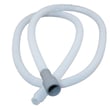
| Not draining | Replace/inspect drain hose | Dishwasher drain hose 8269144A |
| Not filling | Replace inlet valve | Inlet valve WP8531669 |
| Won’t start | Check door switch and fuse | Dishwasher door switch WP8269209, fuse 8193762 |
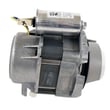
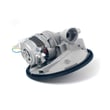
| Poor cleaning | Restore strong circulation | Dish pump WPW10757217 |
Why it matters
These “common problems” often share the same root cause: the dishwasher cannot move water correctly (wash or drain) or it cannot verify the door is safely closed. Fixing the underlying cause prevents repeat failures, poor results, and leaks.
Last updated: February 2026
Do KitchenAid dishwashers have a filter that needs to be cleaned?
Yes. The KitchenAid KUDS01IJBT0 uses a multi-level filtration system (including an ultra-fine filter and a coarse strainer) that traps food particles to keep them from redepositing on dishes; keeping the filter area clear helps prevent poor cleaning, odors, and drain issues. See the KUDS01IJBT0 owner's manual for the exact filter layout and care steps.
What filtration this model uses
Your dishwasher’s wash system is designed to continuously move wash water through filtration and collect soil during the cycle.
- Ultra-fine filtration traps food particles as water circulates
- A sensor monitors pump pressure and adjusts the wash cycle for best performance
- Water jets under the spray arm help clear particles off the ultra-fine filter
- A coarse strainer helps keep large items (bones, pits, etc.) out of the pump
How to clean the filter area (safe, practical routine)
We recommend this routine about once a month, or sooner if you notice gritty dishes or odors.
- Turn off power at the breaker before reaching into the sump area
- Remove the lower rack so you can access the bottom of the tub
- Check the coarse strainer area for labels, glass, bones, or seeds and remove debris
- Rinse any removable screens or filter pieces with warm water (use a soft brush if needed)
- Reinstall parts securely so the spray arm and filtration seal correctly
Symptoms that point to a dirty or blocked filter area
| What you notice | What it often means |
|---|---|
| Grit or specks on glasses | Fine soil is not being captured or flushed from the filter area |
| Odor after cycles | Food soil is trapped in the filter/strainer zone |
| Standing water | Drain path is restricted (filter area, hose, or pump) |
| Poor cleaning on lower rack | Spray arm or filter area is partially blocked |
Why it matters
This model’s filtration is a key part of how it achieves cleaning performance. When the filter and strainer area stay clear, water flow stays strong, the pump runs under normal load, and food particles are less likely to recirculate onto dishes.
Last updated: February 2026
What dishwasher to stay away from?
We do not recommend “avoid lists” for dishwashers because reliability varies by model series, installation quality, water conditions, and how the dishwasher is loaded and maintained. For your KitchenAid KUDS01IJBT0, the most practical way to avoid a bad experience is to choose a model with the features you will actually use, then follow the care and loading guidance in the KUDS01IJBT0 owner's manual.
What to watch for when choosing a dishwasher
These factors predict day-to-day satisfaction more than brand reputation alone:
- Serviceability and parts availability: common wear items (door seal, drain hose, inlet valve) should be easy to source.
- Leak prevention design: solid door sealing and correct leveling reduce leaks.
- Drying approach: heated dry vs air-dry affects plastics and overall dryness.
- Cycle time expectations: modern “Normal” cycles can be long; pick cycles you will run.
- Noise rating: quieter units cost more; decide if it matters in your kitchen.
“Stay away from” red flags (practical checklist)
If you want a simple filter, we suggest avoiding any dishwasher model that has:
- A pattern of leaking at the door even after correct leveling and loading
- Frequent no-drain complaints tied to design (not just clogs)
- Repeated won’t start issues tied to door-latch or control problems
- Poor cleaning reports that persist even with proper detergent and loading
- Hard-to-get replacement parts or unusually expensive core parts
How this relates to your KitchenAid KUDS01IJBT0
Your manual emphasizes safe loading and proper use to prevent damage and performance problems (for example, loading sharp items so they do not damage the door seal, and using dishwasher detergents and rinse agents correctly). Following those basics helps you avoid the same “bad dishwasher” symptoms people often blame on the brand. See the KUDS01IJBT0 owner's manual for loading, care, and troubleshooting guidance.
Common “problem symptoms” and the parts that often fix them
| Symptom people complain about | Common cause | Example part for KUDS01IJBT0 |
|---|---|---|
| Leaks at the door | Worn or mis-seated seal, poor loading | Dishwasher door seal W10542314 |
| Not draining | Clog, kinked hose, drain path restriction | Dishwasher drain hose 8269144A |
| Not filling | Water supply issue, failed valve | Inlet valve WP8531669 |
| Poor cleaning | Spray issue, circulation problem | Dishwasher spray arm WPW10320510 |
Why it matters
“Brands to avoid” lists are usually based on mixed experiences across many models. Focusing on installation, loading, detergent, and maintainability gives you a more reliable outcome and helps your dishwasher clean, drain, and dry the way it was designed to.
Last updated: February 2026