Owner’s manual


Where is the model number on Kenmore Elite dryer?
On Kenmore Elite dryer model 11095088400, the model number is on the model and serial number label located at the top inside the dryer door well. We recommend writing down both the model and serial number before ordering parts or scheduling service; see the owner's manual for the exact label location description.
How to find it quickly
- Open the dryer door fully.
- Look along the inside opening (the door well) near the top edge.
- Find the label that lists Model and Serial.
- Record the full model number (for example, 11095088400) and the serial number.
- Keep the information with your purchase date for future reference.
What the label helps you do
The model and serial label is the fastest way to match the correct Kenmore parts and diagrams for your dryer.
| You need | Use this from the label | Why it matters |
|---|---|---|
| Correct part fit | Model number | Ensures parts match the exact 110 series configuration |
| Version-specific parts | Serial number | Helps identify production changes |
| Service help | Model + serial | Speeds up troubleshooting and repair scheduling |
Why it matters
Many Kenmore Elite dryers share similar styling, but internal components like the drive system, gas burner parts, and sensors can vary by model and serial range. Using the label information prevents ordering the wrong part and reduces downtime.
Last updated: January 2026
What are the codes for Kenmore Elite dryer?
On Kenmore Elite dryer model 11095088400, the display can show error codes that point to a specific problem area such as a power interruption (PF), a control or keypad issue (F:01, F:02), or a heating and temperature-sensing fault (F:20, F:22 to F:25). For the full list and reset steps, use the 11095088400 owner's manual.
Common Kenmore Elite dryer codes and what they mean
Here are the most common codes customers see on this style of Kenmore Elite dryer:
- PF: Power failure; the cycle was interrupted. Press and hold START to restart.
- E1, E2, E3: Service codes; these indicate a condition that typically requires service.
- F:01: Main electronic control board failure.
- F:02: Keypad or user interface failure.
- F:20: Heater relay failure.
- F:22, F:23: Outlet thermistor failure.
- F:24, F:25: Inlet thermistor failure.
Quick checks we recommend before replacing parts
Many “heat” and “drying” related codes are triggered by airflow problems or overheating. Check these first:
- Clean the lint screen and confirm it is seated correctly.
- Check the exhaust vent and outside hood for lint blockage; verify strong airflow outside.
- Replace any plastic or foil venting with rigid or flexible metal vent.
- Make sure the vent is not crushed, kinked, or excessively long.
- If the code appeared after a storm or outage, clear it by restarting the cycle.
What to do next (by code type)
| Code type | What it usually points to | Best next step |
|---|---|---|
| PF | Power interruption | Restart cycle; confirm stable power |
| F:20 | Heater relay or heat control issue | Check airflow first; then diagnose heat circuit |
| F:22 to F:25 | Thermistor (temperature sensing) issue | Check venting and lint buildup; then test sensors |
| E1 to E3, F:01, F:02 | Control or interface problem | Try power reset; then diagnose control and wiring |
Why it matters
Using the code to narrow the fault saves time and prevents repeat failures. For example, restricted venting can cause overheating that trips temperature sensors and safety devices, leading to repeated error codes and poor drying performance.
Last updated: January 2026
How to hard reset a Kenmore dryer?
To hard reset a Kenmore Elite dryer model 11095088400, unplug the dryer (or switch the breaker off) for 1 to 5 minutes, then restore power and start a cycle. If the controls are unresponsive, unlock the control panel and restart the cycle using the correct button sequence in the 11095088400 owner's manual.
Step-by-step hard reset (safe and effective)
- Press PAUSE/CANCEL twice to stop the cycle and clear settings.
- Unplug the dryer (or turn OFF the circuit breaker) for 1 to 5 minutes.
- Restore power.
- Close the door fully.
- Press and hold START for about 3 seconds to begin a cycle.
If the panel still will not respond
Many “needs a reset” symptoms are actually a locked control or a cycle that needs to be cleared.
- Control Locked is on: press and hold AUTO DRY LEVEL for 3 seconds to unlock.
- Cycle is stuck: press PAUSE/CANCEL twice, reselect the cycle, then press and hold START.
- Door not latched: close the door firmly and confirm it latches securely.
Quick checks that prevent repeat shutdowns
Restricted airflow can cause overheating symptoms that look like a control problem.
- Clean the lint screen before every load.
- Make sure the vent is not crushed or kinked behind the dryer.
- Confirm strong airflow at the outside vent hood.
- Avoid overloading; heavy loads can extend dry times and increase heat.
What the results mean
| What happens after reset | Most likely cause | What to do next |
|---|---|---|
| Starts normally | Temporary control glitch | Resume normal use |
| Starts, then stops quickly | Door switch or control lock issue | Recheck latch, unlock controls |
| Runs but does not heat | Heating system or airflow issue | Check venting, then heat components |
Why it matters
A true hard reset clears the electronic control state, but it will not fix airflow restrictions or failed heating components. Using the correct stop, unlock, and restart steps helps you avoid unnecessary part replacement and gets the dryer running safely.
Last updated: January 2026
How much does it cost to replace a heating element in a Kenmore dryer?
For Kenmore Elite dryer model 11095088400, replacing a heating element typically costs $20 to $100 for the part and $100 to $350+ total if a technician does the repair (part plus labor). The exact price depends on the heater style used in your specific dryer and local labor rates.
What changes the price the most
- Electric vs. gas heat: Electric dryers use a heating element; gas dryers use an igniter, gas valve coils, and sensors.
- What failed: Sometimes the heater is fine, but a thermostat, thermistor, or airflow issue is the real cause.
- Labor and access: Stacked installs, tight closets, or seized fasteners increase labor time.
- Vent condition: Restricted venting can cause repeat overheating failures.
Quick cost breakdown
| Scenario | Typical parts cost | Typical labor cost | Typical total |
|---|---|---|---|
| DIY replace heater only | $20 to $100 | $0 | $20 to $100 |
| Pro replace heater only | $20 to $100 | $80 to $250+ | $100 to $350+ |
| Heater plus safety parts (common) | $40 to $150 | $80 to $250+ | $120 to $400+ |
Before you buy a heating element
We recommend checking these common causes of “no heat” first because they can mimic a bad element:
- Lint buildup and restricted venting (overheats the heater and trips safety devices)
- High-limit thermostat or thermal cut-off issues (often replaced as a set)
- Temperature sensing problems (thermistor)
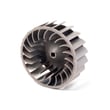
- Poor airflow from a damaged blower wheel
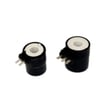
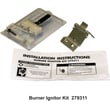
If your dryer is gas, “no heat” is more often tied to ignition components such as the dryer valve coil kit 279834 or the igniter 279311.
Why it matters
Accurate diagnosis saves money and prevents repeat failures. The manual for 11095088400 also emphasizes proper venting and lint removal as part of safe, reliable drying performance; those basics directly affect heating system life. See the 11095088400 owner's manual.
Last updated: January 2026