 Owner’s manual
 Error Codes




What is the average lifespan of a Kenmore washer?
A Kenmore washer typically lasts 10 to 15 years with normal household use. For Kenmore model 79641382410, consistent cleaning and basic maintenance (especially the drain system and inlet filters) helps you reach the upper end of that range; see the 79641382410 owner's manual.
Typical lifespan and what changes it
Most washers land in the same general window, but these factors move the needle:
- Loads per week (more cycles equals faster wear)
- Overloading (stresses the drive system and suspension)
- Detergent use (too much can cause residue and odors)
- Water quality (hard water increases mineral buildup)
- Maintenance habits (cleaning filters, dispenser, and door seal)
Maintenance that extends life (high impact)
The 79641382410 manual calls out routine cleaning tasks that directly reduce strain on key components.
- Run the Clean Washer routine as recommended
- Clean the door seal and glass to prevent leaks and odor
- Clean the dispenser to prevent clogs and poor rinsing
- Clean the water inlet filters to maintain fill performance
- Clean the drain pump filter to prevent slow/no-drain problems
Common “end-of-life” symptoms vs repairable issues
Some problems are inexpensive fixes; others signal major wear.
| Symptom | Often repairable? | Common area to check |
|---|---|---|
| Won’t drain, water left in tub | Yes | Drain pump, drain path |
| Door won’t lock or unlock | Yes | Door lock/strike |
| Loud banging or walking | Sometimes | Suspension, load balance |
| Persistent leaks from front | Sometimes | Door boot, clamps |
| Repeated control/display failures | Sometimes | User interface/control |
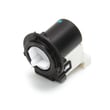
If you’re dealing with a drain issue, the drain pump motor (4681EA2001T) - washer part by lg electronics 4681EA2001T is a common wear item to inspect after you clean the drain pump filter.
Why it matters
Knowing the 10 to 15 year lifespan helps you decide when maintenance and a targeted part replacement makes sense versus planning for a replacement washer, especially if multiple major components start failing close together.
Last updated: February 2026
How to force a Kenmore Elite washer to drain?
On Kenmore washer model 79641382410, we force a drain by pausing the cycle, then running a drain-and-spin using the control panel: press POWER, press SPIN SPEED (with no cycle selected), then press START/PAUSE to pump the water out and spin. See the 79641382410 owner's manual.
Fast steps to drain (control panel method)
- Press START/PAUSE to pause the washer.
- If the door stays locked, wait; the door unlocks only when water level and temperature are safe.
- Press POWER to stop the cycle.
- Press SPIN SPEED (do not select a wash cycle).
- Press START/PAUSE; the washer should drain, then spin.
- When finished, press POWER.
If it will not drain: quick checks
A no-drain condition is usually a restriction (hose, filter, or pump) or a failed drain pump.
- Confirm the drain hose is not kinked, pinched, crushed, or stretched.
- Make sure the standpipe or drain height is not higher than 96 in. above the bottom of the washer.
- If the hose is pushed too far into a standpipe, pull it back; typical insertion is 8 to 12 in.
- If you use an extension, keep it short; long extensions can cause poor draining.
- If you hear the pump hum but water does not move, inspect the pump and hoses for a blockage.
When a part is likely needed
If the washer consistently will not drain (or drains very slowly) after hose and drain setup checks, the drain pump is a common fix.
| Symptom | Most common cause | What to check/replace |
|---|---|---|
| Hums, no drain | Blockage at pump or hose | Hoses, pump inlet, debris trap area |
| Silent, no drain | Pump not running | Wiring, then drain pump motor (4681EA2001T) - washer part by lg electronics 4681EA2001T |
| Drains but stops mid-cycle | Intermittent restriction | Hose routing, standpipe, pump impeller |
Why it matters
Forcing a proper drain protects the door lock system, prevents overflow risk from an unsecured drain hose, and helps the washer reach high-speed spin so clothes come out less wet.
Last updated: February 2026
Does my Kenmore top load washer have a filter?
Yes. Your Kenmore washer model 79641382410 is equipped with a drain pump filter that traps lint and small items (coins, buttons, keys) to help protect the drain pump and improve draining performance. The cleaning steps and access location are shown in the 79641382410 owner's manual.
What filters this washer has
This model uses two common filter points that affect filling and draining:
- Drain pump filter: catches debris before it reaches the pump
- Water inlet hose screens: small screens at the water valve connections that catch sediment
- Dispenser area: not a “filter,” but buildup here can affect water flow into the tub
Where the drain pump filter is and how to clean it
We recommend cleaning the drain pump filter anytime you have slow draining, standing water, or a musty odor.
- Unplug the washer.
- Open the drain pump filter access panel.
- Pull out the small drain hose, remove the plug, and drain water into a shallow pan.
- Twist the pump filter counterclockwise to remove it.
- Remove lint and foreign objects; rinse the filter.
- Reinstall the filter (turn clockwise), reinstall the plug, and close the access panel.
If you need the replacement pump motor for drain problems, use the exact match for this model: drain pump motor (4681EA2001T) - washer part by lg electronics 4681EA2001T.
Quick troubleshooting guide (symptom to check)
| Symptom | Most likely filter-related check | What to do next |
|---|---|---|
| Washer will not drain or drains slowly | Drain pump filter clogged | Clean the drain pump filter and check the tub-to-pump hose for debris |
| Long fill times or low water flow | Inlet hose screens clogged | Shut off water, remove hoses, rinse screens, then flush hoses into a bucket |
| Intermittent draining, rattling noise | Object in filter/pump area | Clean filter; inspect for coins, hairpins, small socks |
Why it matters
A clogged drain pump filter can cause poor draining, longer cycle times, and extra strain on the drain pump. Keeping the filter clean helps your Kenmore washer run quieter and reduces the chance of water left in the drum.
Last updated: February 2026
Where to find model number on a Kenmore washer?
On the Kenmore washer model 79641382410, the model and serial number are printed on an identification plate inside the washer door (typically on the door opening or door jamb area). We use that exact model number to match the correct parts and troubleshooting info.
Where to look first (fastest checks)
- Open the washer door and look around the door opening for a rating label
- Check the door jamb area (the cabinet frame the door closes against)
- Look along the inner front panel near the latch area
- If the label is hard to read, use a flashlight and wipe the area with a damp cloth
What the label usually includes
The identification plate typically lists:
- Model number (for example, 79641382410)
- Serial number
- Electrical ratings (voltage/amps)
- Sometimes a manufacturing date code
Why it matters
The model number is the key to getting the right Kenmore washer parts and repair instructions. Even small model-number differences can change which door lock, drain pump, or water inlet valve fits.
Common label locations by washer style
| Washer type | Most common model tag location |
|---|---|
| Front-load washer (like 79641382410) | Inside the door opening or on the door jamb |
| Top-load washer | Under the lid, on the rim of the tub opening, or on the back of the control panel |
| Compact/stacked unit | Inside the door opening or on the rear panel |
Next step after you find it
- Write down the full model number and serial number exactly as shown
- Use the model number to confirm part fit before ordering
- For model-specific diagrams and identification help, check the 79641382410 owner’s manual
Last updated: February 2026
Why is my Kenmore washer leaking from the bottom?
A bottom leak on Kenmore washer model 79641382410 usually comes from a loose or damaged drain path (tub-to-pump hose, pump, or clamps) or a door boot leak that runs down the front frame and drips underneath. We start by checking hoses, the drain pump area, and the door seal.
Quick checks (fastest wins)
- Unplug the washer; turn off both water supply faucets.
- Pull the washer forward and look for a trail: front-center (door area) vs. back (hoses) vs. middle (pump).
- Check the standpipe or laundry tub for overflow; a slow drain can make water back up.
- Confirm the drain hose is installed correctly (not shoved too far into the standpipe and not too high); see the 79641382410 owner's manual.
- Run a short Rinse/Spin with no clothes and watch where the first drip appears.
Most common leak sources underneath
| Where you see water | Most likely cause | What to do next |
|---|---|---|
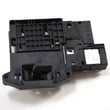
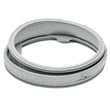
| Front, then dripping under | Door boot torn, folded, or dirty | Inspect and clean the gasket; replace if split (see lg washer door boot MDS47123602) |
| Middle/bottom near front | Drain pump or pump filter area leaking | Check for debris and leaks; consider replacing the drain pump motor (4681EA2001T) - washer part by lg electronics 4681EA2001T |
| Middle/bottom, hose area | Tub-to-pump hose loose or cracked | Inspect the washer tub-to-pump hose 4738ER1002A and clamps |
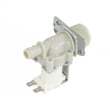
| Back of washer | Fill hoses or inlet valve leaking | Tighten connections; inspect valve body (see washer water inlet valve 5221ER1003A) |
Why it matters
A small leak can quickly damage flooring and can also lead to poor draining or spin performance if water is escaping from the pump or drain hose setup. The manual also notes drain height and insertion limits that help prevent drain problems that can look like leaks.
When a part is the fix
- If the leak is at the pump housing or you see water at the pump during drain, the pump assembly is the most common repair.
- If the leak tracks from the door opening, the door boot is the most common repair.
- If the leak appears only during fill, focus on inlet hoses and the inlet valve.
Last updated: February 2026
What is the cubic feet capacity of a Kenmore washer model 79641382410?
The tub capacity (cubic feet) for Kenmore washer model 79641382410 is listed in the product specifications in the Use & Care Guide; use the spec table in the 79641382410 owner's manual to get the exact cu. ft. value for your unit.
How to find the exact capacity in the manual
Use the model tag and the specifications pages so you match the correct 796-series washer.
- Open the door and locate the model and serial label inside the door opening
- Confirm the full model number is 79641382410 (not the shortened 796.4138 prefix)
- In the manual, look for Key dimensions and specifications or a Specifications table
- Find the line for capacity (sometimes shown as “tub capacity” or “volume”)
- Record the value in cu. ft. for future reference when choosing load size
Typical capacity range (for context)
Most Kenmore 796 front-load washers fall into a mid-to-large capacity range; the manual gives the exact number for 79641382410.
| Washer type | Typical capacity range | What it means for loads |
|---|---|---|
| Front-load washer (Kenmore 796 family) | 4.0 to 5.0 cu. ft. | Handles bulky items and larger mixed loads |
Why it matters
Capacity affects how full the drum should look during washing. Correct loading improves tumble action, rinsing, and spin balance; overloading increases vibration and can contribute to out-of-balance conditions.
Last updated: February 2026


