Owner’s manual
 Error Codes


Where is the model number on Kenmore Elite dryer?
On Kenmore Elite dryer model 11085872400, the model and serial number label is located at the top inside the dryer door well (open the door and look up along the inside opening). This is the quickest place to confirm the exact model number before ordering parts.
How to find it fast
- Unplug the dryer (or switch off the breaker) before reaching around the cabinet opening.
- Open the dryer door fully.
- Look at the top inside edge of the door opening (the door well).
- Find the sticker or metal tag labeled Model and Serial.
- Write down the full model number (for this unit it starts with 110.).
- Use that exact model number when matching parts like a heating element or door switch.
What the label helps you do
The model/serial label is used to match the correct Kenmore Elite dryer parts and documentation.
| What you need | Where it’s used | Why it matters |
|---|---|---|
| Model number (example: 11085872400) | Parts lookup, diagrams | Ensures the right fit and wiring style |
| Serial number | Service history, production run | Helps identify version changes |
| Purchase date (your records) | Warranty and service calls | Speeds up support and repair decisions |
Why it matters
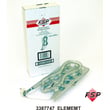
Kenmore Elite dryers often have multiple versions that look similar. Confirming the model number from the door well prevents ordering the wrong component (for example, a heater circuit part such as the dryer heating element WP3387747 or a safety part like the dryer thermal cut-off fuse kit 279973). For additional model-specific details, we use the 11085872400 owner's manual.
Last updated: February 2026
How to reset a Kenmore Elite dryer?
To reset a Kenmore Elite dryer model 11085872400, we stop the current cycle and clear the control settings by pressing PAUSE/CANCEL twice, then reselecting a cycle and pressing and holding START. This restores normal operation after a wrong selection or a control lockout.
Quick reset steps (11085872400)
- Press PAUSE/CANCEL two times to stop the dryer and clear settings.
- Wait about 10 seconds.
- Select the desired cycle (Auto Dry or Timed Dry) and any options.
- Press and hold START for about 3 seconds to begin.
- If the dryer shut off after being paused for more than 5 minutes, select the cycle again before starting.
If the controls are locked
This model uses a Control Locked feature that can look like the dryer is not responding.
- Press and hold AUTO DRY LEVEL for 3 seconds.
- If the lock indicator turns off, try starting the cycle again.
| Symptom | What it usually means | What to do |
|---|---|---|
| Buttons do not respond | Control Locked is on | Hold AUTO DRY LEVEL 3 seconds |
| Cycle won’t change after Start | Cycle is running | Press PAUSE/CANCEL once to pause, change option, then hold START |
| Dryer stops and settings clear | PAUSE/CANCEL pressed twice | Reselect cycle and press/hold START |
Why it matters
A proper reset clears an invalid cycle selection and gets the electronic control back to a known state. It also helps you quickly rule out a simple control lock before replacing parts like the drive motor or heating element.
Helpful references
- Use the exact button sequences and feature descriptions in the 11085872400 owner’s manual.
- If you’re troubleshooting a display code on a Kenmore Elite dryer, use Kenmore elite dryer error codes to match the code to the most likely cause.
Last updated: February 2026
What is the cubic foot capacity of the Kenmore dryer model 11085872400?
The Kenmore Elite dryer model 11085872400 has a 7.0 cu. ft. drum capacity, which is considered a full-size 27-inch class dryer. That capacity is a good fit for everyday family loads like towels, jeans, and mixed laundry.
How to confirm capacity for your exact configuration
We recommend checking the model specifications section in the 11085872400 owner's manual. Capacity is sometimes listed alongside electrical requirements, venting guidance, and cycle features.
What 7.0 cu. ft. means in real use
A 7.0 cu. ft. dryer typically handles:
- A full basket of mixed clothing
- A medium to large load of towels
- Bulky items (comforters) one at a time, depending on fill level
- Better airflow when you avoid packing the drum tightly
Load sizing tips (to dry faster and protect parts)
Overloading reduces airflow and can increase heat stress on components like the heating system and thermostats. For best results:
- Fill the drum loosely; leave space for items to tumble
- Use timed dry for very small loads (sensor cycles can end early)
- Clean the lint screen before every load
- Keep venting clear to prevent long dry times
- Stop and shake out heavy items (towels, hoodies) if they ball up
Quick reference table
| Item type | Typical load guidance in a 7.0 cu. ft. dryer | What to watch for |
|---|---|---|
| Towels | Medium to large load | Long dry times if packed tight |
| Jeans | Medium load | Slow drying at seams and waistbands |
| Comforter | Usually 1 at a time | Poor tumbling if overfilled |
| Mixed laundry | Full load | Separate heavy and light fabrics |
Why it matters
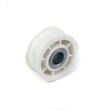
Knowing the capacity helps us choose the right cycle, avoid overloading, and reduce wear on drum support and drive components. If you notice squealing or thumping with heavier loads, inspecting drum support parts such as the support WPW10314173 is a smart next step.
Last updated: February 2026
How do I know if my Kenmore dryer thermal fuse is blown?
On Kenmore Elite dryer model 11085872400, a blown thermal fuse commonly shows up as a dryer that will not start or runs but will not heat. We confirm it by unplugging the dryer and checking the fuse with a multimeter for continuity; no continuity means the fuse is blown. See the 11085872400 owner's manual for access and safety guidance.
Quick symptoms checklist
- Dryer will not start even with the door closed and a cycle selected
- Dryer runs but produces no heat (clothes stay damp)
- Cycle seems normal but drying performance suddenly drops
- You recently had poor airflow (long dry times, hot cabinet, weak vent exhaust)
- The problem appeared after a vent restriction or lint buildup
How we test the thermal fuse (safe, reliable method)
- Disconnect power (unplug the cord; electric shock risk is real).
- Access the thermal fuse area (typically on the blower housing or exhaust duct).
- Remove at least one wire from the fuse terminal.
- Measure continuity across the fuse with a multimeter.
| Meter result | What it means | Next step |
|---|---|---|
| Near 0 ohms / continuity | Fuse is good | Keep troubleshooting heat or start circuit |
| OL / no continuity | Fuse is blown | Replace the fuse and correct the airflow problem |
Why the fuse blows (and what to fix so it does not happen again)
A thermal fuse opens when the dryer overheats. On this model, overheating is most often caused by restricted airflow.
- Clean the lint screen and lint screen housing
- Inspect the exhaust vent for crushing, kinks, or heavy lint
- Check outside hood airflow after 5 to 10 minutes of running
- Replace plastic or foil venting with heavy metal or flexible metal vent
Parts that are often involved in “no heat” complaints
These are common heat-related components for this model that we see replaced during diagnosis:
- Dryer thermal cut-off fuse kit 279973 (overheat protection components)
- Dryer high-limit thermostat WP3391914 (limits heater temperature)
- Dryer heating element WP3387747 (electric heat source)
Why it matters
Replacing a blown fuse without fixing the venting usually leads to repeat overheating, longer dry times, and additional failures in the heating circuit.
Last updated: February 2026
How much does it cost to replace a heating element in a Kenmore dryer?
For a Kenmore Elite dryer model 11085872400, heating-element replacement typically costs $150 to $400 total (part plus labor). If you do it yourself, the part is usually the main cost; for this model, the dryer heating element WP3387747 is a common replacement.
Typical cost breakdown
Costs vary by location and whether you hire service, but these ranges are realistic for most electric Kenmore dryers.
- DIY part only: about $70 to $120
- Service call / diagnostic: about $80 to $150
- Labor (if approved repair): about $100 to $250
- Total installed (most common): about $150 to $400
| Scenario | What you pay for | Typical total |
|---|---|---|
| DIY replacement | Part (and possibly a wire kit) | $70 to $140 |
| Pro repair, straightforward | Diagnostic + part + labor | $200 to $400 |
| Pro repair, extra issues found | Diagnostic + multiple parts + labor | $300 to $550 |
Parts that commonly get replaced with the element
When an element fails, we often see heat damage at terminals or a heat-related safety part open. These are the most common add-ons to budget for:
- Dryer heating element WP3387747
- Dryer heating element wire kit 279457 (if terminals are overheated or brittle)
- Dryer thermal cut-off fuse kit 279973 (if the dryer overheated)
- Vent cleaning supplies or duct service (restricted airflow is a frequent root cause)
Why it matters
A failed heating element is only one reason an electric dryer has no heat. Your 11085872400 manual recommends checking power supply first because many dryers use two fuses or breakers; if one trips, the dryer can run but not heat. Use the troubleshooting steps in the 11085872400 owner's manual to confirm the symptom before buying parts.
Quick checks before you spend money
- Run the dryer 5 minutes, then open the door and feel for heat
- Verify both breakers/fuses are on and tight
- Clean the lint screen and confirm strong airflow at the exhaust
- If there is still no heat after power and airflow checks, test the heating circuit components
Last updated: February 2026
What are the codes for Kenmore Elite dryer?
On Kenmore Elite dryer model 11085872400, the display code “PF” indicates a power failure interrupted the cycle; press and hold START to restart. “E” service codes (E1, E2, E3) indicate a condition that needs service attention (see the 11085872400 owner’s manual).
Common code messages and what to do
- PF (power failure): Cycle was interrupted; press and hold START to restart.
- E1, E2, E3 (service codes): Service is needed.
- If the dryer will not run, confirm the door is fully closed and the breaker is on.
- If clothes are not drying, check airflow (lint screen and venting) before assuming a heating problem.
- If codes repeat after a restart, stop the cycle and address the underlying issue.
Quick troubleshooting checklist (before you assume a bad part)
- Clean the lint screen and confirm strong airflow at the outside vent hood.
- Check for a crushed or kinked exhaust duct.
- Reset the dryer by unplugging (or switching off the breaker) for 1 minute, then retry.
- Avoid extension cords; use a proper 240V dryer circuit.
- If the drum turns but there is no heat, inspect heating circuit components.
Parts that commonly relate to “no heat” symptoms
These parts do not “set” PF or E-codes by themselves, but they are common fixes when drying performance is poor:
| Symptom | Common checks | Example part for this model |
|---|---|---|
| Runs but no heat | Heating circuit continuity, airflow restrictions | Dryer heating element WP3387747 |
| Overheats or shuts heat off early | Vent restriction, temperature sensing | Dryer thermistor WP8577274 |
| No heat after overheating event | Thermal safety devices open | Dryer thermal cut-off fuse kit 279973 |
Why it matters
Codes help you separate a simple interruption (like PF) from a true fault condition (E1/E2/E3). Fixing airflow issues first also prevents repeat overheating problems and protects the heating system.
Last updated: February 2026
Why is Kenmore Elite dryer not heating?
If your Kenmore Elite dryer model 11085872400 runs but doesn’t heat, the most common causes are a tripped breaker (electric dryers use two), restricted venting, or a failed heating circuit part such as the heating element, thermal cut-off, or high-limit thermostat. Use the 11085872400 owner's manual troubleshooting checks first.
Quick checks we recommend first
- Confirm the cycle is a heated cycle (not Air Dry).
- Check both house fuses or both circuit breakers; the drum can tumble with only one side of power.
- Clean the lint screen and check for strong airflow at the outside hood after 5 to 10 minutes.
- Inspect the vent for crushing, kinks, or heavy lint buildup.
- Make sure the dryer is operating in a space above 45°F; low temps can affect cycle performance.
Parts that commonly stop heat on this model
If power and airflow are good, these parts are the usual suspects on Kenmore dryers like 11085872400:
| Symptom | Most likely part | Example part for this model |
|---|---|---|
| Runs, no heat at all | Heating element open | Dryer heating element WP3387747 |
| Runs, no heat; often after overheating | Thermal cut-off opened | Dryer thermal cut-off fuse kit 279973 |
| Overheats or cycles heat oddly | Temperature sensing issue | Dryer thermistor WP8577274 |
| Shuts heat off too soon | Safety thermostat issue | Dryer high-limit thermostat WP3391914 |
How we test it (basic DIY)
- Unplug the dryer before accessing internal components.
- Use a multimeter to check continuity on the heating element and safety fuses.
- If a thermal cut-off is open, also correct the vent restriction before replacing parts.
- After reassembly, run a full-heat cycle and check for heat after about 5 minutes.
Why it matters
A clogged exhaust vent is the #1 reason dryers lose heat repeatedly; it can overheat the heater housing and open safety devices. Restoring proper airflow helps the dryer heat correctly and prevents repeat failures.
Last updated: February 2026