Owner’s manual
 Error Codes


What size is Kenmore refrigerator model 79579783900?
For Kenmore Elite refrigerator model 79579783900, the exact exterior dimensions (width, depth, height) are listed in the product specifications section of the 79579783900 owner's manual. This model is a bottom-freezer style, and most units in this class are about 33 inches wide and 67 to 70 inches tall.
How to confirm the exact size for your kitchen opening
Use the specifications and installation clearances in the 79579783900 owner's manual and measure your space before moving the refrigerator.
- Measure the opening width at the front and back (cabinets are not always square).
- Measure height to the lowest overhead cabinet or soffit.
- Measure depth from the back wall to the front edge of the countertop.
- Plan for door swing and drawer pull-out clearance.
- Allow airflow space behind and above the cabinet per the manual.
Typical size ranges for this Kenmore 795 bottom-freezer platform
These ranges help with planning when you are comparing models or estimating fit.
| Measurement | Typical range | What affects it most |
|---|---|---|
| Width | 32 to 34 in. | Cabinet class (33-in. standard) |
| Height | 67 to 70 in. | Hinge design, leveling legs |
| Depth | 30 to 34 in. | Handles, door thickness |
Why it matters
Correct sizing prevents installation problems like doors hitting cabinets, the freezer drawer not opening fully, or poor cooling from restricted airflow. It also helps you avoid kinking the water line when sliding the refrigerator into place.
Last updated: January 2026
What does DH mean on Kenmore Elite refrigerator?
On Kenmore Elite model 79579783900, DH typically indicates a defrost heating issue (the refrigerator is not sensing normal defrost heater operation). This often shows up with warming temperatures, frost buildup on the evaporator cover, or reduced airflow in the fresh food section.
What to check first (fast, no tools)
- Power-cycle the refrigerator: unplug for 2 minutes, then plug back in.
- Confirm doors fully close and gaskets seal; air leaks can worsen frost and defrost problems.
- Listen for the evaporator fan; weak or no airflow can mimic a defrost failure.
- Check for heavy frost on the freezer back wall (a strong sign of a defrost system problem).
- Verify the unit is not in Demo Mode (cooling disabled); the display may show OFF.
Likely causes and the parts involved
A DH-related defrost problem is usually tied to one of these areas:
- Defrost heater circuit (heater, wiring, connectors)
- Temperature sensing (thermistor) and control logic
- Main control board not powering the heater
| Symptom you notice | Most likely area | What it affects |
|---|---|---|
| Heavy frost, weak airflow | Defrost system | Cooling performance and temperatures |
| Intermittent DH, temps swing | Sensor or control | Defrost timing and heater run time |
| No fan sound, warm fridge | Air circulation | Even cooling across compartments |
Model-specific parts that commonly relate to the symptom
If you confirm a defrost or airflow issue, these model-matched parts are common suspects:
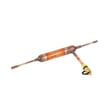
- Lg refrigerator defrost heater 5300JK1005D
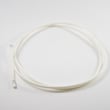
- Refrigerator temperature sensor and cover ACQ73244001
- Refrigerator electronic control board EBR60028302
- Lg refrigerator evaporator fan motor 4681JB1027C
Why it matters
When defrost heat is not working correctly, frost can block airflow across the evaporator. That forces longer run times, causes warm spots, and can lead to poor ice production and inconsistent refrigerator temperatures.
Reference for settings and troubleshooting steps
Use the 79579783900 owner's manual to confirm control settings, Demo Mode steps, and the troubleshooting checks for cooling and defrost-related symptoms.
Last updated: January 2026
What are the common problems with Kenmore Elite refrigerators?
Common problems on the Kenmore Elite 79579783900 bottom-mount refrigerator include warm temperatures (often from dirty condenser coils or airflow issues), frost buildup from doors not sealing or being opened often, and vibration or rattling when the unit is not level. Our 79579783900 owner's manual troubleshooting section walks through these checks.
Most common symptoms and what usually causes them
- Not cooling well: dirty condenser coils, blocked air vents, doors not fully closed, controls not set correctly
- Freezer frost or ice crystals on food: door not closing properly, frequent door openings letting in humid air
- Compressor runs a lot: warm room, frequent door openings, large food load, dirty condenser coils
- Vibration or rattling: weak or uneven floor, leveling legs need adjustment
- Ice tastes or smells off: new icemaker, ice stored too long
Quick checks we recommend first (in order)
- Confirm doors seal and close: push doors firmly shut; clear packages blocking shelves and bins.
- Clean condenser coils: dirty coils reduce heat transfer and make the compressor work harder.
- Check temperature settings: adjust the refrigerator control first; wait 24 hours between adjustments.
- Verify airflow: keep items from blocking vents in the refrigerator and freezer.
- Level the refrigerator: correct wobble and reduce vibration noise.
Parts that commonly relate to these problems
| Symptom | Likely area | Example part for this model |
|---|---|---|
| Interior light stays on, warm temps, door ajar issues | Door sensing | Refrigerator door switch 6600JB1010A |
| Frost, moisture, poor sealing | Door seal | Refrigerator door gasket MDS64172919 |
| Warm temps, fan noise, weak airflow | Evaporator airflow | Lg refrigerator evaporator fan motor 4681JB1027C |
| No water to dispenser or icemaker | Water supply control | Refrigerator water inlet valve MJX41178908 |
Why it matters
These issues are connected: a small air leak at the door gasket or dirty condenser coils can raise temperatures, increase run time, and lead to frost or odor problems. Fixing the root cause protects food quality and reduces wear on the compressor.
Last updated: January 2026