Installation guide
 Owner’s manual


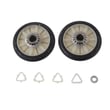
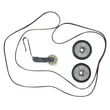
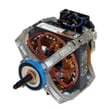
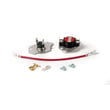
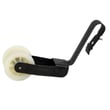
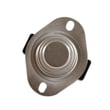
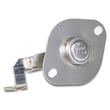
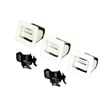
How do I know if my Kenmore dryer thermal fuse is blown?
On Kenmore model 11068652700, a blown thermal fuse commonly shows up as a dryer that will not run at all, or a dryer that tumbles but has no heat. The sure way to confirm is a continuity test with a multimeter after unplugging the dryer; no continuity means the fuse is blown.
Quick symptoms to look for
- Dryer will not start even though the door is closed and a cycle is selected
- Start button is pressed firmly but nothing happens
- Drum turns but there is no heat (electric dryers can still tumble if one side of the 240V supply is lost)
- Cycle seems to run but clothes stay damp and cool
- Problem started after a vent restriction or overheating event
Confirm it with a multimeter (best test)
- Unplug the dryer or disconnect power at the breaker.
- Access the thermal fuse area (follow the access steps in the 11068652700 owner's manual).
- Remove at least one wire from the fuse terminal.
- Check continuity across the fuse.
What the meter reading means
| Meter result | What it means | What to do next |
|---|---|---|
| Beep or near 0 ohms | Fuse is good | Keep troubleshooting airflow, heat circuit, or power supply |
| No beep or OL/infinite | Fuse is blown | Replace the fuse and correct the overheating cause |
Why it matters (and what to fix with it)
A thermal fuse is a one-time safety device; it opens when the dryer overheats. If you replace the fuse without fixing the cause, it can blow again quickly. The most common cause is restricted airflow.
Checks we recommend before and after replacement
- Clean the lint screen and confirm it is not coated with fabric softener residue
- Inspect and clear the vent duct for crushing, kinks, or lint buildup
- Verify the dryer door closes and the door switch works (a bad switch can mimic a “won’t start” issue)
- For electric dryers, confirm the home has full 240V supply (two breakers or fuses)
- If the dryer tumbles but has no heat, test heat components such as the dryer thermal cut-off fuse kit 279816, operating thermostat, and heating element
Last updated: February 2026
How do I tell if my dryer heating element is bad?
If your Kenmore dryer model 11068652700 tumbles but has no heat, takes much longer to dry, or trips the breaker when heat should come on, the heating element is a prime suspect. Confirm it with a multimeter continuity test and a short-to-ground check.
Fast signs the element is failing
- Drum turns normally but clothes stay damp
- Dry times suddenly increase on the same cycle
- Heat is intermittent (warms briefly, then goes cold)
- Burning smell or visible scorching near the heater area
- Breaker trips when the heater should energize (often a grounded element)
Multimeter test (most reliable)
Unplug the dryer before testing; use the access and safety steps in the 11068652700 installation guide.
- Remove at least one wire from the element terminal(s) so you do not read back through the circuit
- Continuity test: across the two heater terminals; you should read continuity
- Resistance: most electric dryer elements read about 10 to 50 ohms
- Short to ground: test from either heater terminal to the metal heater housing; you should read no continuity
How to interpret results
| Meter result | What it means | What to do |
|---|---|---|
| No continuity (open) | Coil is broken | Replace the element |
| Continuity to housing (grounded) | Coil is shorted | Replace the element |
| Element tests good | Heat issue elsewhere | Check power, thermostats, airflow |
Other common “no heat” causes to rule out
Our troubleshooting guidance for electric dryers notes the drum can run with only part of the supply; you need full power for heat. Use the checks in the 11068652700 owner’s manual.
- Reset both breakers (electric dryers use 2 fuses/breakers)
- Verify the vent is not crushed or blocked (poor airflow overheats the heater circuit)
- Test safety controls such as the high-limit thermostat and thermal cut-off
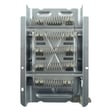
Part that matches the heater on this model
Why it matters
Testing prevents replacing the wrong part; a vent restriction or power issue can mimic a bad heater and keep the dryer running with no heat.
Last updated: February 2026
How do I tell what model my Kenmore dryer is?
Your Kenmore dryer’s model number is printed on the model and serial number label; on model 11068652700, that label is located at the top inside the dryer door well. Once you have the full model number, we use it to match the correct parts, diagrams, and specifications in the 11068652700 owner’s manual.
Where to look on the dryer
Check these common Kenmore dryer label locations (start with the door opening):
- Top inside the dryer door well (most common on Kenmore 110-series)
- Inside the door opening on the cabinet frame
- Back panel of the dryer cabinet
- Near the lint screen housing (varies by design)
What to write down (and why)
Record the full model number and serial number exactly as shown on the label.
- Model number: identifies the exact design family so parts like a belt, thermostat, or timer match
- Serial number: helps confirm production details when there are mid-series changes
- Purchase date (if known): useful for maintenance planning and service history
| Item on label | Example format | What we use it for |
|---|---|---|
| Model number | 11068652700 | Correct parts list and diagrams |
| Serial number | Letters and numbers | Version and production run clues |
| Purchase date | Month/day/year | Maintenance and ownership records |
Why it matters
Kenmore model prefixes (like 110) are especially important because they narrow down the platform the dryer was built on. That prevents ordering look-alike parts that do not fit, such as a door switch, heating element, or drum belt.
Quick tip if you are ordering a common wear part
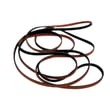
If your dryer is squealing or not tumbling, the belt and idler are frequent wear items. For model 11068652700, a common belt option is the dryer drum belt 341241.
Last updated: February 2026
How to hard reset a Kenmore dryer?
To hard reset your Kenmore dryer model 11068652700, disconnect power by unplugging the dryer (or switching the breaker off) for about 1 minute, then restore power and start a Timed Dry cycle. This clears many temporary control and cycle issues.
Hard reset steps (safe and effective)
- Turn the Cycle Selector to Off.
- Unplug the dryer (or turn the circuit breaker Off).
- Wait 1 minute.
- Restore power.
- Close the door fully.
- Select Timed Dry (heated) and press Push to Start.
For cycle stop and restart details specific to this model, follow the steps in the 11068652700 owner’s manual.
If the dryer still will not start after the reset
Use this quick checklist from the installation diagnostic guidance:
- Confirm the controls are set to a running position (not Off).
- Press Push to Start firmly.
- Verify the dryer is plugged in and the breaker is not tripped.
- Make sure the dryer door is fully closed.
- Check that the vent is not crushed or kinked (restricted airflow can trigger heat and safety problems).
If the door is closed but the dryer acts like it is open, the dryer door switch WP3406105 is a common no-start suspect.
What a “reset” does (and does not do)
A hard reset restores power to the timer/control circuit and can clear a stuck cycle or unresponsive behavior. It does not fix a failed part such as a blown thermal cut-off, bad motor, or broken belt.
| Symptom after reset | Most common area to check | Example part for this model |
|---|---|---|
| Won’t start, door must be slammed | Door switch/latch alignment | WP3406105 |
| Runs but no heat | Heating circuit/airflow | 279838 |
| Runs but drum won’t turn | Belt/idler | 341241, WP691366 |
Why it matters
Resetting is the fastest first step because it rules out a temporary control state before you spend time on deeper troubleshooting. If the dryer still fails to start, we focus next on power, door safety switch, and airflow.
Last updated: February 2026
How to tell if a dryer start switch is bad?
On Kenmore dryer model 11068652700, a bad start switch typically shows up as a dryer that will not run even though a cycle is selected and the door is closed. The most reliable check is a continuity test: the switch should read closed (continuity) only while you press PUSH TO START.
Quick checks before testing the switch
We recommend ruling out the common “no start” causes listed in the troubleshooting steps in the 11068652700 owner’s manual.
- Confirm the dryer door is fully closed (a door that is slightly open will prevent starting).
- Make sure a cycle is selected (some dial positions will not start if the control is effectively at Off).
- Press PUSH TO START firmly.
- Verify power: the dryer is plugged in and the house fuse(s) or breaker(s) are OK.
- If it is an electric dryer, confirm you have the correct 240V supply (a power issue can mimic a bad switch).
How to test the start switch with a multimeter
- Unplug the dryer (or shut off the breaker) before accessing any wiring.
- Access the console area where the start switch is mounted (follow the 11068652700 installation guide for safe access and setup basics).
- Label and remove the wires from the start switch terminals.
- Set your multimeter to continuity (or lowest ohms).
- Test the switch:
- Button not pressed: meter should show open (no beep, OL/infinite).
- Button pressed and held: meter should show closed (beep, near 0 ohms).
What the readings mean
| Test result | What it indicates | Next step |
|---|---|---|
| No continuity when pressed | Start switch contacts are failed | Replace the start switch |
| Continuity all the time | Switch is stuck closed | Replace the start switch |
| Continuity only when pressed | Start switch is likely OK | Check door switch, timer, thermal fuse, or motor circuit |
Why it matters
A failed start switch prevents the motor circuit from energizing, so the dryer will appear “dead” even with the controls set correctly. Confirming the switch with a meter helps you avoid replacing parts unnecessarily.
Last updated: February 2026
Is it worth replacing the heating element in a dryer?
Yes, it’s usually worth replacing the heating element in your Kenmore dryer model 11068652700 when the dryer runs but has no heat, because the repair cost is typically far lower than replacing the whole dryer and it often restores normal drying performance.
When replacement makes sense
- The drum tumbles normally but clothes stay cold or damp
- You have correct power (electric dryers need full 240V; a tripped breaker can cause “tumbles but no heat”)
- The venting is clear and airflow is strong (restricted venting can overheat and damage heat-related parts)
- The rest of the dryer is in good shape (drum support, belt, motor sound normal)
- You want a predictable fix instead of replacing the appliance
Check these first (fast, high-impact)
Our troubleshooting steps for this Kenmore dryer focus on power and airflow before parts:
- Confirm both household fuses are good or both breakers are on (electric dryers commonly use two)
- Make sure the cycle is selected and the Start button is pressed firmly
- Verify the door fully closes
- Inspect the vent for crushing or blockage; an AF code points to vent restriction
- If you see an L2 code during the installation diagnostic, it points to a home power supply issue that can prevent the heater from turning on
For model-specific checks and troubleshooting, use the 11068652700 installation guide.
Common parts involved in “no heat” on this model
A heating element is a frequent cause, but it is not the only one. Here’s a practical way to think about it:
| Symptom | More likely cause | Example part to consider |
|---|---|---|
| Tumbles, no heat | Heating circuit issue | Dryer element 279838 |
| Overheats, then no heat | Safety cutout opened | Dryer thermal cut-off fuse kit (heat-related safety) |
| Weak airflow, long dry times | Venting or blower issue | Blower wheel or vent cleaning |
Why it matters
A dryer that tumbles without heat is often a power-supply or heating-circuit problem, not a “whole dryer” failure. Fixing the root cause restores drying, helps prevent repeat overheating, and avoids unnecessary replacement.
Last updated: February 2026