Owner’s manual
 Error Codes



What model is my Kenmore Elite refrigerator?
Your Kenmore Elite refrigerator model number is printed on the identification label inside the fresh food (refrigerator) compartment; on model 795.76084600, it’s located on the right-hand side wall. Use that full number (including all digits) when ordering parts or checking features in the 79576084600 owner's manual.
Where to look for the model and serial label
Check these common label locations on Kenmore Elite bottom-mount refrigerators:
- Inside the refrigerator compartment on the right-hand side wall (most common)
- On the side wall near the crisper drawer area
- On the inside wall of the refrigerator compartment near the front frame
- Occasionally on the freezer compartment wall (varies by design)
What to write down (and why)
Record both numbers exactly as shown on the label:
- Model number: identifies the exact design family (needed for correct parts diagrams)
- Serial number: identifies the production run (helps match revisions)
- Color code or suffix (if shown): can affect door, handle, and trim parts
Quick ID checklist
| Item | Example format | Used for |
|---|---|---|
| Model number | 795.76084600 | Parts lookup, manuals, feature match |
| Serial number | Letters and numbers | Production date range, version match |
| Color code/suffix | May appear after model family | Cosmetic parts compatibility |
Why it matters
Kenmore Elite model numbers that start with 795 often share similar styling, but parts like door gaskets, drawer rails, and electronic controls can differ by revision. Using the exact model number prevents ordering a door switch, thermistor, or shelf that will not fit.
Last updated: February 2026
What is the average lifespan of a Kenmore Elite refrigerator?
A Kenmore Elite refrigerator like model 79576084600 typically lasts 10 to 15 years with normal household use. Regular cleaning, stable temperatures, and quick fixes for airflow, door sealing, and defrost issues are what most often push real-world life toward the high end.
What affects lifespan the most
- Condenser coil cleanliness: Dust buildup makes the compressor run hotter and longer.
- Door gasket condition: Air leaks force longer run times and can cause frost.
- Airflow inside: Overpacking blocks vents and stresses the cooling system.
- Power interruptions: Frequent outages and surges shorten control and compressor life.
- Ice maker and water system upkeep: Clogs and leaks create avoidable wear.
Maintenance schedule that helps you reach 15 years
Use the cleaning and care guidance in the 79576084600 owner's manual.
| Task | How often | Why it matters |
|---|---|---|
| Clean condenser coils | Every 6 to 12 months | Reduces heat load and run time |
| Wipe door gaskets and door liner | Monthly | Prevents air leaks and frost |
| Check temps (fresh food and freezer) | Monthly | Avoids overcooling and compressor strain |
| Clear/inspect drain area for clogs | As needed | Prevents puddles and ice buildup |
Quick “replace vs. repair” guide
These are common, practical decision points for a bottom-mount refrigerator:
| Symptom | Often worth repairing when… | Often time to replace when… |
|---|---|---|
| Warm temps | It is a fan, sensor, or defrost issue | Cooling is inconsistent even after key repairs |
| Frost buildup | Gasket or defrost components are the cause | Frost returns quickly after multiple repairs |
| Water leaks | It is a drain or tubing issue | Cabinet or insulation damage is present |
Why it matters
A refrigerator’s sealed system is built for long service, but efficiency losses from dirty coils, poor door sealing, and airflow restrictions make the unit run harder every day. Keeping those basics in check is the most reliable way to extend the life of your Kenmore Elite 79576084600.
Last updated: February 2026
Is top mount or bottom mount better?
For most households, a bottom-mount refrigerator like Kenmore Elite 79576084600 is better because fresh foods sit at eye level and the freezer is in a pullout drawer for easier organization. A top-mount is often the better pick if you want the lowest upfront cost and simpler access to the freezer.
Quick comparison
| Feature | Top-mount (freezer on top) | Bottom-mount (freezer drawer) |
|---|---|---|
| Fresh food access | You bend more | More at eye level |
| Freezer access | Easier for frequent freezer use | Great for bulk storage in baskets |
| Organization | Typically simpler shelving | Typically more drawer and bin organization |
| Energy use (typical) | Often slightly lower | Often slightly higher |
| Repairs | Usually simpler layout | More drawer/rail hardware to maintain |
When a bottom-mount is the better choice
- You use the refrigerator section more than the freezer.
- You want better day-to-day ergonomics (less bending for milk, produce, leftovers).
- You like pullout baskets for frozen foods.
- You want easier door alignment and closing once leveled correctly (common on heavier doors).
When a top-mount is the better choice
- You use the freezer more often than the fresh food section.
- You want a simpler design with fewer drawer-slide components.
- You want the most budget-friendly option in many lineups.
What matters for performance (either style)
Even the “better” layout will feel worse if the refrigerator is not set up correctly. For model 79576084600, we recommend following the leveling and door-alignment steps in the 79576084600 owner's manual so doors seal and close properly.
Setup checklist
- Level the cabinet so doors close easily and seal evenly.
- Set initial temperatures to 37°F for fresh food and the recommended freezer setting.
- Allow 2 to 3 hours of run time before loading food.
- Keep air vents clear so cold air can circulate.
Why it matters
Choosing the right mount style affects daily comfort, food organization, and how often doors are opened and left ajar. Better access and organization usually means steadier temperatures and fewer “door left open” issues over time.
Last updated: February 2026
How many cubic feet is the Kenmore Elite?
The Kenmore Elite 79576084600 bottom-mount refrigerator’s exact total cubic-foot capacity is listed on the model’s rating label and in the 79576084600 owner's manual. For most Kenmore Elite bottom-mount refrigerators, total capacity commonly falls in the 20 to 30 cu. ft. range.
Where to find the exact capacity for model 79576084600
Use these quick checks to get the precise number for your refrigerator:
- Check the model and serial (rating) label inside the fresh food compartment (often on a side wall near the crisper area).
- Look for a “Capacity” or “Total volume” line on the label.
- Confirm the same value in the specifications section of the 79576084600 owner's manual.
- If you have the freezer drawer open, also check for a label on the left or right interior wall.
Typical capacity ranges (so you know what to expect)
If you are comparing refrigerators or planning kitchen storage, these typical ranges help set expectations:
| Refrigerator style | Typical total capacity | Best for |
|---|---|---|
| Bottom-mount (freezer drawer) | 20 to 30 cu. ft. | Balanced fresh food and freezer access |
| French door (wide) | 25 to 30+ cu. ft. | Large families, wide shelves |
| Top freezer | 14 to 22 cu. ft. | Smaller kitchens, value-focused |
Why it matters
Cubic feet affects how much food you can store and how you organize shelves, crispers, and freezer bins. It also helps when choosing replacement storage parts such as a refrigerator glass shelf 4890JL1002M or drawer hardware.
Last updated: February 2026
How do I reset a Kenmore refrigerator?
To reset your Kenmore Elite refrigerator model 79576084600, turn the temperature control to OFF, disconnect power by unplugging the cord, then restore power and set the control back to your normal setting. This power-cycle reset clears many control glitches and restores normal operation.
Quick reset steps (recommended)
- Turn the refrigerator control (thermostat) to OFF.
- Unplug the refrigerator from the wall outlet (do not use an extension cord).
- Wait 2 to 5 minutes.
- Plug the refrigerator back into a properly grounded 3-prong outlet.
- Set the refrigerator control back to the desired temperature.
- Allow 24 hours for temperatures to fully stabilize after any control change.
If it still will not run after the reset
Use this checklist to narrow down the cause:
- Confirm the power cord is fully seated in the outlet.
- Check the house circuit breaker or fuse.
- Make sure the control is not still set to OFF.
- Wait about 30 minutes in case the refrigerator is in a defrost cycle.
- If the interior lights do not work, reseat or replace the bulb after turning the control to OFF and unplugging.
What “reset” does (and does not) do
| Reset method | What it helps | What it will not fix |
|---|---|---|
| Control to OFF + unplug + re-power | Minor electronic hiccups, temporary non-response | Failed fan motor, sealed system issues, broken wiring |
| Waiting through defrost | Normal defrost-related pauses | Repeated warm temps caused by airflow or frost buildup |
Why it matters
A proper reset for model 79576084600 starts by turning the control to OFF before disconnecting power. That protects the control settings process and helps you avoid misdiagnosing a normal defrost pause as a failure.
Related help
If your display is showing a code, use our Kenmore 795 model bottom freezer refrigerator error codes reference to identify the code and the most likely next checks.
For model-specific control locations and operating details, follow the steps in the 79576084600 owner’s manual.
Last updated: February 2026
What are the common problems with Kenmore Elite refrigerators?
Common problems on Kenmore Elite refrigerators like model 79576084600 are warm temperatures (cooling failure), ice maker slow or no ice, water leaks or puddles, noisy operation, and doors that do not seal or close well. Most fixes start with airflow, temperature settings, and basic cleaning from the 79576084600 owner's manual.
Most common symptoms and what usually causes them
- Refrigerator or freezer too warm: dirty condenser coils, blocked air vents, doors opened often, controls not set correctly
- Ice maker slow or not making ice: freezer not cold enough yet, door left open, heavy ice usage, water supply restriction
- Water on floor or in fresh food section: clogged/iced drain path, drain tube issues, high humidity causing extra defrost water
- Too much noise: normal operating sounds, fan blade rubbing, condenser fan issues
- Doors will not close or are hard to open: unit not level, bins/shelves out of position, sticky or dirty door gaskets
Quick checks we recommend first (fast, no parts)
- Give temperature changes time: adjust the refrigerator control first, then wait 24 hours before adjusting again; check freezer after the refrigerator stabilizes.
- Confirm doors seal and close: push doors firmly shut; make sure packages, bins, and drawers are not holding the door open.
- Clear airflow: keep items from blocking interior air vents.
- Clean condenser coils: dirty coils reduce heat transfer and can cause poor cooling.
- If the door is hard to reopen: wait about 5 minutes for pressure to equalize.
Common problem-to-fix map
| Problem | What to check first | Typical next step |
|---|---|---|
| Warm fridge/freezer | vents blocked, dirty coils, control settings | clean coils; adjust controls and wait 24 hours |
| No ice/slow ice | freezer temp, door left open | correct temp; confirm door closes fully |
| Door won’t close | leveling, bin/drawer position, gasket sticking | level unit; reposition bins; clean gasket |
| Leak/puddle | defrost drain path | clear drain; inspect drain components |
Parts that often relate to these issues
If basic checks do not solve the problem, these model-matched parts are commonly involved:
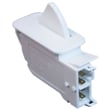
- Door light and door-closed sensing: refrigerator door push-button switch 6600JB1010A
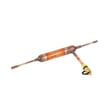
- Defrost and temperature sensing: refrigerator defrost sensor assembly 6615JB2005C, refrigerator thermistor 6500JB2002T
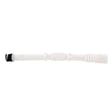
- Drain and leak prevention: refrigerator drain tube 5251JA3003D
- Door sealing: refrigerator gasket assembly ADX73350922
Why it matters
Cooling, ice production, and leak prevention all depend on steady airflow, correct temperature control, and tight door sealing. Fixing simple issues like blocked vents, dirty coils, or a sticking gasket often restores normal performance without major repair.
Last updated: February 2026
Why is my Kenmore Elite refrigerator leaking from the bottom?
A bottom leak on Kenmore Elite model 79576084600 is usually caused by defrost water missing the drain path and overflowing into the fresh food section or down to the floor. The most common fix is clearing a clogged defrost drain and making sure meltwater can flow into the drain pan during defrost.
Quick checks that solve most bottom leaks
- Look for ice or water under the freezer drawer; this often points to a defrost drain issue.
- Check the drain pan area (behind the base grille) for overflow or a pan that is out of position.
- Inspect the water supply line if you have an ice maker or dispenser; loose fittings or a cracked line can drip and run to the bottom.
- Check door closing and gaskets; warm air leaks can create excess frost that later melts and overwhelms the drain.
- Confirm the refrigerator is level; poor leveling can cause water to run the wrong direction.
Most likely causes and what to do
| What you see | Most likely cause | What we recommend |
|---|---|---|
| Water pooling inside, then leaking out | Clogged defrost drain | Thaw any ice, then flush the drain with warm water until it flows freely to the drain pan. |
| Leak only when dispensing water or making ice | Water line/tubing issue | Inspect tubing for cracks and check all compression fittings for tightness. |
| Water appears after a defrost cycle | Drain not flowing to pan | Verify the drain path is clear and the drain pan is seated correctly. |
| Slow, intermittent leak near the front | Door not sealing well | Clean the gasket and cabinet sealing surface; correct door alignment if needed. |
Parts that commonly relate to this symptom
If you find a split or loose line while tracing the leak, these model-matched parts are common fixes:
Why it matters
During normal operation, this refrigerator sends defrost meltwater to a drain pan (you may even hear water running into the pan during defrost). When the drain clogs or water tubing leaks, water can end up on the kitchen floor, damage flooring, and create recurring ice buildup.
Safety and reference
Before removing the base grille or reaching near the bottom of the refrigerator, unplug power and keep hands clear of sharp edges. Use the 79576084600 owner's manual for the exact access points and care and cleaning guidance.
Last updated: February 2026