Error Codes




What is the advantage of a bottom mount fridge?
A bottom-mount refrigerator like the KitchenAid KBFL25ETSS00 keeps the fresh-food compartment at eye and waist level, so we can reach everyday items with less bending. The freezer stays below, which is convenient for long-term storage and bulky frozen foods.
Key advantages in daily use
- Easier access to fresh foods (produce, dairy, leftovers) because they sit higher
- Less bending and squatting compared to top-freezer designs
- Wider, pull-out freezer drawers can make frozen items easier to organize
- Better visibility of refrigerated items, which helps reduce forgotten food
- Often supports a cleaner kitchen workflow (prep items are in the upper section)
Bottom-mount vs top-mount: quick comparison
| Feature | Bottom-mount refrigerator | Top-mount refrigerator |
|---|---|---|
| Fresh-food access | Higher, easier to reach | Lower, more bending |
| Freezer access | Lower drawer(s) | Upper swing door |
| Organization | Strong for fresh-food visibility | Strong for simple freezer access |
| Best for | Frequent fresh-food use | Frequent freezer use |
What to consider before choosing bottom-mount
- If you use the freezer many times a day, a top-freezer can feel faster to access.
- Bottom freezer drawers can be heavier when fully loaded.
- Door alignment and gasket sealing matter for efficiency; if doors do not seal well, cooling performance and energy use can suffer.
Why it matters
Most households open the refrigerator section far more than the freezer. Putting fresh food at eye level reduces strain and makes it easier to keep temperatures stable by minimizing time with the door open.
Related DIY help
If you are optimizing performance and food quality, we recommend starting with how to use your refrigerator efficiently.
Last updated: January 2026
Which is better, top mount or bottom mount refrigerator?
A bottom-mount refrigerator like the KitchenAid KBFL25ETSS00 is usually better if you want fresh foods at eye level and easier organization; a top-mount is usually better if you want a lower upfront cost and simpler access to the freezer. The “better” choice depends on how your household uses the fridge every day.
Quick comparison (what most owners notice)
| Feature | Top-mount refrigerator | Bottom-mount refrigerator (like KBFL25ETSS00) |
|---|---|---|
| Fresh food access | You bend more often | Fresh food is at eye/waist level |
| Freezer access | Freezer is easiest to reach | You bend for freezer drawer |
| Organization | Simpler shelves, fewer drawers | Often more bins and drawer-style storage |
| Typical price | Usually lower | Usually higher |
| Ergonomics | Better for frequent freezer use | Better for frequent fresh-food use |
When a bottom-mount is the better fit
- You use the refrigerator section more than the freezer.
- You want less bending for milk, produce, and leftovers.
- You like drawer-style freezer storage and better food separation.
- You want a layout that supports meal prep and frequent snacking.
- You are willing to keep freezer drawers organized so items do not get buried.
When a top-mount is the better fit
- You use frozen foods daily and want the freezer at eye level.
- You want a simpler design with fewer moving drawer parts.
- You are shopping for the best value and lowest purchase price.
- You have a tight kitchen layout where a freezer drawer could feel less convenient.
Why it matters (real-world comfort and maintenance)
Most households open the fresh-food door far more than the freezer. A bottom-mount design reduces bending and makes it easier to spot foods before they expire. Also, whichever style you choose, keeping seals and airflow in good shape helps performance; if you are troubleshooting warm temps or moisture, a common maintenance item is the door gasket such as the refrigerator freezer gasket W10436252.
Last updated: January 2026
What is the average lifespan of a KitchenAid refrigerator?
KitchenAid refrigerators typically last 14 to 17 years on average, and a well-maintained unit often reaches 10 to 20 years. For your KitchenAid KBFL25ETSS00 bottom-mount refrigerator, consistent cleaning, good airflow, and quick fixes for cooling or water issues are the biggest factors that extend service life.
Typical lifespan ranges (what to expect)
Most freestanding KitchenAid refrigerators fall into these practical ranges:
- 10 to 12 years: common point for first major repairs (fans, valves, sensors)
- 14 to 17 years: typical average lifespan with normal use
- 18 to 20 years: achievable with strong maintenance and timely part replacement
| Lifespan range | What it usually means | Common focus areas |
|---|---|---|
| 0 to 9 years | Routine upkeep | Filters, cleaning, door sealing |
| 10 to 14 years | Wear parts start showing up | Ice maker, inlet valve, sensors |
| 15 to 20 years | Longevity depends on maintenance | Cooling system health, defrost performance |
Maintenance that adds years (high impact)
We recommend these habits to keep the sealed system and airflow working efficiently:
- Vacuum dust from the condenser area and keep airflow paths clear
- Keep doors closing tightly; clean and condition gaskets as needed
- Replace water filters on schedule and purge air after filter changes
- Keep the freezer drawer tracks clean so doors seal fully
- Address temperature swings quickly (they increase compressor run time)
Parts that commonly affect lifespan on KBFL25ETSS00
When these parts fail, the refrigerator often still has plenty of life left once repaired:
- Refrigerator water inlet valve assembly WP67006531: helps prevent no-ice, slow-fill, and leaking issues
- Refrigerator temperature sensor 12002355: helps stabilize temperatures and reduce overworking the compressor
- Refrigerator defrost heater WP67002493: prevents frost buildup that can block airflow and warm the fresh food section
Why it matters
A refrigerator usually “wears out” faster when it runs hot, runs constantly, or leaks water. Fixing airflow, sealing, and water supply problems early reduces stress on the compressor and helps your KitchenAid KBFL25ETSS00 reach the upper end of the normal lifespan range.
Last updated: January 2026
What is the most common problem with a KitchenAid refrigerator?
The most common problems we see on KitchenAid refrigerators like model KBFL25ETSS00 are ice maker issues and cooling problems. In many cases, the root cause is restricted airflow (dirty condenser coils), a defrost system issue, or a water system problem that affects ice production and can lead to leaks.
Most common symptoms (and what they usually point to)
- Ice maker not making ice or slow ice: water supply restriction, inlet valve issue, or ice maker failure
- Fridge warm but freezer cold (or uneven temps): evaporator fan or airflow problem, frost buildup from defrost trouble
- Water leaking or puddles: clogged/iced defrost drain, loose water line connection, filter housing leak
- Noisy operation: condenser fan area dirty, evaporator fan noise, or compressor-related noise
- Lights not working when door opens: door switch problem
Quick checks we recommend first (KBFL25ETSS00)
- Confirm temperatures: set fresh food near 37°F and freezer near 0°F.
- Clean condenser coils: dust buildup is a top cause of poor cooling and long run times.
- Check for frost on the freezer back wall: heavy frost often signals a defrost heater or airflow issue.
- Inspect for water under the crisper or freezer: often a defrost drain issue.
- Verify water supply (if you have an ice maker): shutoff valve fully open, line not kinked.
Parts that commonly solve these problems
| Symptom | Common part to check on KBFL25ETSS00 | What it affects |
|---|---|---|
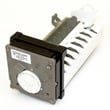
| Ice maker not working | Whirlpool refrigerator ice maker (D7824706Q) D7824706Q | Ice production and harvesting |
| No ice or weak fill | Refrigerator water inlet valve assembly WP67006531 | Water flow to ice maker |
| Frost buildup, warm temps | Refrigerator defrost heater WP67002493 | Defrost cycle performance |
| Lights or fan behavior odd when door opens | Refrigerator door switch W11396033 | Door-activated circuits |
| Temperature swings | Refrigerator temperature sensor 12002355 | Temperature sensing/control |
Why it matters
Ice maker and cooling complaints often share the same underlying issue: airflow and heat removal. Keeping coils clean and fixing small water supply problems early helps prevent food spoilage, leaks, and compressor overwork.
Helpful DIY guidance
- How to replace the water filter in a KitchenAid refrigerator
- How to diagnose a faulty refrigerator water inlet valve
- Common refrigerator ice maker problems and solutions
Last updated: January 2026