


Where is the model number on a Craftsman rear tine tiller?
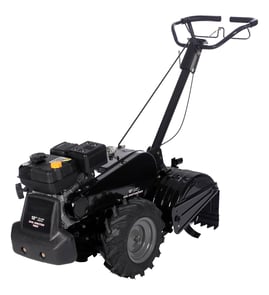
On your Craftsman rear-tine tiller model 536297030, the model number is printed on a product ID label (or stamped on a metal tag) attached to the tiller frame. Most commonly, we see it on the tine shield/guard area, near the engine, or on the front of the unit.
Look for a rectangular sticker or metal tag and wipe off dirt or oil so you can read it clearly.
- On the tine shield (tine guard) behind or above the tines
- On the main frame rail near the transmission/gearcase
- Near the engine mounting area (side of the frame close to the motor)
- On the front frame or handle support bracket
- Near the fuel tank area (on the frame, not on the plastic tank itself)
The correct model number is typically a longer number string (for this unit: 536297030). It is often paired with other identifiers.
| What you see on the label | What it usually means | What to do with it |
|---|---|---|
| Model number (example: 536297030) | Identifies the exact tiller version | Use it to match parts diagrams and parts |
| Serial number | Production identifier | Helpful for service history, not required for most parts |
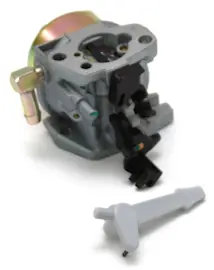
| Engine model/type/code | Identifies the engine (often Briggs and Stratton, Tecumseh, etc.) | Use it for engine-specific parts like carburetor or ignition |
We use the model number to match the correct Craftsman tiller parts list, including hardware and drive components that can look similar but fit differently (for example a tine assembly 56157E701MA or an oil seal 9566MA).
- Check both sides of the frame and the tine guard for a riveted tag
- Clean the area with a rag and mild degreaser; avoid soaking decals
- Compare your existing parts to the parts list for model 536297030 (shape, hole pattern, shaft size)
Last updated: February 2026
What are the common problems with lawn tillers?
Common problems on the Craftsman 536297030 1.6-hp cultivator usually come down to fuel delivery, ignition, or tine/drive wear. Most “won’t start” or “runs rough” complaints trace to stale gas, a dirty carburetor, or a fouled spark plug; poor tilling often points to worn tines or loose hardware.
- Won’t start: old fuel, clogged carburetor, fouled spark plug, kill switch issue
- Starts then dies: restricted fuel flow, dirty carburetor jets, tank vent problem
- Runs rough or surges: stale fuel, partially clogged carburetor, air leak
- Tines won’t turn or slip: worn/loose tine hardware, damaged shaft/bushing, internal drive wear
- Oil leak near tine/gear area: worn seal or bushing
- Drain old gasoline and refill with fresh fuel (stale fuel is the top cause of hard starting).
- Inspect the spark plug; clean or replace if fouled.
- Check that controls move freely and return properly (throttle, choke, shutoff).
- Look for loose fasteners around the tine assemblies; tighten as needed.
- If you see oil around the tine shaft area, stop using the tiller until you locate the leak source.
If the engine runs but tilling performance is poor, these model-matched parts are often involved:
| Symptom | What to inspect | Model-matched part to consider |
|---|---|---|
| Poor digging, uneven tilling | Bent or worn tines | Tine assembly 56157E701MA |
| Tines bind or wobble | Shaft wear, play at pivot points | Bushing 50221MA |
| Oil seepage near gear/tine area | Seal wear | Oil seal 9566MA |
A tiller that runs lean from restricted fuel flow can overheat and lose power, while worn tine/drive components reduce digging depth and can accelerate wear in the gear area. Catching loose hardware early also helps prevent shaft and bushing damage.
Last updated: February 2026
What tiller is made in the USA?
Some tillers are made in the USA, but it varies by brand and even by model within the same brand. For your Craftsman model 536297030 (1.6-hp cultivator), the most reliable way to confirm country of origin is to check the product ID label on the frame and compare it to the model and serial information you use when ordering parts like the tine assembly 56157E701MA.
- Look for a data plate on the handle support, engine mount area, or rear frame; it often lists the country of manufacture.
- Check for wording such as “Made in USA” or “Assembled in USA” (these are not the same).
- Use the exact model number (for example, 536297030) when researching parts and specs.
- Confirm whether the engine and the tiller frame/transmission are made in the same country (often they are different).
- If the label is missing, match the machine by key components (tines, shafting, seals) to ensure you are identifying the correct unit.
Country-of-origin claims on outdoor power equipment commonly fall into a few buckets:
| Label you may see | What it typically indicates | What to do next |
|---|---|---|
| Made in USA | Product is manufactured in the U.S. under applicable labeling rules | Verify on the frame label and packaging paperwork |
| Assembled in USA | Final assembly is in the U.S., parts may be imported | Check where major components are sourced |
| Designed in USA | Engineering is U.S.-based, manufacturing may be elsewhere | Rely on the data plate for origin |
Country of origin does not automatically determine performance, but it can affect parts sourcing, hardware standards, and how easily you can match wear items (like tines, bushings, and seals) to your exact Craftsman configuration.
If you are trying to confirm you have the correct machine while shopping for repair parts, start with high-identity drivetrain and tine components, such as the tine assembly 56157E701MA, then match fasteners and wear items (washers, pins, lock nuts) to your diagram.
Last updated: February 2026
How often should I change the oil in my tiller?
For the Craftsman 536297030 rear-tine tiller, change the engine oil on a regular hour-based schedule; most small 4-cycle tiller engines need the first change early in the season, then every 25 to 50 operating hours or once per year, whichever comes first. Change it sooner if the oil is dirty.
- First oil change (new engine or after major service): after about 5 hours of run time
- Normal homeowner use: every 25 to 50 hours
- Light use: once per year
- Dusty, sandy, or very hot conditions: closer to 25 hours
- Hard soil or heavy tilling: shorten the interval
- Oil on the dipstick looks dark, gritty, or smells burnt
- Oil level keeps dropping between checks
- Engine runs hotter than normal or loses power under load
- Oil looks milky (moisture contamination)
- Shut the engine off and let it cool.
- Drain oil into an approved container.
- Refill with the correct oil type and amount for your engine.
- Recheck the level and clean up any spills.
| How you use the tiller | When to change oil |
|---|---|
| Break-in period | After ~5 hours |
| Typical seasonal use | Every 25 to 50 hours or yearly |
| Dusty or heavy tilling | About every 25 hours |
Fresh oil reduces wear and overheating, which helps your Craftsman tiller maintain steady power when the tines hit compacted soil. If you notice oil residue around the tine-drive area, replacing a leaking seal such as the oil seal 9566MA helps prevent ongoing oil loss.
Last updated: February 2026
Are Craftsman rear tine tillers any good?
Yes. Craftsman rear-tine tillers are a strong choice for home gardens because the rear-tine layout delivers steady traction and consistent soil mixing, especially in tougher ground. For Craftsman model 536297030, “good” performance comes down to tine condition, tight hardware, and a leak-free gearbox.
A rear-tine tiller is performing well when it:
- Starts reliably and runs smoothly under load
- Pulls forward without excessive wheel spin or hopping
- Breaks soil evenly across the full tilling width
- Does not leave un-tilled strips or hard ridges
- Stays dry around the tine shaft area (no gear oil seepage)
Wear items make the biggest difference in how the tiller feels in the dirt:
- Tines: rounded edges or bent blades reduce bite and depth
- Tine mounting hardware: loose fasteners cause wobble and vibration
- Bushings and pins: play in the tine drive area leads to uneven tilling
- Seals: leaks can lower gearbox oil and accelerate internal wear
If you are restoring digging power, start by inspecting the tine assembly 56157E701MA and check for seepage at the oil seal 9566MA.
| Symptom | What it points to | What to inspect first |
|---|---|---|
| Skims on top, poor digging | Worn or damaged tines | Tines, mounting hardware |
| Excess vibration or wobble | Loose hardware or worn bushing/pin | Bushings, pins, nuts, washers |
| Oil around tine shaft | Seal wear | Oil seal, shaft area |
Rear-tine tillers are built to “self-feed” into soil; when tines are worn or the drivetrain is loose, the machine feels weak even though the design is solid. Keeping the tine set sharp, tight, and sealed restores normal performance.
Last updated: February 2026