


How to tell AC tonnage by model number?
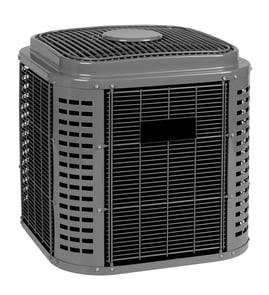
For a York central air conditioner, the model number often includes a 2-digit capacity code that represents thousands of BTUs (for example, 36 = 36,000 BTU). Divide that number by 12 to estimate tonnage (36,000 ÷ 12,000 = 3 tons). For model H1RA042S06A, the “042” indicates about 42,000 BTU, or 3.5 tons.
How to read tonnage from the model number
Many central AC model numbers embed capacity as BTUs in thousands.
- Find the capacity digits in the model number (commonly 18, 24, 30, 36, 42, 48, 60)
- Treat that number as “thousands of BTUs” (42 = 42,000 BTU)
- Divide by 12 to convert BTU to tons
- Round to the nearest common size (2, 2.5, 3, 3.5, 4, 5 tons)
- If the model uses 3 digits (like 042), read it as 42
Quick tonnage conversion table
| Capacity code | Approx. BTU/hr | Approx. tons |
|---|---|---|
| 24 | 24,000 | 2.0 |
| 30 | 30,000 | 2.5 |
| 36 | 36,000 | 3.0 |
| 42 | 42,000 | 3.5 |
| 48 | 48,000 | 4.0 |
| 60 | 60,000 | 5.0 |
Why it matters
Tonnage affects comfort and efficiency. Matching the correct capacity helps you choose compatible components (like a condenser fan motor, run capacitor, or contactor) and avoid performance issues such as short cycling or poor humidity control.
If the model number is hard to decode
Some brands use additional characters that can make the capacity code less obvious.
- Check the rating label on the outdoor unit for “BTU/hr” or “Cooling capacity”
- Compare the label capacity to the model-number estimate
- Use a wiring diagram and safe electrical testing practices when diagnosing cooling issues (not tonnage)
- For electrical checks, use a meter correctly to avoid damage or injury
For help with safe electrical troubleshooting steps, use our guides: how to use a multimeter to test electrical parts video and how to tell if a fuse is blown.
Last updated: February 2026
Is 2-ton AC enough for a 1000 sq ft house?
Yes. A 2-ton central air conditioner (about 24,000 BTU/hr) is the right size for many 1,000 sq ft homes with average insulation, 8-foot ceilings, and typical sun exposure. For a York central air conditioner like model H1RA042S06A, ductwork and heat gain still decide the final size.
Quick sizing rule of thumb
Many homes land around 18 to 25 BTU per sq ft.
- 1,000 sq ft x 18 BTU = ~18,000 BTU (about 1.5 ton)
- 1,000 sq ft x 25 BTU = ~25,000 BTU (just over 2 ton)
- 2 ton = ~24,000 BTU (fits the common range)
Signs 2 tons is a good fit (or not)
Use real-world performance cues, not just square footage:
- Good fit: long, steady run times; even temperatures; good humidity control
- Often too large: short cycling (frequent on/off), clammy indoor air
- Often too small: runs constantly and still cannot hold set temperature on hot days
- Not a sizing issue: hot rooms or weak airflow from vents (duct leakage, restrictions, blower issues)
What to check before changing size
| Check | Why it matters |
|---|---|
| Manual J load calculation | Confirms the correct tonnage for your exact home |
| Duct sizing and leakage | Ensures airflow can support the system |
| Filter and coil cleanliness | Dirty components reduce capacity and raise costs |
| Outdoor unit clearance | Poor airflow makes the system act undersized |
Why it matters
Correct sizing improves comfort and humidity control, reduces compressor wear, and helps keep energy use predictable.
To make sure you are matching parts and information to the correct unit, confirm the data plate model number using how to find your appliance model number (and what it means for parts).
Last updated: February 2026
What is H1RA042S06A in split AC?
H1RA042S06A is the York model number for a central air conditioner (outdoor condenser unit), not an error code for a split AC. If you’re seeing “H1” on a display, that is a separate code from the model number and it typically relates to a specific operating condition on that system.
How to tell a model number from a code
A model number like H1RA042S06A is a fixed identifier on the unit’s rating plate; an error or status code changes during operation.
Common differences:
- Model number: long mix of letters and numbers; stays the same
- Error/status code: short (often 1 to 4 characters); appears on a thermostat or indoor unit display
- Location: model number is on a label; codes show on a screen
- Purpose: model number is for parts matching; codes are for troubleshooting
Where to find the York H1RA042S06A model tag
On most York central AC outdoor units, the rating plate is typically:
- On the outside cabinet near the service panel
- Inside the electrical/control compartment (after power is shut off)
- Near the refrigerant service valves area
If the label is worn, use our guide: how to find your appliance model number (and what it means for parts).
Why “H1” can be confusing
Many systems use short codes like “H1” to indicate a status (not a part number). Depending on the brand and control board, “H1” is often used for a heating or defrost-related condition on heat pump style equipment.
Quick checks that help narrow it down
- Confirm whether you have a heat pump or cooling-only condenser
- Note when the code appears (startup, heating mode, cooling mode)
- Check for ice on the outdoor coil or unusually low airflow
- Reset power once (turn off at disconnect/breaker, then back on)
What to do next for parts
For York H1RA042S06A, match parts by the exact model number from the rating plate. If you’re shopping beyond the model parts list, search by model on Sears PartsDirect.
| You have | Use this for | Example |
|---|---|---|
| Model number | Correct parts lookup | H1RA042S06A |
| Short code on display | Troubleshooting steps | H1 |
Why it matters
Using the correct identifier prevents ordering the wrong capacitor, contactor, fan motor, or control component; model numbers and display codes are used for completely different purposes.
Last updated: February 2026