Owner’s manual
 Error Codes


Where is the model number on a Kenmore side by side refrigerator?
On a Kenmore Elite side-by-side refrigerator like model 10657866800, the model number is printed on the appliance identification label inside the fresh food (refrigerator) compartment, typically along the side wall near the top or around the crisper area. Use the exact model number from that label when ordering parts.
Where to look first
Check these common label locations on side-by-side refrigerators:
- Inside the refrigerator section on the left or right side wall
- Near the ceiling of the fresh food compartment (upper side wall area)
- Around the crisper drawer frame or side trim near the bottom
- On the cabinet frame just inside the door opening (hinge-side area)
For diagrams and model-specific details, use the 10657866800 owner's manual.
What you should see on the label
The identification label usually includes both a model number and a serial number.
| Item on label | What it’s used for | Example format (typical) |
|---|---|---|
| Model number | Matching parts and documentation | 10657866800 |
| Serial number | Production info and service history | Letters and numbers |
Why it matters
We use the model number to match the correct Kenmore parts for your exact configuration (ice maker, dispenser style, shelving, and water filter setup). Even small model-number differences can change which parts fit.
Quick tips for reading and using the model number
- Copy the model number exactly as printed, including all digits
- Take a clear photo of the label before you start a repair
- Use the model number when selecting parts like a water filter or ice maker
Last updated: February 2026
How many cubic feet is my Kenmore refrigerator by model number?
For Kenmore Elite refrigerator model 10657866800, the most accurate way to confirm cubic-foot capacity is to use the model’s specification information in the 10657866800 owner's manual. If you cannot locate the capacity line quickly, you can also estimate capacity by measuring the interior and converting to cubic feet.
Fast ways to find your refrigerator’s cubic feet
- Check the specifications section in the 10657866800 owner's manual.
- Look for the rating plate inside the fresh food compartment (often on a side wall or near the crisper area); it commonly lists capacity or key specs.
- If you are measuring, use a tape measure and calculate interior volume (see below).
- If you are comparing similar Kenmore side-by-side units, most are commonly in the 22 to 26 cu. ft. range.
How to estimate cubic feet by measuring (quick method)
- Empty enough space to measure the usable interior (not the outside cabinet).
- Measure interior width x height x depth in inches.
- Convert to cubic feet:
| What you have | What to do | Result |
|---|---|---|
| Inches (W x H x D) | Multiply to get cubic inches | Total cubic inches |
| Cubic inches | Divide by 1,728 | Cubic feet |
Tip: Measure the refrigerator and freezer compartments separately, then add them together for a closer estimate.
Why it matters
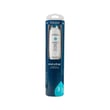
Knowing cubic feet helps us match the right parts and accessories for your Kenmore Elite 10657866800, such as the correct water filter size and fit. For example, this model uses a base grille water filter style; the replacement filter listed for this model is genuine Kenmore refrigerator water filter EDR3RXD1.
Last updated: February 2026
What model is my Kenmore Elite refrigerator?
Your Kenmore Elite refrigerator’s model number is printed on the appliance’s rating label; on model 10657866800, you’ll typically find that label inside the fresh food compartment (side wall or ceiling), inside the freezer compartment, or behind the lower toe grille. Confirm the exact characters on the label and match them to the format shown in the owner's manual.
Where to look first (fastest checks)
- Open the refrigerator door and check the inside side walls near the front
- Look on the ceiling area inside the fresh food compartment
- Check inside the freezer compartment on a side wall
- Remove the toe grille (kick plate) and look for a label behind it
- Check the wall behind the lower crisper drawers (if accessible)
What the model label looks like
Most Kenmore side-by-side refrigerators use a paper or foil rating label that includes:
- Model number (example format: 106.57866800 or 10657866800)
- Serial number
- Electrical ratings (volts/amps)
- Sometimes a type or manufacturing code
Model number formatting tip
| What you see on the label | What it means | What to enter when ordering parts |
|---|---|---|
| 106.57866800 | Same model with a dot | 10657866800 |
| 10657866800 | Same model without a dot | 10657866800 |
Why it matters
We use the model number to match the correct parts and diagrams for your exact Kenmore Elite refrigerator. Even small differences in the model number can change which water filter, ice maker, door cam, or electronic control fits.
If you’re replacing a common maintenance item, this model uses a base grille water filter; the manual lists replacement filter part number 9030, and the matching part on our parts list is genuine Kenmore refrigerator water filter EDR3RXD1.
Last updated: February 2026
What are the common problems with Kenmore Elite refrigerators?
Common problems on the Kenmore Elite 10657866800 side-by-side refrigerator include weak or uneven cooling, ice maker or dispenser trouble, water leaks, and louder-than-expected operating noises. Many issues trace back to airflow restrictions, water supply/filter problems, or normal high-efficiency compressor and fan operation described in the owner's manual.
Most common symptoms and what usually causes them
- Not cooling well or temperature swings: blocked air vents, dirty condenser coils, doors opened often, or the unit still stabilizing after a power interruption.
- Runs a lot: warm room, large food load, frequent door openings, or doors not fully closing.
- Noisy operation: buzzing when the water valve fills the ice maker, pulsating as the compressor/fans adjust, or evaporator fan airflow sounds.
- Ice maker not making ice: restricted water flow (often a clogged filter), low water pressure, or a dispenser/ice door not sealing.
- Water leaking or puddles: loose water connections, a clogged defrost drain, or a cracked/loose water tube.
Quick checks we recommend before replacing parts
- Confirm power and settings: make sure the controls are on and the outlet is working.
- Allow proper cool-down time: after a new install or long outage, allow 24 hours for full cooling.
- Restore airflow: keep packages from blocking interior vents; good circulation prevents warm spots.
- Check the water system: if water/ice is slow, replace the filter and flush the system.
- Listen for “normal” sounds: buzzing at fill, fan airflow, and compressor pulsing are expected on many units.
Parts that commonly solve water and ice complaints
If your symptoms point to restricted water flow or a dispenser issue, these model-compatible parts are common fixes:
| Symptom | What to inspect first | Common replacement part |
|---|---|---|
| Slow water, small ice cubes | Filter and filter seating | Genuine Kenmore refrigerator water filter EDR3RXD1 |
| Leaks at filter area | Cracked housing or poor seal | Refrigerator water filter housing WPW10121138 |
| No water to dispenser/ice maker | Valve not opening consistently | Refrigerator inlet valve W10822681 |
| Drips or leaks in tubing path | Split or loose line | Refrigerator water tube 8201597 |
Why it matters
Cooling, ice, and leak problems often share the same root causes: airflow and water flow. Fixing a blocked vent or a restricted filter can restore performance quickly and helps prevent the compressor and fans from running longer than necessary.
For step-by-step filter guidance, we also recommend how to replace the water filter in a Kenmore refrigerator.
Last updated: February 2026
How to tell if a Kenmore refrigerator compressor is bad?
On a Kenmore Elite refrigerator model 10657866800, a bad compressor typically shows up as poor cooling even though the unit runs a lot, unusual clicking or repeated start attempts, or the compressor staying very hot while temperatures in the fresh food and freezer sections keep rising. Confirm basics first because airflow, controls, and power issues can mimic compressor failure.
Quick checks before blaming the compressor
Unplug the refrigerator before touching any wiring or components.
- Verify the power cord is plugged into a grounded 3-prong outlet.
- Check the outlet by plugging in a lamp.
- Reset a tripped breaker or replace a blown fuse.
- Make sure the temperature controls are turned on.
- If it is a new installation or was recently moved, allow 24 hours to cool completely.
Symptoms that point toward a compressor problem
Some sounds are normal on this model, including a pulsating or high-pitched sound as the compressor and fans adjust for efficiency. Use the pattern of symptoms, not just noise.
| What you notice | More likely normal | More likely a problem |
|---|---|---|
| Runs longer than an older fridge | High-efficiency compressor can run longer | Runs constantly and never reaches safe temps |
| Clicking | Occasional relay click | Repeated clicking every few minutes with no cooling |
| Compressor temperature | Warm during operation | Very hot to the touch with poor cooling |
| Sound | Pulsating/high-pitched at times | No compressor sound plus warming temps |
Why it matters
The compressor is the heart of the sealed refrigerant system. Misdiagnosing it can lead to unnecessary parts replacement when the real issue is power, controls, or normal high-efficiency run time. For model-specific operating notes and normal sound descriptions, use the owner's manual.
Parts that are commonly involved in cooling and “no cool” complaints
If diagnosis confirms a sealed-system or compressor-related failure, these are model-matched parts we commonly see referenced during repair planning:
Last updated: February 2026