Installation guide
 Owner’s manual
 Error Codes




How much freezer space is in a side-by-side?
Most side-by-side refrigerators, including the GE PSC23SGPASS, typically have about 7.5 to 10 cubic feet of freezer space, with total refrigerator capacity commonly landing in the 22.5 to 31 cubic feet range. For the exact capacity for your unit, check the PSC23SGPASS owner’s manual.
Typical freezer capacity ranges (what to expect)
Side-by-side designs split the cabinet vertically, so the freezer is narrower but tall. In real kitchens, that usually means:
- Freezer section: 7.5 to 10 cu. ft.
- Fresh food section: 14 to 21 cu. ft.
- Total capacity: 22.5 to 31 cu. ft.
- Best for: frozen foods you want organized on shelves and door bins
- Tradeoff: less room for extra-wide items (like large pizza boxes)
Quick comparison: side-by-side vs other styles
| Refrigerator style | Typical freezer space | Best for |
|---|---|---|
| Side-by-side | 7.5 to 10 cu. ft. | Shelf organization, frequent freezer access |
| Top freezer | 4 to 7 cu. ft. | Budget-friendly, simple storage |
| Bottom freezer | 6 to 9 cu. ft. | Larger freezer drawer, bulky frozen items |
Why it matters
Freezer capacity affects how well your refrigerator fits your shopping habits. If you buy bulk frozen foods, the freezer’s shape (narrow shelves vs a wide drawer) can matter as much as the cubic feet.
Tips to make the most of side-by-side freezer space
- Use stackable bins to group foods (meats, vegetables, snacks)
- Keep airflow paths clear so temperatures stay even
- Store tall items on the door only if they do not block door closure
- If ice storage crowds your freezer, check the ice bin and dispenser parts for fit and function
- Replace the water filter on schedule so ice and water flow stay strong (see refrigerator water filter MWFP if your unit uses that filter)
Last updated: February 2026
How to defrost GE bottom freezer?
To defrost a GE refrigerator like model PSC23SGPASS, we unplug the refrigerator, move food to a cooler, and let the freezer ice melt naturally with the doors open; then we dry everything and restart the unit so airflow returns to normal.
Safe manual defrost steps
- Unplug the refrigerator (or switch off the breaker).
- Remove freezer items and ice bin; keep food cold in a cooler.
- Open the freezer door to speed melting; place towels to catch water.
- Use a hair dryer on low only if needed; keep it moving and away from plastic liners.
- Clear loose frost from vents and around the evaporator cover area (do not chip ice with sharp tools).
- Wipe the compartment dry, close doors, and restore power.
What to check after defrosting (to prevent repeat icing)
If frost returns quickly, we focus on airflow and door sealing issues first.
- Make sure shelves and baskets are pushed fully back so the door closes tightly (GE notes this for shelves and freezer baskets in the PSC23SGPASS owner’s manual).
- Confirm the door gasket is sealing all the way around.
- Avoid blocking air vents with packages.
- Set temperatures to normal targets: freezer around 0°F, fresh food around 37°F.
- If temperatures swing or frosting is uneven, a failed sensor can contribute; the GE profile refrigerator temperature sensor WR55X10025 is a common control input used to regulate cooling.
Quick troubleshooting guide
| Symptom after defrost | Most likely cause | What we do next |
|---|---|---|
| Frost returns in 1 to 3 days | Door not sealing, door left ajar | Check gasket, alignment, baskets fully seated |
| Heavy frost only on back wall | Airflow restriction or defrost issue | Check vents, listen for fan, inspect for ice buildup |
| Warm freezer, no airflow | Evaporator fan issue | Listen for fan, inspect fan area |
| Water on floor during/after | Drain trough/drain line iced or clogged | Clear ice, flush drain with warm water |
Why it matters
A full manual defrost restores airflow across the evaporator coil. When airflow is blocked by ice, the freezer warms up, the refrigerator side can run warm, and the compressor may run longer than normal.
Last updated: February 2026
What is the average lifespan of a GE refrigerator?
Most GE refrigerators, including the GE PSC23SGPASS side-by-side, typically last 12 to 15 years with normal household use. Regular maintenance (especially keeping airflow and temperatures stable) is what most often separates a 10-year fridge from a 15-year fridge.
Typical lifespan ranges (what we see most often)
- Average: 12 to 15 years
- Shorter lifespan: 8 to 12 years (heavy use, poor ventilation, dirty condenser area)
- Longer lifespan: 15 to 20 years (good airflow, clean coils, good door sealing)
| What affects lifespan most | What to do | How often |
|---|---|---|
| Heat buildup around the cabinet | Keep ventilation space open; clean dust from condenser area | Every 6 to 12 months |
| Door seal condition | Inspect for gaps, tears, or doors not closing fully | Every 3 months |
| Temperature stability | Keep fresh food near 37°F and freezer near 0°F | Ongoing |
| Water system strain (if equipped) | Replace the water filter on schedule | About every 6 months |
Maintenance that adds years (and prevents common failures)
- Vacuum dust from the condenser area and surrounding vents.
- Make sure both doors close and seal tightly; avoid overloading door bins.
- Keep the freezer from icing up; persistent frost points to an airflow or defrost issue.
- Replace the water filter regularly to reduce restriction and improve water flow.
- Level the refrigerator so doors self-close and don’t hang open.
Parts that commonly impact “how long it lasts”
These parts do not set the lifespan by themselves, but they are frequent wear items that can cause performance problems if they fail:
- GE profile refrigerator temperature sensor WR55X10025 (temperature control and cycling)
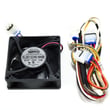
- Refrigerator evaporator motor WR60X10307 (cold air circulation)
- Refrigerator defrost thermostat WR50X10068 (defrost protection)
- Refrigerator water filter MWFP (water flow and filtration)
Why it matters
A refrigerator can “run” for years while slowly losing cooling efficiency. When airflow is restricted (dust, frost, weak fan) the compressor runs longer and hotter, which is the fastest path to an early end of service life. For model-specific care and setup details, follow the PSC23SGPASS owner’s manual.
Last updated: February 2026
What is the most common problem with a GE refrigerator?
In our experience with GE side-by-side models like PSC23SGPASS, the most common complaint is not cooling well or warming up. The usual causes are restricted airflow (blocked vents or dirty coils), a fan problem, or a defrost issue that lets frost choke the evaporator.
Quick checks that fix many cooling complaints
- Confirm the doors fully close and nothing is holding them open.
- Set the temperature controls one step colder and allow 24 hours for temperatures to stabilize.
- Avoid overpacking; keep air vents clear so cold air can circulate.
- Clean dust from the condenser area (unplug the refrigerator first).
- If the unit was just plugged in or recently loaded with warm food, longer run times are normal.
Common causes and what you typically notice
| Likely cause | What you notice | What to do first |
|---|---|---|
| Controls not cold enough | Both sections warm | Adjust controls; wait 24 hours |
| Door left ajar or poor seal | Temps drift up, moisture/frost | Remove obstructions; inspect gasket |
| Dirty condenser area | Weak cooling, long run times | Clean condenser area safely |
| Evaporator fan issue | Freezer cold but fresh food warm | Listen for fan; check for ice buildup |
| Defrost system problem | Frost on back wall, warming | Defrost and diagnose components |
Parts that often relate to cooling symptoms on PSC23SGPASS
If troubleshooting points to a specific failure, these model-matched parts are commonly involved:
- GE PSC23SGPASS owner’s manual for control settings, operating notes, and safety steps.
- GE PSC23SGPASS installation guide for moving the refrigerator safely and water line guidance.
- GE profile refrigerator temperature sensor WR55X10025 if temperatures swing or readings seem inaccurate.
- Refrigerator evaporator motor WR60X10307 if airflow is weak or the fan is noisy or not running.
Why it matters
Poor cooling is more than an inconvenience; it can lead to food spoilage and can also signal airflow restrictions that make the compressor run longer than normal. Addressing airflow, control settings, and fan or defrost problems early helps restore stable temperatures.
Last updated: February 2026
Why is my GE side-by-side freezing up?
On the GE PSC23SGPASS side-by-side, “freezing up” is usually caused by moisture getting where it should not (door left ajar or a weak door seal), restricted airflow from frost buildup, or a defrost system problem. Start by checking door closure, temperature settings, and visible frost patterns.
Quick checks that fix most freeze-ups
- Make sure no package is holding a door open; even a small gap can create frost and ice.
- Confirm the temperature controls are not set to the coldest setting.
- Push shelves and freezer baskets fully back so the door closes squarely.
- Look for heavy frost on the freezer back wall (points to a defrost or airflow issue).
- If the icemaker is on, confirm the water supply is fully connected and turned on.
Most common causes and what to do next
| What you notice | Likely cause | What we recommend |
|---|---|---|
| Frost or ice crystals, temps swing | Door not sealing or left open | Inspect gaskets, remove obstructions, verify doors close fully |
| Freezer packed with frost, weak airflow | Defrost problem or fan issue | Check for heavy frost; listen for evaporator fan operation |
| Ice maker “buzzing” or odd ice symptoms | Water supply off or filter restriction | Turn water on; replace filter if flow is poor |
Parts that often solve the problem
If you find poor water flow, hollow ice, or slow ice production along with icing symptoms, replacing the filter is a strong first step. If you suspect a defrost failure (heavy frost blanket), the defrost thermostat is a common repair item.
Why it matters
Ice buildup blocks airflow, so the refrigerator section can warm up while the freezer looks “too cold.” It also forces longer run times, which can lead to more frost and inconsistent temperatures.
Where to confirm settings and procedures
Use the model documentation to verify the correct control settings and any model-specific steps for your PSC23SGPASS.
Last updated: February 2026