 Owner’s manual


What is the average lifespan of a whirlpool dryer?
A Whirlpool dryer typically lasts 10 to 13 years in normal household use. For your Whirlpool LEB6000PQ0, consistent airflow and lint control are the biggest lifespan drivers; follow the cleaning and venting guidance in the LEB6000PQ0 owner's manual to reduce heat stress on parts.
What affects dryer lifespan the most
- Restricted venting (overheats the heater and thermostats)
- Lint buildup in the cabinet, lint chute, and exhaust duct
- Overloading (wears the drum belt, idler pulley, and drum support parts faster)
- Long dry times (more run hours equals more wear)
- Skipped maintenance (small issues become motor, heater, or timer failures)
Maintenance schedule we recommend (based on the manual)
Your manual calls out deep lint removal intervals that matter for longevity.
| Task | How often | Why it matters |
|---|---|---|
| Clean lint screen | Every load | Keeps airflow strong and drying times short |
| Clean exhaust vent ducting | About every 2 years (more with heavy use) | Prevents overheating and long dry times |
| Clean lint from inside dryer cabinet | About every 2 years (qualified service) | Reduces heat buildup and strain on components |
Parts that commonly wear before the dryer “wears out”
Replacing a few wear items often restores performance and extends service life.
| Symptom | Common wear area | Example part for LEB6000PQ0 |
|---|---|---|
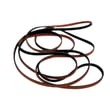
| Drum not turning, squealing, thumping | Belt and drum support system | Dryer drum belt 341241 |
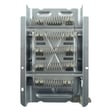
| Runs but no heat or weak heat | Heating circuit and safety cutoffs | Dryer element 279838 |
Why it matters
A dryer can run for years past the average, but only if it is not overheating. Good airflow (clean lint screen, clear venting, and periodic internal lint removal) reduces cycling stress on the heating element, operating thermostat, and high-limit safety devices.
Last updated: February 2026
How do I know if my whirlpool dryer thermal fuse is blown?
If your Whirlpool dryer model LEB6000PQ0 won’t start, or it runs but has no heat, a blown thermal fuse or thermal cut-off is a top suspect. We confirm it by testing the fuse for continuity with a multimeter; a blown fuse reads open (no continuity) and must be replaced.
Quick symptoms to look for
A thermal fuse or thermal cut-off problem often shows up as one of these:
- Dryer will not run at all (no motor operation)
- Drum turns but there’s no heat (electric dryers can still tumble with one tripped breaker or fuse)
- Dryer stops mid-cycle and won’t restart until the issue is corrected
- Drying performance gets worse because airflow is restricted (the overheating cause)
For model-specific operating and troubleshooting checks, use the LEB6000PQ0 owner's manual.
How we test it (the definitive check)
- Unplug the dryer (or switch off the breaker).
- Access the thermal fuse or thermal cut-off (location varies by design; typically on the blower housing or heater housing).
- Pull at least one wire off the fuse terminal.
- Set a multimeter to continuity or ohms.
- Test across the fuse terminals.
- Good fuse: continuity (beep) or near 0 ohms
- Blown fuse: no beep or infinite/open reading
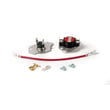
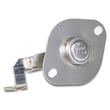
If you’re replacing an overheat safety, the Dryer thermal cut-off fuse kit 279816 is a common service kit used on this model family.
What to fix so it doesn’t blow again
A thermal fuse is a one-time safety device; it usually opens because the dryer overheated from poor airflow.
- Clean the lint screen and confirm it seats correctly
- Check the vent hose for kinks, crushing, or long runs
- Clear lint from the outside hood and verify strong airflow
- Use 4-inch heavy metal or flexible metal venting (not plastic)
Why it matters
Replacing the fuse without correcting the airflow problem often leads to repeat failures, longer dry times, and overheating that can damage parts like the heating element, operating thermostat, or high-limit thermostat.
| What you observe | Most likely next step |
|---|---|
| Dryer won’t run | Check door switch, start switch, then test thermal fuse/cut-off |
| Drum turns, no heat | Check both house breakers/fuses, then test heater circuit safeties |
| Long dry times | Fix venting and airflow first, then recheck heating |
Last updated: February 2026
What are the common problems with whirlpool dryers?
Common Whirlpool dryer problems on model LEB6000PQ0 fall into a few buckets: it will not start, it runs but does not heat, it tumbles poorly (or not at all), or it takes too long to dry. Most fixes start with power, airflow, and a few high-wear parts listed in the LEB6000PQ0 owner’s manual.
Most common symptoms and what usually causes them
- Dryer will not start: tripped breaker, bad door switch, failed start switch
- Dryer runs but no heat: failed heating circuit parts (element, thermal cut-off, thermostats)
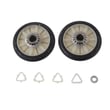
- Drum will not spin or squeals: worn belt, idler pulley, rollers (often serviced as a kit)
- Long dry times: restricted venting, clogged lint path, overloaded drum
- Wrinkles/overdrying: wrong cycle or temperature selection; leaving clothes in after cycle ends (Wrinkle Shield feature helps on some versions)
Quick checks we recommend first (fast, no parts)
- Confirm power: electric dryers typically need a full 240V supply; a half-tripped breaker can let the motor run but prevent heat.
- Check airflow: clean the lint screen every load; inspect the vent run for kinks, crushing, or heavy lint buildup.
- Match settings to fabric: use the correct temperature and cycle for the load type (the manual calls out temperature guidance and optional features like Wrinkle Shield and end-of-cycle signal).
- Avoid overloading: smaller loads tumble freely and dry faster.
Parts that commonly fix these problems on LEB6000PQ0
| Symptom | Common fix | Example part for this model |
|---|---|---|
| Not tumbling | Replace worn belt | Dryer drum belt 341241 |
| No heat | Replace failed heater | Dryer element 279838 |
| No heat, overheated dryer | Replace safety fuse kit and correct vent restriction | Dryer thermal cut-off fuse kit 279816 |
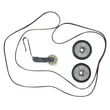
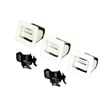
| Squealing, thumping, poor tumbling | Refresh wear items together | Dryer repair kit 4392065 |
Why it matters
Many “no heat” and “long dry time” complaints trace back to restricted venting. Poor airflow can overheat the dryer and repeatedly trip safety devices, so correcting the lint and vent path helps the repair last.
Last updated: February 2026








