Installation guide
 Owner’s manual
 Error Codes


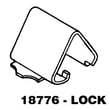
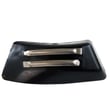
How do I know if my Kenmore dryer thermal fuse is blown?
A blown thermal fuse on your Kenmore dryer model 11077622600 usually shows up as a dryer that will not start at all, or a dryer that tumbles but has no heat. The sure way to confirm it is a continuity test with a multimeter after disconnecting power (and shutting off gas if it is a gas model). See the safety and access notes in the 11077622600 owner’s manual.
- Dryer will not run even though the door is closed and a cycle is selected
- Drum turns but there is no heat (common when one house fuse trips on electric dryers)
- Dryer stops mid-cycle and will not restart until the issue is corrected
- You recently noticed restricted airflow (long dry times, very hot cabinet, burning smell)
- Lint screen or venting has been clogging more than usual
- Unplug the dryer (or switch off the breaker).
- If it is a gas dryer, turn off the gas supply shutoff valve.
- Access the thermal fuse (location varies by design; commonly on the blower housing or exhaust duct).
- Remove at least one wire from the fuse terminal.
- Set the meter to continuity or ohms and test across the fuse.
| Meter result | What it means | What to do next |
|---|---|---|
| Beep or near 0 Ω | Fuse is good | Keep troubleshooting (airflow, thermostat, timer/control) |
| No beep or OL | Fuse is blown | Replace the fuse and fix the airflow restriction |
The thermal fuse is a one-time safety device; it opens when the dryer overheats. Overheating is most often caused by blocked venting, a clogged lint screen, or a crushed/too-long exhaust duct.
The Kenmore troubleshooting steps in the manual note that electric dryers can tumble with no heat if one of the two household fuses or breakers trips. Also, gas dryers will not heat if the gas supply valve is closed. Use the checks in the 11077622600 installation guide to confirm power, door closure, and gas supply basics.
If testing shows the fuse is fine, these model-compatible parts are commonly checked next:
- Dryer operating thermostat WP3387134 (temperature regulation)
- Dryer thermal cut-off kit W11050897 (overheat protection components)
- Dryer valve coil kit 279834 (gas ignition support on gas models)
Last updated: February 2026
How do I tell what model my Kenmore dryer is?
Your Kenmore dryer’s model number is printed on the model and serial number label; on model 11077622600, that label is located at the top inside the dryer door well. Once you have the full model number, we can match the correct parts, diagrams, and specifications.
Check these common label locations (start with the door opening):
- Top inside the dryer door well (most common on Kenmore 110-series dryers)
- Inside the door opening on the cabinet frame
- On the back panel (less common)
- Near the lint screen housing (some designs)
Use the location diagram and wording in the 11077622600 owner's manual to confirm the exact label position for your unit.
Kenmore model numbers are usually a long string of numbers (sometimes with a dot). For example, many Kenmore dryers begin with 110.
| What you see | What it tells us | Why we need it |
|---|---|---|
| Full model number (example: 11077622600) | Exact dryer design and parts list | Ensures correct fit and compatibility |
| Serial number | Production sequence and date coding | Helps with service history and some part revisions |
| Rating plate info | Fuel type and key specs | Confirms gas type and installation requirements |
When you write down the model number, use these best practices:
- Copy it exactly as printed (include all digits)
- Photograph the label so nothing is missed
- Use the full model number, not just the first three digits
- If the label is worn, use a flashlight and take a close-up photo
Parts can look similar across Kenmore dryers, but small design changes affect fit. With the exact model number (like 11077622600), we can confidently match items such as the dryer drum belt 341241 or the correct door switch, thermostat, and repair kit for your dryer.
Last updated: February 2026
What is the average lifespan of 11077622600?
The average lifespan of the Kenmore 11077622600 dryer is about 13 years with normal household use. Keeping airflow strong (clean lint system and venting) and replacing wear items like belts and rollers on time helps this dryer reach its full service life.
Most full-size Kenmore dryers last around 13 years. The biggest factors are heat stress, restricted venting, and normal wear on moving parts.
- Clean the lint screen every load and keep the lint chute clear
- Keep the exhaust duct short, smooth, and free of lint buildup
- Avoid overloading; it strains the drum support and drive system
- Use the right cycle and heat setting for the fabric
- Fix unusual noises early to prevent secondary damage
These parts commonly wear out before the dryer itself does:
| Part (example) | What you may notice | What it impacts |
|---|---|---|
| Dryer drum belt 341241 | Drum will not tumble, squealing, burning rubber smell | Drum rotation |
| Dryer idler pulley WP691366 | Squealing, thumping, belt slipping | Belt tension |
| Dryer repair kit 4392065 | Thumping, rumbling, vibration | Rollers, belt, idler (kit dependent) |
| Dryer operating thermostat WP3387134 | Overheating, poor temperature control | Heat regulation |
A dryer can seem “worn out” years early when airflow is restricted. Good venting keeps temperatures stable, reduces drying time, and lowers stress on the motor, igniter, and thermostats.
For model-specific care, cleaning guidance, and installation clearances, follow the 11077622600 owner’s manual and the 11077622600 installation guide.
Last updated: March 2026