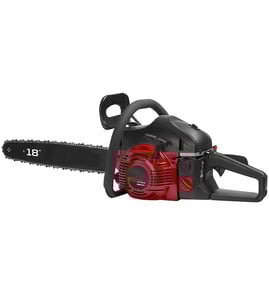

How many cc's is a McCulloch MACCAT chainsaw?
Engine size (cc) depends on the exact Mcculloch model variant, even when the model label says MACCAT. For the Mcculloch MACCAT gas chainsaw model MACCAT, the most reliable way to confirm cc is to match the engine tag and parts breakdown to your saw’s exact identification details using how to find your appliance model number (and what it means for parts).
Most gas chainsaws list displacement in cc (or cubic centimeters) on the engine housing, starter cover, or an ID tag near the handle.
- Look for a stamp or label that says “cc”, “cm³”, or “displacement”
- Check the starter/recoil cover and crankcase area first
- If the label is missing, note any engine family code or type number
- Compare those identifiers to the parts diagrams for model MACCAT
Mcculloch saws in the MACCAT class are commonly in a mid-range displacement, and many homeowner gas chainsaws fall into these bands:
| Chainsaw class | Typical displacement | Typical bar length |
|---|---|---|
| Light duty | 30 to 40 cc | 12 to 16 in. |
| Mid-range | 40 to 50 cc | 16 to 18 in. |
| Heavy duty | 50 to 60+ cc | 18 to 24 in. |
The cc rating affects which carburetor settings, spark plug type, fuel mix, and bar and chain combinations work best. Getting the displacement right also helps you avoid ordering the wrong ignition or fuel-system parts.
- Hard starting and bogging can point to a fuel delivery or carburetor issue
- Surging at idle often relates to air leaks or a dirty carb
- No start with good fuel can indicate spark or compression problems
Last updated: February 2026
Are McCulloch chainsaws good quality?
Mcculloch chainsaws are generally a solid, homeowner-focused choice: they are built to deliver strong cutting performance with practical ergonomics and durability for routine jobs like storm cleanup and firewood. For the Mcculloch MACCAT gas chainsaw, overall quality depends most on maintenance and correct chain setup.
Quality shows up in how consistently the saw starts, cuts, and holds adjustment over time.
- Reliable starting and idling (carburetor tune and clean fuel system matter)
- Strong cutting under load (sharp chain, correct depth gauges, proper bar oiling)
- Comfort and control (anti-vibration feel, balanced weight, good grip)
- Durability of wear items (bar, chain, sprocket, clutch, air filter)
- Parts support (being able to match the correct model number when ordering)
These steps improve performance and reduce premature wear on most Mcculloch gas chainsaws, including MACCAT.
- Run fresh fuel mix (old fuel is the #1 cause of hard starting and poor power).
- Clean or replace the air filter regularly.
- Confirm bar oiling (a dry bar makes any saw seem weak and rough).
- Keep the chain sharp and correctly tensioned (too tight overheats; too loose derails).
- Inspect the clutch drum/sprocket for hooking or heavy wear.
| Symptom | Most common cause | What to do first |
|---|---|---|
| Hard starting | Stale fuel, dirty filter, fouled plug | Fresh mix, clean filter, check plug |
| Bogging in the cut | Dull chain, carb tune off | Sharpen chain, verify tune |
| Excess vibration | Chain damage, bar wear, loose fasteners | Inspect chain/bar, tighten hardware |
| Chain won’t stay tight | Worn bar rails, tensioner issue | Inspect bar, check adjuster |
A chainsaw’s “quality” is heavily influenced by setup and upkeep. A well-oiled bar, sharp chain, and clean air intake let the MACCAT cut smoothly and protect the engine, clutch, and sprocket from unnecessary stress.
For ordering the right replacement parts, use the exact model identification and follow our guide: how to find your appliance model number (and what it means for parts).
Last updated: February 2026
When did they quit making McCulloch chainsaws?
Mcculloch chainsaws were not discontinued on one single, universal date; production and branding changed over time by market and model line. For your Mcculloch MACCAT gas chainsaw, the practical cutoff is the point when your specific model stopped being produced, which you confirm by the model and serial information.
For parts and repair decisions, the most reliable approach is identifying the exact model and serial range on the saw, then matching parts by diagram callouts.
- Use the full model number MACCAT when searching parts information
- Record the serial number (it often narrows down revisions)
- Match parts by illustration and reference number when diagrams are available
- Treat wear items as maintenance parts (bar, chain, sprocket, air filter, fuel filter)
- For “won’t start” issues, check fuel delivery, spark, and air flow in that order
| What you know | What it tells you | Best next step |
|---|---|---|
| Model number only (MACCAT) | Identifies the product family | Add serial number for best match |
| Model + serial number | Pinpoints the correct revision | Use diagrams to confirm fit |
| Symptoms (won’t start, stalls, no oiling) | Points to likely systems | Troubleshoot before ordering |
Mcculloch brand history does not determine whether a part fits your saw; fit is determined by the model/serial identification and the component design (carburetor setup, ignition type, bar mount pattern). Getting the ID right prevents wrong-part returns and repeat repairs.
Use this guide to locate and interpret the model tag on your chainsaw: how to find your appliance model number (and what it means for parts).
Last updated: February 2026
What is the gas oil mix ratio for a McCulloch chainsaw?
For the Mcculloch MACCAT gas chainsaw, the correct gas-to-2-cycle oil mix ratio is the one printed on the saw’s fuel/oil decal or fuel cap; Mcculloch used different ratios across engine families and years. In practice, most Mcculloch 2-cycle chainsaws use 40:1 or 50:1.
Use the chart below after you confirm the ratio shown on your saw.
| Mix ratio (gas:oil) | Oil per 1 U.S. gallon gas | Oil per 1 liter gas |
|---|---|---|
| 40:1 | 3.2 fl oz | 25 ml |
| 50:1 | 2.6 fl oz | 20 ml |
- Check the fuel cap and the area around the fuel fill for a stamped or printed ratio.
- Look on the starter housing, rear handle, or top cover for a fuel mix decal.
- If the saw was rebuilt, verify the engine/cylinder is original; mix ratio guidance follows the engine, not the bar length.
- Match the identification on the saw to the parts listing so you are using guidance for the right series.
A reliable way to locate the ID tag and interpret what you’re seeing is: how to find your appliance model number (and what it means for parts).
- Use fresh, unleaded gasoline and quality 2-cycle oil labeled for air-cooled engines.
- Mix in an approved fuel can (not in the chainsaw tank).
- Add half the gas, add measured oil, cap and shake; then add remaining gas and shake again.
- Mix only what you will use within 30 days.
Too little oil can score the piston and cylinder; too much oil can foul the spark plug, smoke heavily, and reduce performance. The correct ratio keeps lubrication and carburetor tuning consistent.
Last updated: February 2026