Owner’s manual
 Error Codes


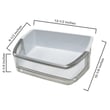
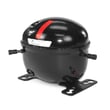
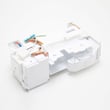
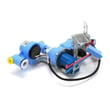
Where to find model number on Kenmore Elite fridge?
On Kenmore Elite refrigerator model 79572483410, the model number is printed on the rating label inside the fresh food (refrigerator) compartment. The most common spot is on an interior side wall near the crisper drawers; confirm the exact label location in the 79572483410 owner's manual.
Common places to check first
Look for a white or silver sticker that lists the model and serial number.
- Inside the refrigerator section on the left or right side wall
- On the wall behind or just above the crisper drawers
- Along the door frame (hinge side) when the refrigerator door is open
- On the ceiling of the fresh food compartment (less common)
- If you cannot find it inside, check the exterior lower front area near the toe grille (kick plate)
What the label looks like (and what to write down)
The label typically includes both identifiers; we recommend recording both before ordering parts.
| What to capture | Example format | Why it matters |
|---|---|---|
| Model number | 79572483410 | Ensures parts fit your exact Kenmore Elite configuration |
| Serial number | Letters and numbers | Helps match production changes and revisions |
Why it matters
Kenmore Elite refrigerators can have multiple versions that look similar. Using the exact model number (and ideally the serial number) prevents ordering the wrong water filter, ice maker, door bin, or control board.
Last updated: February 2026
Why is my refrigerator not getting cold at the bottom?
If your Kenmore Elite refrigerator model 79572483410 is warmer at the bottom, the most common causes are blocked airflow, doors not sealing or closing correctly, or temperature settings and recent defrost activity causing uneven temperatures. Start by restoring airflow and confirming the controls are set correctly per the 79572483410 owner's manual.
Quick checks that fix most “warm bottom” complaints
- Move food packages away from interior air vents so cold air can circulate.
- Confirm both doors close fully and stay closed (no “pop open”).
- Reduce long or frequent door openings; warm, humid air raises compartment temperature.
- If you just adjusted controls, change only one increment at a time and wait for temperatures to stabilize.
- After a defrost cycle, wait about 30 minutes and recheck temperatures.
What to check next (in order)
- Airflow path: Bottom areas warm up when cold air cannot move from the evaporator area into the fresh food section.
- Door seal and alignment: A small gap can cause warm spots low in the cabinet where heavier cold air is lost first.
- Room conditions and loading: Hot kitchens, adding warm food, or overpacking can make the unit run longer and cool unevenly.
- Fan and frost symptoms: If you hear unusual fan noise, see heavy frost, or the freezer is also warming, the evaporator fan system may be involved.
Symptom guide
| What you notice | Most likely cause | Best first action |
|---|---|---|
| Top shelves cool, bottom warm | Blocked vents or overpacked shelves | Clear vents, reorganize food |
| Bottom warm and moisture/condensation | Doors opened often or not sealing | Check gasket contact, limit openings |
| Temps fluctuate after changes | Control adjusted too quickly | Adjust one step, wait to stabilize |
| Warm after defrost | Normal short-term rise | Wait 30 minutes, recheck |
Why it matters
Bottom-mount refrigerators rely on steady airflow and good door sealing to keep temperatures even. When airflow is restricted or warm air leaks in, the lower section often shows the problem first, and food safety can be affected.
Parts that can be involved if symptoms persist
If airflow and door sealing look good but cooling is still uneven, we commonly inspect the evaporator fan motor and related assemblies.
Last updated: February 2026
What is the average lifespan of a Kenmore Elite refrigerator?
A Kenmore Elite refrigerator like model 79572483410 typically lasts 13 years. With steady upkeep (clean condenser coils, good door seals, and on-time filter changes), many units reach 15 years of service before major cooling-system repairs become more common.
Typical lifespan range (what to expect)
Most modern bottom-mount refrigerators fall into a predictable window:
| Refrigerator age | What’s typical | What we recommend |
|---|---|---|
| 0 to 5 years | Minor adjustments and maintenance | Keep coils clean; replace filters on schedule |
| 6 to 10 years | Occasional part replacements | Address leaks, fan noise, and ice maker issues early |
| 11 to 15 years | Higher chance of cooling or control issues | Compare repair cost vs. age and condition |
| 16+ years | End-of-life is common | Plan for replacement if sealed-system work is needed |
Maintenance that extends life the most
These steps reduce compressor run time and prevent airflow and moisture problems:
- Vacuum dust from the condenser area regularly (more often with pets).
- Keep door gaskets clean so the doors seal tightly.
- Do not block interior vents; allow air to circulate around shelves and drawers.
- Replace the water filter on schedule to protect the dispenser and ice maker.
- Replace the air filter as recommended to reduce odors and keep airflow fresh.
- Keep the refrigerator level so doors close fully and consistently.
Parts that commonly affect longevity
When performance drops, these are frequent “make-or-break” components on bottom-mount designs:
- Refrigerator compressor TCA38091801 (major cooling component)
- Refrigerator condenser coil ACG73645004 (heat removal; dust buildup hurts efficiency)
- Refrigerator evaporator fan motor EAU61524007 (moves cold air; failures cause warm spots)
- Kenmore refrigerator water filter 9490 ADQ73613402 (protects water flow and taste)
Why it matters
Once a refrigerator is past about 10 years, small efficiency losses (dirty coils, weak seals, restricted airflow) can shorten compressor life and increase temperature swings. Preventive maintenance is the simplest way to keep food temps stable and avoid expensive cooling repairs.
For model-specific care and feature details, follow the maintenance and troubleshooting guidance in the 79572483410 owner's manual.
Last updated: February 2026
What size is Kenmore refrigerator model 79572483410?
Kenmore Elite refrigerator model 79572483410 is a bottom-mount style refrigerator; the exact exterior width, depth, and height vary by configuration and are listed in the 79572483410 owner's manual. For planning space, most Kenmore 795 bottom-mount units are roughly 33 inches wide and about 68 inches tall.
How to confirm the exact dimensions for your 79572483410
We recommend using the model-specific spec and installation section in the 79572483410 owner's manual and measuring your unit in place.
- Measure width at the widest point (often the door edges, not the cabinet)
- Measure height from floor to top hinge cover (leveling legs affect this)
- Measure depth two ways: cabinet only, then to the front of handles
- Confirm whether the refrigerator is leveled; tilt can change door swing clearance
- Account for required clearances: 2 inches behind and 24 inches in front for door opening
Space planning: what to allow around the refrigerator
The manual guidance for this model family calls for airflow and door-swing clearance.
| What you’re planning for | Typical minimum to allow | Why it matters |
|---|---|---|
| Rear clearance to wall | 2 in. | Helps cooling efficiency and prevents heat buildup |
| Front clearance | 24 in. | Lets doors open fully and drawers slide out |
| Room temperature | 55°F to 110°F | Keeps cooling performance stable |
Why it matters
Correct sizing prevents installation headaches like doors that cannot open fully, freezer baskets that hit nearby cabinets, and reduced cooling from restricted airflow. It also helps you choose the right water line routing if your unit has a filter and ice maker.
Last updated: February 2026
What are the common problems with Kenmore Elite refrigerators?
Common problems on the Kenmore Elite refrigerator model 79572483410 include warm temperatures from airflow restrictions (dirty condenser area, blocked vents), frost buildup from defrost issues, water leaks from drain or water-line problems, and ice maker or dispenser troubles. We use the 79572483410 owner's manual troubleshooting section to pinpoint the cause fast.
Most common symptoms and what usually causes them
- Not cooling or weak cooling: dusty condenser area, failed evaporator fan, sealed-system/compressor trouble
- Freezer cold but fridge warm: blocked air vents, evaporator fan issue, frost-clogged evaporator cover
- Frost buildup or noisy fan: defrost system problem, ice contacting the fan
- Water under the refrigerator: clogged defrost drain, loose water line, dispenser tubing leak
- Ice maker not making ice: water supply issue, frozen fill tube, ice maker failure
- Dispenser issues (ice door not closing, clumping): chute door motor or auger/ice path problems
Quick checks we recommend before replacing parts
- Confirm temperature settings and allow 24 hours after any adjustment.
- Make sure food packages are not blocking interior air vents.
- Clean dust from the condenser area (unplug first).
- Listen for the evaporator fan running when the doors are closed.
- Check for visible frost behind the freezer rear panel.
- Verify household water supply is on and the line is not kinked.
Parts that commonly solve these problems on model 79572483410
| Problem area | What you may notice | Example model-matched part |
|---|---|---|
| Odors in fresh food section | Smells linger even after cleaning | Lg refrigerator air filter ADQ73214408 |
| Ice maker stops or is inconsistent | No ice, small cubes, slow production | Lg refrigerator ice maker AEQ73110210 |
| Dispenser ice door not sealing | Frost in chute, clumped ice | Refrigerator dispenser ice chute door motor EAU59551204 |
| Warm temps with fan noise changes | Poor airflow, unusual fan sound | Refrigerator evaporator fan motor EAU61524007 |
Why it matters
Cooling and ice maker complaints often start with airflow or water-supply restrictions. Catching those early helps protect food, reduces compressor run time, and prevents repeat icing and leaking problems.
For model-specific diagnostics (including the built-in troubleshooting guide and Kenmore Connect steps), follow the 79572483410 owner's manual.
Last updated: February 2026
How many cubic feet is my Kenmore refrigerator model 79572483410?
The exact cubic-foot capacity for Kenmore Elite refrigerator model 79572483410 is listed on the model’s rating label and in the specifications section of the 79572483410 owner's manual. Most Kenmore 795 (LG-built) bottom-mount refrigerators are commonly in the 20 to 22 cu. ft. range.
Where to find the exact capacity (fastest options)
Use one of these methods to get the precise number for your specific unit:
- Check the rating label inside the fresh food compartment (often on a side wall near the crisper area).
- Look for a specifications or features section in the 79572483410 owner's manual.
- If your refrigerator has a product information sticker behind the toe grille or on the cabinet edge, check there.
- If you are comparing similar models, match the full model number exactly (795.7248 series can include multiple capacities).
Typical capacity range for this model family
Here is a practical way to interpret what you may see when shopping for parts or comparing refrigerators:
| What you have | What it usually means | Typical capacity |
|---|---|---|
| Kenmore model prefix 795 | Built by LG for Kenmore | Often 20 to 22 cu. ft. |
| Bottom-mount layout | Freezer drawer on bottom | Commonly mid to large capacity |
Why it matters
Capacity affects how you plan food storage and also helps when comparing similar Kenmore Elite bottom-mount models. For parts ordering (like filters, bins, or an ice maker), the full model number is more important than cubic feet.
If you are also replacing maintenance items, this model uses parts such as the Kenmore refrigerator water filter 9490 ADQ73613402 and the lg refrigerator air filter ADQ73214408 (when equipped).
Last updated: February 2026
Why is my Kenmore Elite refrigerator leaking from the bottom?
On Kenmore Elite refrigerator model 79572483410, a leak from the bottom is usually caused by a clogged defrost drain overflowing into the base pan, or a water supply leak from the dispenser/ice maker tubing connections. Start by checking for ice or debris in the drain area and inspecting the water line fittings.
Quick checks we recommend first
- Unplug the refrigerator before inspecting internal panels or wiring.
- Look for a sheet of ice or standing water under the freezer floor (common with a blocked defrost drain).
- Check the water filter area and nearby tubing for drips.
- Inspect the water tube connection at the back of the unit for a loose or damaged fitting.
- Confirm the doors are closing fully; warm air can increase frost and drain icing.
Most common causes and what to do
| What you see | Most likely cause | What to do next |
|---|---|---|
| Water pooling under crisper or on fresh food floor | Defrost drain restricted | Clear the drain opening and flush with hot water (per safe access steps in the manual). |
| Water only when dispensing water or making ice | Cracked/loose water tubing or fitting | Inspect tubing for splits and reseat connections; replace damaged tubing. |
| Slow, intermittent leak with no dispensing | Filter head or filter not seated | Reinstall the filter and check the housing for cracks; replace the filter if it will not seal. |
| Water appears after defrost cycles | Drain icing or drain tube blockage | Defrost the drain area, then clear the restriction to prevent repeat icing. |
Parts that commonly relate to bottom leaks on this model
If you find the leak is coming from the water system (not the defrost drain), these model-matched parts are often involved:
- Plastic tube MJU62070602 (water tubing that can crack, kink, or leak at fittings)
- Kenmore refrigerator water filter 9490 ADQ73613402 (a poor seal or mis-seated filter can drip)
Why it matters
Bottom leaks can lead to floor damage and can also cause ice buildup in the freezer, reduced airflow, and warmer temperatures. Fixing the drain or water line leak early helps protect the evaporator area and keeps the ice maker and dispenser working reliably.
Manual guidance for safe access
We follow the safety and access steps in the 79572483410 owner's manual, including disconnecting power and using proper handling when accessing areas near vents and the bottom of the refrigerator.
Last updated: February 2026