Owner’s manual


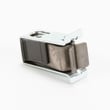

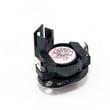
How do I know if my Kenmore dryer thermal fuse is blown?
On Kenmore Elite dryer model 11068062801, a blown thermal fuse commonly shows up as a dryer that will not start, or a dryer that tumbles but has no heat. The sure way to confirm is a continuity test with a multimeter after disconnecting power; an open (no continuity) reading means the fuse is blown.
- Dryer will not run at all (no motor, no drum movement)
- Drum turns but there is no heat (electric models can still tumble with a heat-side power issue)
- Cycle runs unusually long because clothes stay damp
- You recently had restricted airflow (packed lint screen, crushed vent, blocked exterior hood)
- Unplug the dryer or shut off the breaker.
- Access the fuse (typically on the blower housing or exhaust duct area).
- Pull the wires off the fuse terminals.
- Check continuity across the fuse with a multimeter.
Results guide
| Multimeter result | What it means | What to do next |
|---|---|---|
| Continuity (beep or near 0 ohms) | Fuse is good | Check power supply, door switch, start circuit, or heating circuit |
| No continuity (open circuit) | Fuse is blown | Replace the fuse and correct the airflow problem |
If the fuse is blown, we replace it and also fix the overheating cause (usually airflow restriction).
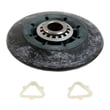
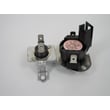
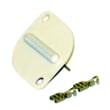
- Dryer thermal fuse WP3390719: one-time safety device that opens if the dryer overheats
- Clean the lint screen and confirm the vent run is not crushed or kinked
- If you see airflow-related messages, follow the troubleshooting steps in the 11068062801 owner’s manual
A thermal fuse is designed to stop the dryer when unsafe temperatures occur. Replacing the fuse without fixing venting or lint buildup often leads to another blown fuse and continued no-heat or no-start symptoms.
Last updated: February 2026
How much does it cost to replace a heating element in a Kenmore dryer?
For the Kenmore Elite dryer model 11068062801, replacing the heating element typically costs about $100 to $350 total when you include labor; the part itself is usually $20 to $120 depending on whether you buy the element only or a more complete repair set. Use the 11068062801 owner's manual to confirm the correct heating and troubleshooting checks for your exact dryer.
Costs vary most by whether you DIY or hire service, and whether you replace only the failed part or also address heat-safety parts.
- Heating element part: commonly $20 to $120
- Labor (service call + install): commonly $80 to $230
- Common add-on parts (often replaced together): thermal fuse, high-limit thermostat, wiring terminals
- Vent cleaning (if needed): can add cost but often prevents repeat failures
| Scenario | What you pay for | Typical total |
|---|---|---|
| DIY element only | Part only | $20 to $120 |
| DIY with heat-safety parts | Element plus fuse/thermostat as needed | $40 to $180 |
| Professional repair | Parts + labor | $100 to $350 |
If your dryer overheated or stopped heating, we often see these checked or replaced at the same time as the element:
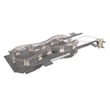
- Dryer heating element WP8544771 (the heat source)
- Dryer thermal fuse WP3390719 (opens if the dryer overheats)
- Dryer high-limit thermostat WP8557403 (limits heater temperature)
- Dryer heating element wire kit 279457 (repairs heat-damaged terminals)
A new element can fail early if airflow is restricted. Your manual notes that an “AF” code points to a crushed or blocked vent, and an “L2” code can indicate a home power supply issue that keeps the heater from turning on. Checking venting and power first helps you avoid paying twice.
- Confirm the dryer has proper airflow (lint screen, duct, outside hood)
- Run a Timed Dry heated cycle test (not Air Only)
- Watch for error codes and match them to the right fix
- If the dryer overheated, plan to test/replace the thermal fuse and high-limit thermostat
For code help on this style of Kenmore dryer, use Kenmore 110 series electronic control model dryer error codes.
Last updated: February 2026
How to hard reset a Kenmore dryer?
To hard reset your Kenmore Elite dryer model 11068062801, we recommend a simple power reset: unplug the dryer (or switch the breaker off) for 1 minute, restore power, then start a new cycle. If the control is still acting up, cancel the current cycle and restart it using the steps in the 11068062801 owner's manual.
- Unplug the dryer for 1 minute (or turn the dryer breaker off).
- Restore power.
- Close the door fully.
- Select a Timed Dry heated cycle.
- Press and hold START until the dryer starts.
- If the dryer was mid-cycle, reselect your cycle and options before restarting.
Your 11068062801 control has specific “cancel and restart” behavior:
| What you see | What to do | What it means |
|---|---|---|
| Cycle won’t change or seems stuck | Press STOP twice, then pick a new cycle and press START | Cancels the cycle and clears the selection |
| “PF” on the display | Press and hold START | Power failure interrupted the cycle |
| “L2” on the display | Press and hold START, then check both breakers/fuses | Low or missing line voltage; drum may run but heater may not |
| “AF” on the display | Clear the code, then clean lint screen and check venting | Low airflow condition |
A “reset” will not fix a safety open circuit. On this model, no-heat is commonly tied to airflow restrictions or a failed heat safety part.
Check these in order:
- Clean the lint screen and confirm the exhaust duct is not crushed or kinked.
- Confirm the outside vent hood opens freely and is not packed with lint.
- If the dryer runs but has no heat, test the thermal fuse and heating circuit parts.
- Consider replacing a failed fuse with the correct part for this model, such as the dryer thermal fuse WP3390719.
Resetting clears a stuck cycle selection and recovers from power interruptions, but codes like AF and L2 point to conditions (airflow or power supply) that can keep drying performance poor or prevent the heater from running.
Last updated: February 2026
What are common problems with Kenmore dryers?
Common problems we see on Kenmore Elite dryer model 11068062801 include the dryer not starting, no heat (even though the drum turns), long dry times from restricted venting, and unusual noises from worn drum support parts. The troubleshooting section in the 11068062801 owner's manual covers several of these symptoms and quick checks.
- Dryer will not run: door not fully closed, Start not held long enough, tripped breaker or blown fuse
- No heat: one leg of power lost on an electric dryer (drum turns but heater stays off), or a failed safety device
- Long dry times: crushed or blocked venting, lint buildup, restricted airflow
- Unusual sounds (thumping, squealing, scraping): items caught at drum edge, dryer not level, worn rollers or belt
- Error codes at first run (installation diagnostic): L2 points to a home power supply issue; AF points to vent restriction
- Confirm the dryer is getting 240V power (electric dryers often use 2 breakers/fuses; one can trip and still let the motor run).
- Press and hold Start for 2 to 5 seconds on large loads.
- Make sure the door is firmly closed and controls are set to a running cycle.
- Inspect the vent path for kinks, crushing, or blockage; an AF code is a strong airflow warning.
- Level the dryer on all four legs to reduce vibration and noise.
| Symptom | Commonly involved part | Example part for this model |
|---|---|---|
| No heat | Heating circuit component | Dryer heating element WP8544771 |
| No heat or won’t run (safety open) | Overheat safety device | Dryer thermal fuse WP3390719 |
| Squealing or rumbling | Drum support wear | Support WPW10314173 |
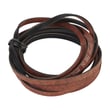
| Drum not turning | Belt or idler issue | Dryer drum belt WP8547157 |
Airflow and power issues can mimic “bad parts.” Fixing a crushed vent or a tripped breaker often restores heat and prevents repeat failures like a blown thermal fuse.
For model-specific operating and troubleshooting steps (including the L2 and AF guidance), use the 11068062801 owner's manual.
Last updated: February 2026
What are the codes for Kenmore Elite dryer?
For Kenmore Elite dryer model 11068062801, the display can show diagnostic codes that point to power supply issues, airflow restrictions, or control and sensor problems. The most common codes you will see include PF (power failure), L2 (low line voltage), and AF (low airflow). See the 11068062801 owner's manual for the model-specific troubleshooting steps.
- PF: Power failure interrupted the cycle; press and hold START to restart.
- L2: Low or no line voltage; the drum may turn but the heater may not heat.
- AF: Low airflow; vent may be crushed, kinked, or blocked.
- F:01: Main electronic control board failure.
- F:02: Keypad or user interface failure.
- F:20: Heater relay failure.
- F:22 / F:23: Outlet thermistor failure.
- F:24 / F:25: Inlet thermistor failure.
- Clear and retry: Press and hold START to restart after PF or L2.
- Check power for L2:
- Confirm the dryer is plugged in firmly.
- Check both household fuses or breakers (electric dryers typically use two).
- If the code returns, have an electrician check the outlet and supply.
- Fix airflow for AF:
- Clean the lint screen and lint screen housing.
- Inspect the vent hose for kinks or crushing.
- Clean the vent duct to the outside hood.
If you are troubleshooting heat or temperature-sensing issues, these parts are commonly involved:
| Symptom or code | Most likely area | Example part for this model |
|---|---|---|
| No heat or weak heat | Heating circuit | Dryer heating element WP8544771 |
| Overheats or shuts off | Safety cutoff | Dryer thermal fuse WP3390719 |
| Temperature codes (F:22-F:25) | Temperature sensing | Dryer thermistor WP8577274 |
Using the code to guide your next step prevents unnecessary part replacement. For example, AF is usually a venting problem (maintenance), while L2 is typically a home power supply issue that can stop the heater even though the drum still turns.
Last updated: February 2026
What does AF mean on my Kenmore Elite dryer?
On Kenmore Elite dryer model 11068062801, the AF code means the dryer is sensing low airflow. The dryer can keep running, but drying times increase and heat can be limited until you clear the venting restriction (crushed hose, lint buildup, or blocked exterior hood). See the 11068062801 owner's manual for the model’s troubleshooting steps.
- Clean the lint screen completely (wash with warm water if it has fabric softener residue, then dry it).
- Make sure the vent hose behind the dryer is not crushed, kinked, or pinched.
- Disconnect the vent at the wall and remove lint and debris from the duct.
- Check the exterior exhaust hood; confirm the flap opens freely and is not packed with lint.
- Verify the vent run is not too long and does not have too many elbows.
After correcting airflow issues:
- Press any key to clear AF from the display.
- Run a Timed Dry heated cycle and restart the dryer.
Low airflow traps heat and moisture in the dryer. That causes longer dry times, higher energy use, and can lead to repeated shutdowns or overheating protection trips.
| What you notice | Most common cause | What to do |
|---|---|---|
| Clothes take 2+ cycles to dry | Lint restriction in vent run | Clean the full vent path to the outside |
| Dryer feels hot, laundry still damp | Crushed or kinked vent hose | Re-route or replace the vent hose |
| Little air outside at the hood | Blocked exterior hood | Clear lint, confirm flap movement |
| AF returns quickly after cleaning | Heavy buildup in home ducting | Have the entire vent system cleaned |
If you’re seeing other display messages along with AF, use our Kenmore elite dryer error codes guide to identify what the dryer is reporting.
Last updated: February 2026
What size is a Kenmore model 11068062801 dryer?
The Kenmore Elite dryer model 11068062801 is a full-size 27-inch class dryer. For exact cabinet dimensions (width, height, depth) and the clearance you need for venting and the door swing, we recommend confirming the measurements listed in the 11068062801 owner's manual.
Most Kenmore 110-series (Whirlpool-built) full-size dryers are approximately:
- Width: about 27 in.
- Height: about 38 to 44 in. (varies by control console style)
- Depth: about 27 to 30 in. (can increase with venting)
Even when the cabinet is 27-inch class, the installed footprint is usually larger because of venting and airflow needs.
- Plan for at least 5 in. behind the dryer for the exhaust vent and elbow (common requirement).
- If installing in a closet, the door needs top and bottom ventilation openings.
- Extra space around the dryer helps reduce vibration noise and makes service easier.
| What you’re measuring | What to include | Typical allowance |
|---|---|---|
| Width | Cabinet only | ~27 in. |
| Depth | Cabinet + vent elbow | + ~5 in. behind |
| Height | Cabinet + console | Varies by design |
- Measure width at the widest cabinet points.
- Measure height from floor to the highest point of the top or console.
- Measure depth from the back panel to the front (include the door if it protrudes).
- Add space for the 4-inch vent duct and the bend radius behind the unit.
Correct sizing prevents crushed venting (long dry times, overheating) and avoids fit issues in closets, laundry alcoves, and tight side-by-side installations.
Last updated: February 2026
Where is the model number on Kenmore Elite dryer?
On a Kenmore Elite dryer, the model number is printed on the rating label; for model 11068062801, you’ll typically find that label on the door opening (inside the door on the cabinet frame) or on the back of the dryer near the top. Confirm the exact label location in the 11068062801 owner's manual.
- Open the dryer door and look along the cabinet frame around the door opening.
- Check the area just behind the door, near the lint screen housing.
- Look on the back panel near the top edge.
- If your dryer is stacked or in a tight closet, use a flashlight and take a photo to zoom in.
The rating label usually includes the model number and serial number. We recommend recording:
- Model number (example: 11068062801)
- Serial number
- Power type (electric dryers list electrical requirements)
- Any additional code numbers printed near the model
We use the model number to match the correct Kenmore parts and diagrams for your exact dryer configuration. Small differences can affect fit for common wear items like the dryer drum belt WP8547157 or the dryer thermal fuse WP3390719.
| Label location | When it’s most common | Tip |
|---|---|---|
| Door opening (cabinet frame) | Most installations | Check all four sides of the opening |
| Back of dryer near top | When the door label is worn or obstructed | Use a flashlight, take a picture |
Last updated: February 2026