Installation guide
 Owner’s manual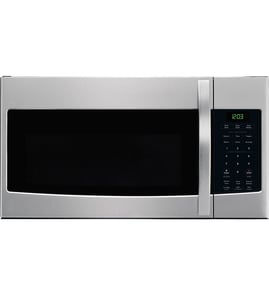
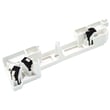


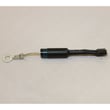

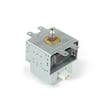
Are all over-the-range microwaves 30 inches wide?
Most over-the-range microwaves are built to fit a 30-inch-wide cabinet opening, but the microwave itself is usually slightly narrower so it can slide into that space. For Kenmore model 40185053010, the installation requirements call for a 30-inch-wide space between cabinets.
What “30 inches wide” really means
Over-the-range (OTR) microwaves are designed around the standard range width, so installers measure the opening, not just the appliance shell.
- Cabinet opening: typically 30 inches wide
- Microwave body: commonly a bit under 30 inches (often around 29 3/4 inches)
- Mounting alignment: centered in the 30-inch space using the rear wall template
- Clearance to cooktop: the cabinet bottom needs to be 30 inches or more above the cooking surface
For the exact fit and template measurements for this Kenmore unit, follow the 40185053010 installation guide.
Quick sizing guide (common OTR scenarios)
| What you are measuring | Typical target | What to do |
|---|---|---|
| Space between cabinets | 30 inches | Confirm it is clear and unobstructed |
| Microwave overall width | Slightly under 30 inches | Compare to the spec sheet in the install guide |
| Height above cooktop | 30 inches or more | Measure from cooktop to cabinet bottom |
Why it matters
A microwave/hood combo has to line up with wall studs, the mounting plate, and the venting path (recirculating, top exhaust, or back exhaust). If the opening is not the standard 30 inches, the unit may not mount level or vent correctly.
Related installation tips we use in the field
- Use a tape measure and level before drilling any holes.
- Make sure the cabinet bottom is flat; trim can interfere with leveling.
- Center the unit in the 30-inch opening using the template.
- Plan your venting type before mounting (recirculating vs. outside exhaust).
- Verify at least one mounting screw is anchored into a wall stud.
Last updated: February 2026
How far can you run a microwave vent?
For the Kenmore 40185053010 microwave/hood combo, we run the vent up to 140 equivalent feet maximum (using either 3-1/4 x 10 inch rectangular duct or 6 inch round duct). Equivalent feet includes straight duct plus fittings like elbows and roof or wall caps; see the 40185053010 installation guide.
How to calculate “equivalent feet”
Equivalent length is the total of:
- Straight duct length
- Each elbow (for example, 90° elbows)
- Transitions (such as rectangular-to-round adaptors)
- The exterior termination (roof cap or wall cap)
The installation guide includes an example layout that totals 63 equivalent feet using a roof cap, a short straight run, and two 90° elbows.
Recommended venting practices (best performance)
We install for the shortest, straightest route possible because every turn reduces airflow.
- Keep the duct route as direct as possible
- Use as few elbows as possible
- Make sure the damper swings freely and nothing blocks the duct
- Seal all duct joints with duct tape
- If using a transition adaptor, trim damper corners as needed so the damper moves freely
Quick reference: duct types and limits
| Vent duct type | Minimum size to use | Maximum total length |
|---|---|---|
| Rectangular duct | 3-1/4 x 10 in | 140 equivalent ft |
| Round duct | 6 in diameter | 140 equivalent ft |
Why it matters
Staying under the 140 equivalent foot limit helps the vent fan move air properly, reduces grease and moisture buildup, and prevents weak exhaust performance (especially important for an over-the-range microwave/hood combo).
Last updated: February 2026
How do I reset a Kenmore microwave?
To reset your Kenmore microwave/hood combo model 40185053010, unplug it (or turn off the breaker) for about 1 minute, then restore power and set the clock. This clears most control glitches and returns the unit to a normal standby state; see the 40185053010 owner's manual for model-specific control steps.
Quick reset options (from easiest to most complete)
- Power reset: Unplug the microwave or switch the circuit breaker OFF, wait 60 seconds, then turn it back ON.
- Control lock check: If the keypad seems unresponsive, turn off the control lock (often a 3-second press on a key such as Stop/Cancel or Lock; confirm the exact key in the manual).
- Clock re-set: After power is restored, set the clock; some features will not run until the clock is set.
- Vent/light check: Test the hood fan and cooktop light to confirm the control board is responding.
If “reset” is really a heating problem
A reset will not fix a no-heat condition. If the microwave runs but does not heat, common causes include a failed high-voltage component or a door safety switch.
| Symptom | What it usually points to | What to do next |
|---|---|---|
| Runs, light/fan on, no heat | High-voltage circuit issue | Use a pro for diagnosis; review why is my microwave not heating |
| Dead display, no response | Power supply issue, fuse, control | Verify outlet and breaker; then follow how to replace a microwave fuse |
| Starts then stops when door moves | Door interlock problem | Inspect latch alignment; consider microwave door interlock switch 3405-001034 |
Why it matters
Resetting clears temporary electronic errors after a power surge or keypad glitch. If the issue returns quickly, it usually indicates an underlying problem (power, door interlock, or heating circuit) that needs troubleshooting rather than repeated resets.
Last updated: February 2026
What is the life expectancy of a Kenmore microwave?
Most Kenmore microwaves, including the Kenmore 40185053010 microwave/hood combo, typically last 9 to 10 years with normal household use. Keeping the venting system clean, using the correct power supply, and addressing heating or door issues early helps you get the full service life.
What affects microwave lifespan most
- Ventilation and grease buildup (over-the-range units work harder when airflow is restricted)
- Door use and slamming (wears door latches and interlock switches)
- Electrical supply quality (this model is designed for a dedicated grounded outlet and proper circuit sizing)
- Cooking habits (frequent long run times, overheating, or running empty)
- Maintenance (regular cleaning of filters and interior)
Signs it is near end-of-life (or needs repair)
- Food takes much longer to heat than it used to
- Loud humming, buzzing, or burning smell during operation
- Display works but it will not start, or it stops mid-cycle
- Door does not close smoothly or you have to push hard to start
- Fan runs abnormally loud or airflow is weak
Common “repair vs replace” decision guide
| What you notice | Most likely area | Typical next step |
|---|---|---|
| Runs but does not heat | High-voltage system | Professional diagnosis recommended |
| Intermittent starting | Door safety circuit | Inspect door alignment and switches |
| Shuts off during cooking | Overheat protection | Check airflow, filters, and venting |
| No power at all | Fuse, cord, control | Verify outlet, then test components |
Why it matters
A microwave/hood combo like the Kenmore 40185053010 depends on both microwave heating and range ventilation. When airflow is restricted or the door safety system is worn, the unit can run hotter, trip thermal protection, and shorten component life.
For model-specific electrical and installation requirements (including dedicated circuit guidance and mounting support), follow the 40185053010 installation guide.
Last updated: February 2026
Can I replace a microwave with a range hood?
Yes. You can replace the Kenmore 40185053010 microwave/hood combo with a dedicated range hood as long as the new hood fits the cabinet opening, matches your venting method (ducted outside or recirculating), and you have a safe power supply for the hood.
What to check before you buy a hood
- Width: Most over-the-range setups are 30 inches wide; your opening should be the same.
- Mounting height: Keep the hood bottom at the proper distance above the cooktop (many installations target 30 inches or more, depending on the hood and range).
- Venting path: Decide outside venting (vertical or rear duct) vs recirculating (charcoal filter).
- Cabinet space: A hood and ductwork can reduce usable space in the cabinet above.
- Electrical: Many hoods plug into an outlet in the upper cabinet; some are hardwired. Match what you have.
How the existing microwave installation affects the swap
Your current unit was designed to mount in a 30-inch wide space and uses a wall mounting plate plus top cabinet fasteners. The installation process also accounts for cabinet overhangs and keeping the appliance level. Use the measurements and templates in the installation guide to understand your existing hole locations and clearances before removing the microwave.
Typical differences: microwave/hood combo vs range hood
| Feature | Microwave/hood combo (like 40185053010) | Dedicated range hood |
|---|---|---|
| Weight/support | Heavier; wall plate plus top bolts | Usually lighter; bracket or direct cabinet/wall mount |
| Venting | Often convertible (top/rear/recirc) | Also convertible, but model-specific |
| Cabinet impact | Takes full appliance cavity | May free space below but duct can still take space above |
Why it matters
Fit and venting are the two make-or-break items. If the hood does not match your duct direction or cabinet opening, you can end up with poor smoke capture, extra cabinet modifications, or a hood that sits out of level.
Helpful next steps
- Confirm your cabinet opening width and the cooktop-to-cabinet height.
- Identify whether you currently vent outside or recirculate.
- Use the 40185053010 owner’s manual for filter and venting basics, then compare those requirements to the hood you want.
- If you plan to recirculate, choose a hood that supports a charcoal filter kit.
Last updated: February 2026
How many cubic feet is a Kenmore Model 40185053010 microwave?
The Kenmore 40185053010 microwave/hood combo has a 1.7 cubic foot oven capacity. For the most accurate confirmation for your exact configuration and any related specs (like mounting clearances), we recommend checking the 40185053010 installation guide.
Quick specs and what they mean
- Capacity: 1.7 cu. ft. (interior cooking space)
- Type: Over-the-range microwave/hood combo
- Typical fit: Designed to install over ranges up to 30 inches wide
- Minimum mounting height: Bottom of the cabinet should be 30 inches or more above the cooking surface
Why capacity matters
Capacity affects what you can heat comfortably (casserole dishes, dinner plates, tall mugs) and how evenly food cooks. It also helps when comparing replacement models or choosing accessories that need interior clearance.
Installation clearance snapshot (from the install instructions)
| Item | What to plan for | Why it matters |
|---|---|---|
| Range width | Up to 30 inches | Ensures the microwave aligns over the cooktop |
| Space between cabinets | 30 inches wide, unobstructed | Allows the unit to mount correctly |
| Height above cooktop | 30 inches or more | Helps with safe clearance and usability |
Related parts you might replace during ownership
If you are troubleshooting performance issues (like weak heating or ventilation problems), these are common service parts for this model:
- Microwave magnetron OM75P-21-ESGN (heating component)
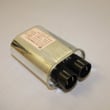
- Microwave high-voltage capacitor 2501-001011 (part of the high-voltage circuit)
- Microwave grease filter DE63-00666A (helps capture cooking grease in venting)
Helpful troubleshooting resource
If the microwave runs but does not warm food, follow the diagnostic steps in why is my microwave not heating.
Last updated: February 2026
How big is a Kenmore microwave model 40185053010 in inches?
Kenmore microwave/hood combo model 40185053010 is built to fit a standard 30-inch over-the-range opening; the installation requirements call for 30 inches of space between cabinets and installation over ranges up to 30 inches wide. For the exact overall width, height, and depth, use the dimensioned drawings in the 40185053010 installation guide.
Key fit measurements to confirm
Use a tape measure and compare to the templates/drawings in the installation instructions:
- Space between cabinets (opening width)
- Overall depth (front of door/handle clearance)
- Overall height (cabinet bottom to microwave bottom)
- Cooktop-to-cabinet height (mounting height above the range)
- Upper cabinet depth/overhang (can affect how the unit sits level)
Model-specific installation clearances (in inches)
These are the critical fit numbers called out for the 401.8505* series installation:
| Fit item | Requirement | Why it matters |
|---|---|---|
| Space between cabinets | 30 | Ensures the mounting plate and templates align correctly |
| Range width below | Up to 30 | Confirms it is designed for standard range widths |
| Cooktop to cabinet bottom | 30 or more | Provides safe clearance and proper mounting height |
Why it matters
Over-the-range microwaves can share the same 30-inch class fit but still differ in depth, mounting plate hole locations, and venting layout. Verifying the exact dimensions prevents cabinet interference, poor leveling, and vent duct misalignment.
Before you install (quick checklist)
- Choose your venting type: recirculating, outside top exhaust, or outside back exhaust
- Check for decorative cabinet trim that can interfere with leveling
- Confirm the cabinet bottom is level; the microwave must mount level
- Use the paper templates and hole locations shown in the 40185053010 installation guide
Last updated: February 2026