Owner’s manual
 Error Codes


What size is Kenmore refrigerator model 79575549401?
The Kenmore Elite refrigerator model 79575549401 is a bottom-freezer refrigerator; its exact exterior dimensions (width, depth, height) vary by configuration and are listed in the product specifications section of the 79575549401 owner's manual. For planning space, most 33-inch-class bottom-freezer units measure about 33 in W, 30 to 34 in D, and 67 to 70 in H.
We recommend using the manual specs (not a “similar model” listing) so your cabinet opening, door swing, and water line clearance are correct.
- Check the specifications/dimensions section in the 79575549401 owner's manual
- Measure your unit at the widest points (handles and hinges can add width)
- Measure depth with doors closed, then note any extra depth for handles
- Confirm height to the top hinge cover (not just the cabinet)
- Leave clearance for air circulation and for pulling the refrigerator out for service
These ranges help when you are estimating fit before you confirm the exact spec sheet.
| Measurement | Typical range for this style | What can change it |
|---|---|---|
| Width | ~33 in | Door/hinge geometry, trim, handles |
| Depth | ~30 to 34 in | Handles, door thickness, rear clearance |
| Height | ~67 to 70 in | Leveling legs, hinge cover |
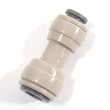
Correct sizing prevents installation problems like doors hitting cabinets, drawers not clearing, and kinks in the water line. If you’re connecting a water supply for the ice maker, the manual’s water line routing guidance helps you plan enough slack and access behind the refrigerator.
Last updated: January 2026
What does DH mean on Kenmore Elite refrigerator?
On Kenmore Elite refrigerator model 79575549401, dH (often shown as Er dH) points to a defrost heating problem: the refrigerator is not warming the evaporator enough during the defrost cycle, so frost can build up and airflow can drop. Use the 79575549401 owner's manual to confirm the display behavior and troubleshooting steps for your exact control panel.
- Freezer temperature slowly rises or swings
- Frost or ice buildup on the rear freezer panel
- Weak airflow into the fresh food section (warm refrigerator, cold freezer)
- Fan noise changes as ice interferes with airflow
- Water dripping or refreezing after a defrost attempt
We start with the simplest checks because airflow and frost patterns often point to the root cause.
- Heavy frost on the evaporator cover: indicates a defrost system issue
- Door not sealing well: warm, moist air entering can overwhelm defrost (inspect gaskets and door closure)
- Defrost heater circuit problem: heater, wiring, or connectors
- Control not completing defrost: less common, but possible if other parts test good
If you suspect a failed heater, the model’s listed defrost heater is the lg refrigerator defrost heater 5300JK1005D.
| What you see | Most likely direction | What we do next |
|---|---|---|
| Solid frost sheet behind freezer panel | Defrost system not heating | Check heater and wiring; inspect connectors |
| No frost, but temps still off | Airflow or sensor/control issue | Check vents, fan operation, settings |
| Door not closing or gasket gaps | Moisture intrusion | Clean/reshape gasket, confirm door alignment |
When defrost heat is not working, frost can block the air passages that move cold air from the freezer to the refrigerator section. That can cause warm food temps, longer run times, and inconsistent ice production.
For display codes commonly seen on Kenmore 795 bottom-freezer models, use our Kenmore 795 model bottom freezer refrigerator error codes reference to match the exact code format and recommended checks.
Last updated: January 2026
What are the common problems with Kenmore Elite refrigerators?
Common problems on the Kenmore Elite 79575549401 bottom-mount refrigerator include weak or no cooling, frost buildup in the freezer, doors that will not close or are hard to open, and ice maker issues like slow ice production or bad-tasting ice. Many fixes start with cleaning, leveling, and checking airflow.
- Not cooling well: dirty condenser coils, blocked vents, or a failed fan motor
- Frost or ice crystals on food: door not sealing, door opened often, or defrost system trouble
- Doors will not close completely: refrigerator not level, bins or shelves out of position, food packages blocking the door
- Doors are difficult to open: dirty or sticky door gaskets, or pressure not equalized after closing
- Ice tastes bad or smells: old ice, unwrapped food odors, or water quality issues
- Slow ice production: freezer not cold enough yet, door left open, or restricted water supply
- Clean the condenser coils (this is a top cause of poor cooling and long run times).
- Confirm doors seal and close: push doors firmly shut; make sure bins and drawers are fully seated.
- Clean door gaskets and the surfaces they touch; then apply a thin coat of wax as described in the 79575549401 owner's manual.
- Level the refrigerator if it wobbles or doors drift open.
- For ice issues: discard the first few batches after installation or service; throw out old ice and rewrap foods.
If troubleshooting points to a failed component, these model-matched parts are often involved:
| Symptom | Part to check | What it affects |
|---|---|---|
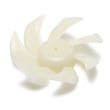
| Warm fridge or freezer, poor airflow | Evaporator fan blade 5901JA1021A | Circulates cold air through compartments |
| Frost buildup, warm temps after icing | Defrost heater 5300JK1005D | Melts frost off the evaporator |
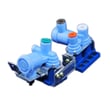
| Water dispenser or ice maker not filling | Refrigerator valve assembly 5221JB2006K | Controls water flow into the refrigerator |
Cooling and ice maker complaints often trace back to airflow, door sealing, or coil cleanliness. Fixing those basics first prevents unnecessary part replacement and helps the compressor and sealed system run under normal load.
Last updated: January 2026