Installation guide
 Owner’s manual
 Error Codes


Are KitchenAid appliances high end?
Yes. KitchenAid is widely considered a premium, upper-mid-range appliance brand, and the KitchenAid KDTE204ESS2 dishwasher fits that “high-end” category for most kitchens based on its build quality, features, and long-term ownership support such as multi-year component coverage listed in the owner's manual.
In practical terms, “high end” is less about a label and more about performance, materials, and serviceability.
Common high-end indicators include:
- Quieter operation compared to basic models
- Stainless steel tub construction
- More wash options and better soil handling
- Better rack design and adjustability
- Stronger long-term parts support and warranty coverage
KitchenAid’s warranty language for this model includes:
- 1st year: limited warranty covering parts and labor
- Years 2 through 5: limited warranty on certain component parts (labor not included), including nylon dish racks and electronic controls
- Lifetime (limited): stainless steel tub and inner door liner (parts and labor)
| Coverage period | What’s typically covered (high level) | Labor included? |
|---|---|---|
| Year 1 | Parts and labor for defects | Yes |
| Years 2 to 5 | Certain component parts (ex: racks, controls) | No |
| Lifetime limited | Stainless steel tub, inner door liner | Yes |
If you are comparing brands, “high end” should translate into fewer compromises: quieter cycles, better cleaning and drying results when loaded correctly, and a dishwasher that is worth repairing when normal wear items fail.
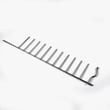
If you are maintaining or repairing KDTE204ESS2, we commonly see customers replace wear-and-tear rack hardware first; for example, the dishwasher dishrack roller assembly, lower WPW10195417 is a typical fix when the lower rack starts sticking, wobbling, or coming off track.
Last updated: February 2026
What is the average lifespan of a KitchenAid dishwasher?
A KitchenAid dishwasher typically lasts 10 years on average. For your KitchenAid KDTE204ESS2, regular maintenance (especially cleaning and using rinse aid for drying and hard-water control) helps you reach the normal 9 to 14 year lifespan range.
Most dishwasher life depends less on the brand name and more on how hard the machine works and the conditions it runs in.
- Water hardness and mineral buildup (can shorten pump, valve, and heater life)
- How often you run it (daily heavy use wears moving parts faster)
- Loading habits (overloading can strain racks, rollers, and spray performance)
- Detergent and rinse aid use (too much detergent can cause issues; rinse aid improves drying)
- Basic upkeep (filter area cleaning, wiping seals, clearing clogs)
The KDTE204ESS2 is designed for efficiency; longer cycles are normal, and rinse aid is important for drying and deposit control. Use these habits to reduce wear on key components like the drain pump, inlet valve, and heating element.
- Keep the tub and filter area clear of food debris
- Use rinse aid consistently; refill and replace the cap securely
- Use the correct detergent amount (avoid over-dosing)
- Run hot water at the sink before starting a cycle (helps fill temperature)
- Inspect and clean door sealing surfaces to prevent leaks
| What you notice | What it often means | What to do first |
|---|---|---|
| Longer cycles than expected | Energy-efficient design, sensor calibration, options selected | Confirm cycle expectations in the owner's manual |
| Poor drying | Low rinse aid, plastics holding water, cooler final rinse | Use rinse aid; adjust loading |
| Leaks at the door | Dirty or worn seals | Clean sealing surfaces; consider replacing the dishwasher door seal W11177741 |
| Not draining well | Partial clog, drain path restriction, pump issue | Check drain path; review troubleshooting steps |
Knowing the normal lifespan helps you decide whether to maintain and replace wear items (like seals and rack rollers) or plan for a larger repair. Small fixes early often prevent water damage and reduce strain on the motor and pump system.
Last updated: February 2026
What is the most common problem with KitchenAid dishwashers?
For KitchenAid dishwasher model KDTE204ESS2, the most common problems we see are poor cleaning, water not draining, and leaks at the door. In many cases, the fix is basic maintenance and setup: correct loading, clean filtration, proper detergent and rinse aid use, and confirming 120°F incoming water.
- Not cleaning well: filter needs cleaning or isn’t seated correctly; spray arms blocked; improper loading
- Spotting or filming: low rinse aid, hard water, or incorrect detergent amount
- Not drying: plastics and nonstick items hold water; rinse aid missing
- Not draining: drain path restriction, kinked hose, or a failing drain pump
- Leaking at the door: worn or mis-seated door seal, or excess suds from wrong detergent
- Verify incoming water temperature is at least 120°F (49°C).
- Use fresh dishwasher detergent and the correct amount for your water hardness.
- Fill and use liquid rinse aid to improve drying and reduce spotting.
- Confirm the filter is installed correctly and clean it as needed.
- Load so spray arms can rotate freely; avoid blocking the detergent dispenser.
If the basic checks don’t change the symptom, these model-relevant parts are common next steps:
| Symptom | Common part involved | What it affects |
|---|---|---|
| Leaks at the door | Dishwasher door seal W11177741 | Seals the door perimeter to prevent drips |
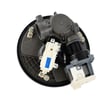
| Won’t drain or drains poorly | Dishwasher drain pump WPW10348269 | Pushes water out during drain portions |
| Not filling or fills slowly | Dishwasher water inlet valve W11175771 | Controls water entering the dishwasher |
Poor cleaning and draining issues usually get worse over time; they can also cause odor, redeposit food soil, and extend cycle times. Door leaks often start small but can damage flooring or cabinets if the seal problem is ignored.
Use the troubleshooting and “Problem Solver” steps in the owner's manual for KDTE204ESS2, including checks like ensuring the water supply is on and confirming the overfill protection float moves freely.
Last updated: February 2026
How to do a hard reset on a KitchenAid dishwasher?
To hard reset the controls on your KitchenAid KDTE204ESS2 dishwasher, we cancel the current cycle so the unit drains and clears the active selections. This is the fastest way to recover from a stuck cycle or unresponsive keypad; follow the exact control names in your owner's manual.
- Press the Cancel/Drain control on the console (some models require a press and hold).
- Close the door and let the dishwasher run the drain portion until it stops.
- Select a new cycle and options.
- Press Start/Resume, then close the door firmly to begin.
- If the keypad is locked, turn off Control lock (the manual lists the exact hold time for your console).
These checks fix the most common reasons a cancel and drain will not complete.
- Control lock is on: Disable Control lock, then try Cancel/Drain again.
- Door not fully latched: Close the door firmly; the dishwasher will not reset or start with an unlatched door.
- Sleep mode or paused cycle: Open and close the door, then press Start/Resume.
- Power glitch: Turn the dishwasher off at the breaker for 1 minute, restore power, then run Cancel/Drain.
| Method | What it does | Best for |
|---|---|---|
| Cancel/Drain | Clears the current cycle and drains water | Stuck cycle, wrong options selected |
| Control lock off | Re-enables the keypad | Buttons/touchpad not responding |
| Breaker reset (1 minute) | Reboots the control after a glitch | Frozen display, odd behavior after outage |
Canceling and draining returns the dishwasher to a known safe state, prevents restart problems caused by an interrupted cycle or locked controls, and helps you start a fresh wash cycle normally.
Last updated: February 2026