Owner’s manual
 Error Codes


How to identify a Kenmore washer model?
For Kenmore washer model 11026842690, the model number is printed on the model and serial number plate. On this style of top-load Kenmore washer, that plate is typically under the lid, so lifting the lid and checking the rim area is the fastest way to confirm the exact model for parts.
Where to look on Kenmore washers
Use these common locations to find the model tag (the exact spot depends on washer style):
- Top-load washers: under the lid, around the tub opening (often on the rim)
- Front-load washers: inside the door opening, on the door frame
- Some models: on the back panel near the power cord entry
- Occasionally: behind the control panel or on a side panel
For this Kenmore 11026842690, the manual calls out the model and serial number plate under the lid; see the 11026842690 owner's manual.
What the model number looks like (and why it matters)
Kenmore model numbers are often a long numeric string (commonly starting with 110 on many Kenmore-built top-load designs). Matching the full model number helps us get the correct fit for parts like a lid switch, drain pump, or motor coupling.
Quick checklist
- Copy the model number exactly as shown (all digits)
- Record the serial number too (helps with version changes)
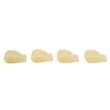
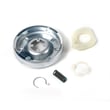
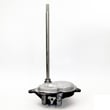
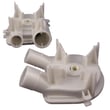
- Use the model number when ordering common repair parts such as:
Common tag locations by washer type
| Washer type | Most common model tag location | What you will see |
|---|---|---|
| Top-load | Under the lid near the tub opening | Model and serial plate or sticker |
| Front-load | Door opening on the cabinet frame | Sticker/plate with model and serial |
| Compact/stackable | Back panel or door opening | Sticker/plate |
Why it matters
Kenmore washers can look similar across multiple series, but parts are not always interchangeable. Using the exact model number prevents ordering the wrong timer, inlet valve, or drive components and reduces repeat repairs.
Last updated: February 2026
What is the average lifespan of a Kenmore washer?
A Kenmore washer typically lasts 10 to 15 years. For Kenmore model 11026842690 (a classic top-load, agitator-style design), staying closer to 15 years usually comes down to avoiding overloads, using the right water level and temperature settings, and fixing small issues before they become major drive or drain failures.
Typical lifespan and what affects it
Most washers reach the end of life due to wear in moving, water-handling, or spin-support components.
- Load size and balance: frequent overloading or off-balance loads shorten tub, drive, and suspension life
- Water quality: sediment can stress the inlet valve and internal passages
- Drain habits: coins, lint, and small items can damage the pump
- Cycle choices: heavy-duty cycles and hot water increase mechanical and thermal stress
- Maintenance: keeping the tub clean and checking hoses reduces leaks and corrosion
Common wear items that can shorten life
If your washer stops agitating, won’t spin, or won’t drain, these are frequent culprits on many Kenmore top-load models.
| Symptom | Common cause | Example part for this model |
|---|---|---|
| Won’t spin or starts then stops | Lid safety circuit issue | Washer lid switch WP3949238 |
| Won’t drain or drains slowly | Pump jam or worn impeller | Washer drain pump WP3363394 |
| Agitates poorly or “slips” | Agitator dogs/cam worn | Agitator dog 80040 |
| No fill or slow fill | Inlet valve or screen restriction | Inlet valve 285805 |
Quick checks that help you reach the high end of the range
- Level the washer and keep all feet firmly on the floor
- Use the correct water level for the load size (small, medium, large)
- Distribute bulky items evenly before spin
- Check pockets to prevent pump clogs
- If you notice new noises, burning smell, or leaking, stop the cycle and inspect
Why it matters
A washer that is kept balanced and draining freely puts less strain on the drive system (coupling, clutch, gear case) and reduces vibration. That directly improves reliability and helps your Kenmore 11026842690 deliver a full 10 to 15 years of service.
For model-specific operating and care guidance, follow the 11026842690 owner's manual.
Last updated: February 2026
What replacement parts are most commonly needed for the 11026842690?
For Kenmore washer model 11026842690, the most commonly replaced parts are the wear items that affect filling, draining, agitation, spinning, and lid safety. If your washer will not start, will not drain, or will not agitate, these parts are the first ones we check; confirm symptoms and procedures in the 11026842690 owner's manual.
Commonly replaced parts for this model
These parts are frequent fixes for everyday complaints like no spin, no drain, leaks, or weak agitation:
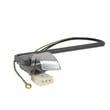
- Washer lid switch WP3949238 (won’t start, won’t spin, stops mid-cycle)
- Washer drain pump WP3363394 (won’t drain, humming, water left in tub)
- Coupling 285753A (motor runs but washer won’t agitate or spin)
- Inlet valve 285805 (won’t fill, slow fill, overfilling)
- Clutch 285785 (poor spin, burning smell, slow basket acceleration)
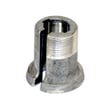
- Agitator dog 80040 (agitator “slips” or only moves one direction)
Quick symptom-to-part guide
| Symptom | Most likely part to check first | What you may notice |
|---|---|---|
| Won’t start or won’t spin with lid closed | Washer lid switch WP3949238 | No motor action, intermittent operation |
| Water won’t drain | Washer drain pump WP3363394 | Standing water, pump hum, slow drain |
| Motor runs but no agitation/spin | Coupling 285753A | Tub and agitator stay still |
| Won’t fill or fills slowly | Inlet valve 285805 | No water or weak flow into tub |
| Weak agitation | Agitator dog 80040 | Top of agitator “ratchets” |
Why these parts matter
This Kenmore top-load design relies on a lid switch for safe operation, a pump for draining, and a direct-drive style coupling and clutch to transfer motor power into agitation and spin. When any of these wear, the washer can appear “dead” even though power is present.
Before you order
Use these checks to avoid replacing the wrong part:
- Match the symptom to the cycle step (fill, agitate, drain, spin).
- Listen for the motor: running vs silent helps narrow the failure.
- Check for simple clogs or kinked hoses before replacing the pump.
- Follow the diagnostic and operating steps in the 11026842690 owner's manual.
Last updated: March 2026