Installation guide
 Owner’s manual



Does Hotpoint make gas dryers?
Yes. Hotpoint makes gas dryers, and the Hotpoint HTDX100GD4WW is a gas dryer model. Gas dryers use either natural gas or LP gas for heat and still require proper electrical power and outdoor venting for safe, efficient drying (see the HTDX100GD4WW owner's manual).
How to confirm your dryer is a gas model
- Check the model tag behind the dryer door; it lists the model and serial number.
- Look for a gas shutoff valve and a flexible gas connector at the back of the dryer.
- Gas models have a burner/ignition system instead of an electric heating element.
- If the drum tumbles but there is no heat, confirm the gas supply is turned on.
What gas dryers need to run correctly
| Requirement | What to look for | Why it matters |
|---|---|---|
| Gas supply | Shutoff valve fully open; correct fuel (natural gas or LP) | No gas means no heat |
| Electrical power | Plug fully seated; breaker not tripped | Controls and motor still need power |
| Proper venting | 4-inch metal ducting to the outdoors | Prevents long dry times and overheating |
Why it matters
Knowing you have a gas dryer helps you troubleshoot correctly. For example, a “no heat” complaint on a gas dryer often points to gas supply being off, an ignition issue, or restricted venting, not an electric heater problem.
Last updated: February 2026
How to remove top of hotpoint tumble dryer?
On the Hotpoint HTDX100GD4WW gas dryer, the top panel typically comes off after you remove the rear and top-edge screws that secure it, then slide the top slightly and lift it free. We follow the exact screw locations and panel-release steps shown in the HTDX100GD4WW installation guide.
Before you start (safety and prep)
- Unplug the dryer from the wall outlet.
- Shut off the gas supply valve to the dryer.
- Let the dryer cool completely if it was running.
- Pull the dryer forward enough to access the back panel.
- Use a #2 Phillips screwdriver; a tape-tipped putty knife can help protect paint.
Basic top removal steps (common Hotpoint/GE-style cabinet)
- Remove the screws along the back edge that hold the top to the rear panel (many models use several screws across the back lip).
- Remove any screws at the top of the rear panel that tie into the top panel.
- Slide the top panel back slightly to disengage the front retaining tabs.
- Lift the top panel up and off.
If the top will not release
Most “stuck top” issues come from one of these:
- A missed screw at the back corners or along the rear lip
- The top panel still engaged in front clips; sliding it back first is required
- Cabinet slightly racked; push down near the front corners while sliding back
- Lint buildup acting like glue at the front seam
Helpful reference points
| What you see | What it usually means | What to do |
|---|---|---|
| Top lifts at back but not front | Front tabs/clips still engaged | Slide top farther back, then lift |
| Nothing moves after screws removed | Hidden screw(s) remain | Recheck back corners and rear lip |
| Top shifts but binds | Cabinet tension | Square the cabinet, then retry |
Why it matters
Removing the top correctly prevents bent panels and stripped screw holes, and it gives safe access to common service items like the door switch, belt path, and drum supports.
Last updated: February 2026
Why does my Hotpoint tumble dryer squeak?
A squeak in your Hotpoint HTDX100GD4WW gas dryer almost always comes from friction in the drum support system (glides, bearings, idler pulley) or a worn drum belt. We recommend stopping use until you pinpoint the source because continued running can damage the drum, belt, or motor.
Most common squeak sources on this dryer
- Worn drum glides or top bearing surfaces (drum rubs the front support)
- Dry or worn idler pulley (belt tensioner squeals)
- Worn drum belt (glazed, cracked, or stretched)
- Drum felt seal rubbing or coming loose
- Dryer sitting unevenly, causing extra drum contact and noise
Quick checks you can do first
- Level the dryer: Some shaking and noise is normal, but an uneven dryer can squeak; adjust leveling legs until stable.
- Run a short cycle empty: Listen for squeak timing.
- Squeak once per drum revolution usually points to a belt, seam, or felt seal.
- Constant squeak often points to an idler pulley or glide/bearing surface.
- Inspect wear parts (power off): Use the HTDX100GD4WW owner’s manual for safe access guidance and panel removal basics.
Parts that commonly fix squeaking
If inspection shows wear, these model-matched parts are typical fixes:
| Symptom you hear | Most likely wear part | Example part for HTDX100GD4WW |
|---|---|---|
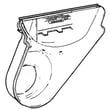
| High-pitched squeal, constant | Idler pulley | Dryer idler pulley WE03X31620 |
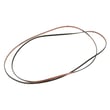
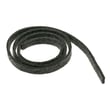
| Thump then squeak, once per turn | Drum belt | Dryer drum belt WE03X29897 |
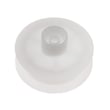
| Squeak/scrape at front of drum | Upper glide bearing | Dryer drum glide bearing, upper WE03X37320 |
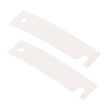
| Rubbing or chirping near drum edge | Felt seal | Dryer drum felt seal WE09X27634 |
Why it matters
A squeak is an early warning that a moving support part is wearing out. Replacing a glide, belt, or idler pulley early helps prevent secondary damage such as a shredded belt, overheated motor, or a drum that starts scraping the cabinet.
Last updated: February 2026