Owner’s manual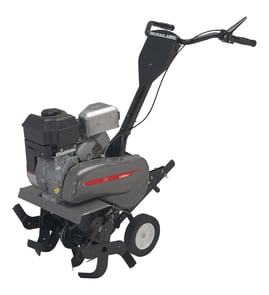


What would cause a tiller to not start?
A Craftsman 917298353 front-tine tiller usually will not start because it is missing spark, fuel, or airflow, or because the controls are not set for a cold start. We focus first on safe spark-plug checks, correct choke and throttle settings, and basic fuel-system inspection.
Quick checks that fix most no-start problems
- Move the throttle control to a run/start position (not STOP).
- Use the choke control for a cold engine (then open the choke as it warms up).
- Confirm the tine control is released (tines disengaged) before starting.
- Inspect the spark plug condition and connection; replace the plug at the start of each season or every 50 hours.
- Check the air filter; clean or replace it if it is dirty or oil-soaked.
- Verify fresh fuel and an open fuel path (no pinched or cracked fuel line).
Spark, fuel, and compression: what to test (in order)
- Spark: Remove the spark plug wire, inspect the plug, and test for spark with a spark tester. No spark commonly points to an ignition issue (such as a failing coil) or a damaged plug wire.
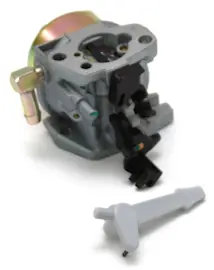
- Fuel delivery: If it has spark, confirm fuel is reaching the carburetor. Old fuel, varnish in the carburetor, or a restricted fuel line can prevent starting.
- Airflow: A clogged air filter can make the engine act flooded or refuse to fire.
- Engine condition: Low oil, heavy carbon, or internal wear can contribute, but spark and fuel issues are far more common.
Control settings that matter on this model
The manual calls out the key controls used during starting and operation (choke, throttle, and recoil starter). Use these settings as a baseline:
| Situation | Choke | Throttle | What to do next |
|---|---|---|---|
| Cold start | On/closed | Medium | Pull recoil starter; open choke gradually after it fires |
| Warm start | Off/open | Medium | Pull recoil starter; avoid choking unless it stumbles |
| Flooded (fuel smell) | Off/open | Low to medium | Pull several times; check/clean plug if wet |
Why it matters
Repeated no-start attempts can flood the engine, foul the spark plug, and waste time. A simple, safe spark and control-setting check prevents unnecessary carburetor work and helps you pinpoint the real failure faster.
For control locations, safe procedures (disconnecting the spark plug wire before service), and seasonal maintenance intervals, follow the owner's manual.
Last updated: February 2026
How to get a tiller to start?
To start your Craftsman 917298353 front-tine tiller, set the engine controls for starting (switch ON, choke for a cold engine), prime if equipped, then pull the recoil starter. Once it fires, move the choke toward RUN and set the throttle to a steady speed before engaging the tines.
Safe starting basics (do this every time)
- Work outdoors; never run the engine indoors.
- Keep hands and feet away from rotating parts.
- Make sure the tine control is released (tines stopped) before you start.
- If you hit a foreign object, stop the engine and disconnect the spark plug wire before inspecting.
- If the tiller vibrates abnormally, stop the engine and check the cause.
Step-by-step: cold start vs. warm start
- Controls: Set the engine switch to ON (if equipped) and set the throttle to START/FAST.
- Choke:
- Cold engine: Move choke to CLOSED/CHOKE.
- Warm engine: Choke OPEN/RUN (or only partial choke if needed).
- Prime (if equipped): Press the primer bulb a few times.
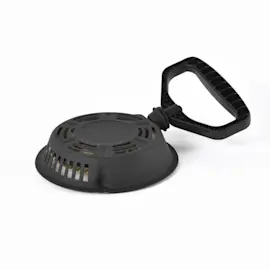
- Start: Pull the recoil starter handle briskly.
- After it starts: Gradually move choke toward OPEN/RUN; adjust throttle to a smooth idle or mid-speed.
Quick reference table
| Engine condition | Choke position | Throttle setting |
|---|---|---|
| Cold start | Closed/Choke | Start/Fast |
| Warm restart | Open/Run | Start/Fast |
| Flooded (gas smell) | Open/Run | Fast (no choke) |
If it still will not start (common causes)
- Old fuel: Drain and refill with fresh gasoline.
- Spark plug wire loose: Reseat the wire firmly on the plug.
- Oil level low: Check oil before starting; low oil can cause hard starting and engine damage.
- Drive system binding: Make sure the tine control is not engaged during starting.
Why it matters
Correct choke and throttle settings prevent flooding, reduce pull-start effort, and help the engine stabilize before you squeeze the tine control to start tine rotation. For control locations and operating steps, follow the owner's manual.
Last updated: February 2026
How to lubricate a tiller?
For the Craftsman 917298353 front-tine tiller, we lubricate it as part of routine maintenance: keep the engine oil at the correct level, then grease or oil the tiller’s moving pivot points and drive components as the maintenance chart in the owner's manual specifies.
What to lubricate on a front-tine tiller
Focus on wear points that move under load or see dirt and moisture.
- Engine crankcase oil (this is the most important lubricant on the machine)
- Tine drive and belt-related moving points (idler arm pivots, engagement linkage pivots)
- Wheel and depth stake pivots and pins
- Control cable pivot points (light oil only, avoid soaking the cable)
- Any exposed pins, clevis points, and spring contact points
Engine oil lubrication (model-relevant)
The manual guidance for this Craftsman tiller includes these oil practices:
- Check crankcase oil before starting the engine and after each 5 hours of continuous use
- Change oil after the first 2 hours of operation
- Then change oil every 25 hours, or at least once a year
- Use SAE 30 motor oil (or equivalent) in typical warm-weather operation
Quick oil schedule
| Task | When to do it | Why it matters |
|---|---|---|
| Check oil level | Before each use; after 5 hours continuous use | Prevents low-oil engine damage |
| First oil change | After 2 hours | Removes break-in contaminants |
| Routine oil change | Every 25 hours or yearly | Maintains lubrication and cooling |
How to lubricate safely and cleanly
- Shut the engine off and let hot parts cool.
- Brush or wipe dirt off fittings and pivot points before adding lubricant.
- Use a small amount; excess grease attracts grit and can speed up wear.
- After lubricating, cycle the tine control and roll the tiller a few feet to distribute lubricant.
Parts that often relate to lubrication and tine engagement
If tine engagement feels sticky or noisy after proper lubrication, inspect common wear items in the drive and control area.
- Idler pad 532109227 (worn pads can affect belt control and engagement feel)
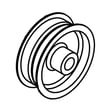
- Pulley 592642101 (a worn pulley can squeal or cause belt slip)
- Cbl/cltch t 583731701 (a binding or stretched clutch cable can mimic a lubrication issue)
Why it matters
Proper lubrication reduces friction, keeps belt and tine engagement smoother, and helps prevent premature wear on pulleys, pivots, and control linkages. It also supports reliable tilling performance, especially in dusty soil conditions.
Last updated: February 2026
Are Craftsman tillers any good?
Yes. Craftsman tillers, including model 917298353, are a strong choice for typical home garden soil prep when they are operated safely and maintained on schedule. Performance and durability depend most on technique (not over-tilling) and replacing normal-wear items on time; see the owner's manual.
What “good” means for a front-tine tiller
Front-tine tillers are built for lighter to moderate soil work and garden bed maintenance. They can till effectively, but they react more to operator technique than heavier rear-tine machines.
Common strengths
- Maneuverable in tighter garden spaces
- Effective for loosening soil in established beds
- Straightforward maintenance compared with larger units
Common limitations
- Can pull forward if tines catch in hard ground
- Struggles if you try to till too deep too fast
- Wear parts (tines, belts, fasteners) need periodic replacement
How to get the best results (and avoid common problems)
The manual stresses controlled operation and avoiding overload.
- Till in shallow passes; increase depth gradually
- Slow down in hard or rocky soil; let the tines do the work
- If the tines catch and the tiller lunges forward, let go of the handlebars and do not restrain the machine
- Keep guards and protective devices installed
- Check shear pins and mounting bolts frequently for tightness
Quick symptom guide
| What you notice | What it usually points to | What to do next |
|---|---|---|
| Excess vibration or rattling | Loose hardware | Inspect and tighten fasteners; replace damaged hardware |
| Poor tilling or shallow digging | Worn tines or depth setting | Inspect tine edges; adjust depth stake |
| Drive feels inconsistent | Belt or idler wear | Inspect belt path and tension components |
Parts that often affect depth and stability
- Depth stake 532446066 (helps set tilling depth and stabilize the machine)
Why it matters
Most “bad tiller” experiences come from trying to till too deep too fast or skipping routine checks. With proper depth control and regular hardware inspections, a Craftsman front-tine tiller delivers consistent garden performance.
Last updated: February 2026