 Installation guide
 Owner’s manual


How many cubic feet is a Kenmore Model 11028132411 washer?
The Kenmore 11028132411 is a top-loading high efficiency, low-water washer, but the capacity in cubic feet is not listed in the provided excerpts. Most Kenmore top-load HE washers in this design family are typically around 3.5 to 4.3 cu. ft.; use the 11028132411 owner's manual to confirm the exact capacity for your unit.
We recommend using one of these quick checks:
- Look for a “Capacity” or “cu. ft.” line in the specifications section of the 11028132411 owner's manual
- Check the model and serial tag (often under the lid or along the lid opening)
- Compare your tub size to published capacity ranges (see table below)
- If you are measuring for bedding, use load guidance (king comforters usually need 4.0+ cu. ft.)
- If you are troubleshooting small loads not washing well, focus on cycle selection and HE detergent amount, not just capacity
These ranges help you estimate when the exact spec is not in front of you.
| Washer type | Typical capacity range | Best for |
|---|---|---|
| Compact top-load | 2.0 to 3.0 cu. ft. | Small households, tight spaces |
| Standard top-load HE (low-water) | 3.5 to 4.3 cu. ft. | Everyday mixed loads |
| Large-capacity top-load HE | 4.4 to 5.5 cu. ft. | Bulky items, larger families |
Capacity affects how much you can wash at once and how well items circulate. Overloading a low-water HE top-load washer can reduce cleaning performance and increase out-of-balance spinning, even when the washer is working normally.
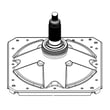
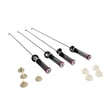
If you see out-of-balance symptoms (banging, walking, or a balance-related code), suspension and drive components are common contributors. For example, worn suspension can make loads shift more easily; the damper assembly W11130356 is one of the parts used to control tub movement on this model.
Last updated: February 2026
How to hard reset a Kenmore Elite washer?
For Kenmore model 11028132411, a “hard reset” is simply a power reset that clears a stuck control state. Unplug the washer (or switch off the breaker) for 1 minute, restore power, then try starting a cycle; if an error code returns, clear it using the Start/Pause procedure in the 11028132411 owner's manual.
- Press POWER/CANCEL to stop the cycle.
- Unplug the washer (or turn OFF the breaker) for 60 seconds.
- Plug back in (or turn breaker ON).
- Select a cycle and touch and hold START/PAUSE/Unlock Lid for up to 3 seconds to start.
- If the display shows an F-type error code, touch START/PAUSE/Unlock Lid once to clear it, then touch it again to restart.
These checks fix the most common “won’t start” situations after a reset:
- Make sure the lid is fully closed; the washer will not spin with the lid unlocked.
- If you paused during a high-speed spin, wait for movement to stop; the lid can take several minutes to unlock.
- Confirm the cycle selector is actually on a cycle (a “--” display means the knob is not set to a cycle).
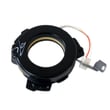
- If the lid will not lock or unlock normally, inspect the washer lid lock assembly W10810403.
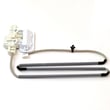
- If the tub will not drain and the washer will not advance, check for a blockage at the washer drain pump W10876600.
| Symptom | Reset helps? | What to do next |
|---|---|---|
| Control panel frozen or cycle won’t start | Yes | Power reset, then restart cycle |
| F-type error code appears | Sometimes | Clear code with START/PAUSE, retry |
| Lid won’t lock/unlock | Sometimes | Check lid lock, wiring, lid alignment |
| Won’t drain or spins poorly | Rarely | Check drain pump, drain hose, load balance |
A hard reset restores normal operation after a brief power glitch or a control “hang,” but it does not correct mechanical problems like a failed lid lock, a clogged drain pump, or a draining issue that triggers repeated error codes.
Last updated: February 2026
How to identify a Kenmore washer model?
Your Kenmore washer model number is printed on the appliance’s model and serial tag. For Kenmore model 11028132411, this tag is typically under the lid on the top panel area (top-load design) and is the number we use to match the correct parts and instructions.
Check these common locations first:
- Under the lid, around the tub opening or on the underside of the top panel
- Along the rear edge of the lid opening
- On the back of the washer cabinet near the power cord
- Inside the control console area (less common)
Kenmore washer model numbers are usually 11 characters and often start with 110.
| What you see | What it means | Example |
|---|---|---|
| Model number | Identifies the exact washer design | 11028132411 |
| Serial number | Identifies your specific unit | Varies |
| Type/series text | Marketing or platform name | Varies |
Use the full model number exactly as shown on the tag.
- Write it down or take a clear photo before shopping
- Include every digit (no spaces)
- Match the model number first, then confirm the part name and part ID
- Use the model’s documentation for location diagrams and labeling details in the 11028132411 owner’s manual
Kenmore washers can look similar across multiple series, but parts like a lid lock, water inlet valve, or drive assembly can change by model. Using 11028132411 ensures we show parts and repair information that fit your washer.
Last updated: February 2026
What is the UL code on the Kenmore Elite Oasis HE washer?
On Kenmore washer model 11028132411, a UL code indicates the washer detected an unbalanced load and stopped or limited the spin to protect the basket and suspension. Correcting load balance and making sure the washer is level usually clears the code; see the 11028132411 use and care guide for control and reset steps.
- Press START/PAUSE once to stop the cycle.
- Wait for the basket to stop moving, then open the lid.
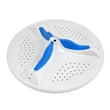
- Redistribute items evenly around the washplate (mix large and small items).
- Remove a few items if the load is overpacked or one heavy item is dominating.
- Close the lid and press START/PAUSE to resume.
An out-of-level cabinet makes the tub swing and triggers UL more often, especially on high-speed spin.
- Confirm the washer sits solidly on the floor (no rocking).
- Adjust the leveling feet until the cabinet is stable.
- Tighten the locknuts on the feet after leveling.
- Verify the drain hose is routed correctly and not pulling on the washer.
For the exact leveling procedure and drain hose setup, follow the 11028132411 installation guide.
| What you notice | Most likely cause | Best next step |
|---|---|---|
| UL happens with bulky items (blankets, towels) | Load distribution issue | Rebalance, run a smaller load |
| UL happens every load | Washer not level or weak suspension | Level the washer; inspect suspension |
| Loud banging during spin | Severe out-of-balance or worn support parts | Stop cycle; check suspension components |
If UL returns after leveling and careful loading, the suspension system may not be controlling tub movement.
- Check for broken or stretched suspension components
- Look for a tub that sits noticeably off-center
- Inspect for excessive bounce when you push down on the basket
A common suspension-related replacement for this platform is the damper assembly W11130356.
Running repeated unbalanced spins can damage the basket drive, clutch, and tub support components, and it can also leave clothes wetter because the washer reduces spin speed.
Last updated: February 2026
What is the average lifespan of a Kenmore washer?
Most Kenmore washers average 10 to 15 years of service life with normal household use and basic maintenance; that expectation applies well to the Kenmore top-loading high-efficiency washer model 11028132411. Consistent HE detergent use, correct loading, and quick attention to leaks or draining issues help you reach the upper end of that range.
- Load size and balance: frequent overloading and off-balance loads shorten tub, suspension, and drive life.
- Detergent choice: this washer is designed for HE (high efficiency) detergent; too many suds can stress draining and sensing.
- Water quality: hard water and sediment can wear valves and pumps faster.
- Drain performance: slow draining increases strain on the pump and can leave residue behind.
- Vibration control: worn suspension parts lead to shaking, noise, and faster wear.
Use this as a practical decision guide for a Kenmore washer like model 11028132411.
| Washer age | What we typically see | Best next step |
|---|---|---|
| 0 to 5 years | Minor adjustments, occasional small part failures | Repair and maintain |
| 6 to 10 years | More frequent wear items (drain, lid lock, suspension) | Repair if cost is reasonable |
| 11 to 15 years | Multiple wear areas, higher chance of major drive/tub issues | Compare repair cost to replacement |
| 16+ years | Increasing downtime and stacked repairs | Replacement usually makes sense |
- Follow cycle, loading, and detergent guidance in the 11028132411 use and care guide.
- Keep loads evenly distributed; wash bulky items (blankets, rugs) in smaller loads.
- Check hoses and connections periodically; replace worn hoses before they leak.
- If you notice slow draining, inspect for clogs and consider the washer drain pump W10876600 if the pump is noisy or weak.
- If the lid will not lock or the washer will not start, test the washer lid lock assembly W10810403.
A washer near the end of its expected lifespan often shows early warning signs (longer cycles, louder spin, more vibration). Catching those symptoms early can turn a major breakdown into a simpler repair and help protect the basket, outer tub, and drive system.
Last updated: February 2026





