Installation guide
 Owner’s manual


Is 3.8 cu ft a big washer?
A 3.8 cu. ft. washer is a medium-to-large capacity size; for most households, it handles everyday laundry and many bedding loads well, but it is not considered “extra-large.” For your Whirlpool WTW5800SG0, 3.8 cu. ft. is a practical capacity that balances load size and cycle performance.
What 3.8 cu. ft. typically handles
- Daily mixed loads for 1 to 4 people
- Towels and jeans (medium-heavy loads)
- Queen bedding in many cases (depending on thickness)
- Smaller comforters and blankets
- Bulky items do better when washed one at a time
Quick capacity comparison
| Washer capacity | Common label | Best for |
|---|---|---|
| 3.0 to 3.5 cu. ft. | Medium | Singles, couples, smaller loads |
| 3.6 to 4.2 cu. ft. | Large | Most families, regular bedding |
| 4.5 cu. ft. and up | Extra-large | King bedding, very bulky loads |
How to decide if you need bigger than 3.8 cu. ft.
A larger tub (often 4.5+ cu. ft.) is worth it if you regularly wash:
- King-size comforters or thick duvets
- Large loads of towels (multiple bath towels at once)
- Oversized blankets, pet beds, or bulky outerwear
- Back-to-back loads for a larger household
Why it matters
Overloading is the main reason a “large” washer feels too small. Keeping loads to a comfortable fill level helps your WTW5800SG0 agitate, drain, and spin correctly, which improves cleaning and reduces vibration and wear.
For load size guidance and cycle recommendations specific to your washer, follow the usage and care instructions in the owner's manual.
Last updated: February 2026
What is the life expectancy of a Whirlpool WTW5800SG0 washer?
A Whirlpool WTW5800SG0 top-load washer typically lasts 10 to 14 years with normal household use and basic maintenance. Heavy loads, frequent cycles, and skipped upkeep shorten lifespan; replacing common wear parts can keep performance strong well past the 10-year mark. See the owner's manual for care and operating guidance.
Typical lifespan and what affects it
Most washers in this class land in the 10 to 14 year range. The biggest factors are load size, cycle frequency, and how well the machine drains, spins, and stays balanced.
- Avoid consistently overloading the basket; it accelerates wear on the drive system and suspension.
- Use the correct detergent amount; oversudsing can contribute to poor draining and residue.
- Keep the washer level; out-of-balance operation stresses the suspension and drive components.
- Address small leaks or slow drains early; they often lead to bigger failures.
- Follow fabric care labels and proper bleach use to prevent damage and residue buildup.
Parts that commonly determine “repair vs replace” timing
When a washer reaches midlife, a few components tend to decide whether it is worth repairing. For the WTW5800SG0, these are common examples from the parts list:
| Symptom | Often-related part | Example part on this model |
|---|---|---|
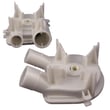
| Won’t drain or leaves water in tub | Drain system | Washer drain pump WP3363394 |
| Won’t spin or stops when lid is open | Safety interlock | Washer lid switch assembly WP8318084 |
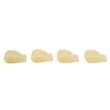
| Agitation is weak or intermittent | Agitator drive | Agitator dog 80040 |
Why it matters
Knowing the expected life helps you plan: if your WTW5800SG0 is near 10 to 14 years old, investing in maintenance and smaller repairs often makes sense, while repeated major drive or control issues can signal end-of-life economics.
Last updated: February 2026
What problems are common with the WTW5800SG0?
Common problems we see with the Whirlpool WTW5800SG0 washer include not starting (often lid-related), not draining or not spinning, leaking at hoses or the drain connection, and loud or unusual noises during agitation or spin. Many of these issues trace back to installation/leveling, drain height, or wear parts in the drive and drain systems.
Most common symptoms and what usually causes them
- Won’t start or stops mid-cycle: lid not fully closed, lid switch issue, or a normal pause in the cycle.
- Won’t drain or won’t spin: drain hose restriction, drain hose installed too high (over 96 inches), or a failing pump.
- Leaking: loose fill hoses, mis-seated hose washers, or a drain hose clamp problem.
- Noisy operation: normal gear engagement sounds, or wear in the agitator/drive components.
- Basket crooked or washer “walks”: unbalanced load or washer not level.
Quick checks we recommend first (fast, no parts)
Use the troubleshooting section in the owner's manual as you go.
- Confirm the lid is closed; this washer will not agitate or spin with the lid open.
- Verify hot and cold faucets are on and inlet hoses are not kinked.
- Check the drain hose height; the end of the hose should not be more than 96 inches (244 cm) above the floor.
- If leaking, recheck fill hose tightness and that hose washers are seated.
- Level the washer and rebalance the load; an off-balance load can cause noise, walking, and poor spin.
Parts that commonly fix these symptoms (when checks don’t)
If the basic checks do not resolve the issue, these model-compatible parts are frequent fixes:
| Symptom | Common part to inspect/replace | Why it matters |
|---|---|---|
| Won’t start, won’t spin with lid closed | Washer lid switch assembly WP8318084 | Confirms the lid is closed so the washer can run/spin |
| Won’t drain or leaves water in tub | Washer drain pump WP3363394 | Moves water out; a weak pump can stall drain/spin |
| Agitates poorly or makes clicking in agitator | Agitator dog 80040 | Worn dogs can cause slipping and weak agitation |
Why it matters
Catching the root cause early prevents repeat cycle interruptions, reduces leaks that can damage floors, and avoids extra wear on the clutch, drive block, and basket drive components.
Last updated: February 2026
What is diagnosis code 580?
For a Whirlpool WTW5800SG0 washer, “diagnosis code 580” is not a standard washer error or diagnostic code; it is most commonly an ICD-9 medical diagnosis code (580) for acute glomerulonephritis. For washer troubleshooting, use the model’s diagnostic steps and symptom checks in the owner's manual.
How to tell if the code is from the washer or something else
Use these quick checks to confirm what you are looking at:
- If the code appears on the washer console display during a cycle, treat it as a washer fault or status code.
- If the code appears on paperwork, a bill, or a medical portal, it is almost always a medical billing code.
- If the washer is not draining, spinning, or agitating, focus on symptoms first (not the number).
- If the lid is open, the washer will not agitate or spin; close the lid and restart the cycle.
- If the washer will not drain or spin, confirm the drain hose is not clogged and is installed correctly.
What to do on the washer (WTW5800SG0) when it won’t run right
The WTW5800SG0 troubleshooting guidance is symptom-based. Start with these common, high-impact checks:
- Confirm both hot and cold water faucets are fully on.
- Straighten any kinked inlet hoses.
- Check for a tripped breaker or blown fuse.
- Allow for normal cycle pauses (some cycles pause for about 2 minutes).
- Reduce load size if the washer is overloaded.
- Keep the lid closed during operation.
Common symptom to likely part area (quick guide)
| Symptom | Common area to inspect | Example part for this model |
|---|---|---|
| Won’t drain | Drain pump, drain hose | Washer drain pump WP3363394 |
| Won’t spin/agitate | Lid switch, drive system | Washer lid switch assembly WP8318084 |
| Agitates poorly | Agitator dogs/agitator | Agitator dog 80040 |
Why it matters
Mixing up a medical “diagnosis code” with a washer diagnostic code can send you down the wrong path. For the WTW5800SG0, troubleshooting by symptom (fill, drain, spin, agitation) gets you to the right checks and the right replacement parts faster.
Last updated: February 2026