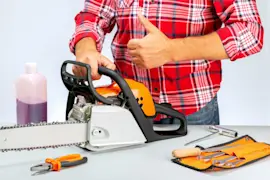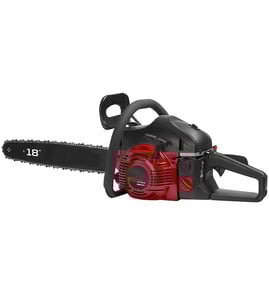

Are McCulloch chainsaws good quality?
Mcculloch chainsaws are generally a solid, homeowner-grade choice when you want good cutting performance without stepping up to PRO-FORESTRY pricing. For your Mcculloch PRO gas chainsaw, quality comes down to routine maintenance (fuel mix, chain sharpness, and air filtration) and using the saw within its intended workload.
What “good quality” means for a gas chainsaw
A good-quality gas chainsaw typically delivers consistent starting, stable idle, strong acceleration under load, and manageable vibration. In real use, you will notice quality most in these areas:
- Engine performance: steady power through the cut without bogging
- Ergonomics: comfortable grip and balanced feel for longer sessions
- Durability: bar, chain, clutch, and starter components hold up with normal use
- Serviceability: common wear items can be cleaned, adjusted, or replaced
- Safety features: reliable chain brake and throttle interlock operation
How to judge your PRO model’s condition quickly
Use this checklist before you decide whether the saw is “good” or just needs basic service:
- Starts within a few pulls when cold (with choke used correctly)
- Idles without the chain creeping (idle speed set correctly)
- Accelerates cleanly (no hesitation that suggests fuel or air restriction)
- Cuts straight (chain sharp, bar rails not excessively worn)
- Chain oiling works (a light oil line appears on cardboard at half throttle)
Common quality killers (and the fixes)
Most “bad chainsaw” complaints trace back to maintenance, not the brand.
| Symptom | Most common cause | What to do first |
|---|---|---|
| Hard starting | old fuel, wrong mix ratio | drain and refill with fresh, correctly mixed fuel |
| Dies at idle | carb adjustment, dirty air filter | clean filter; set idle so chain does not move |
| Low power in cut | dull chain, clogged muffler screen | sharpen chain; inspect exhaust outlet |
| Chain runs dry | empty tank, clogged oiler path | refill; clean bar oil holes and groove |
Why it matters
A well-tuned Mcculloch gas chainsaw can feel “high quality” because it cuts faster, vibrates less, and is safer to control. A neglected saw can feel weak or unreliable even if the core engine and chassis are in good shape.
For help confirming you have the exact model identification for parts and diagrams, use how to find your appliance model number (and what it means for parts).
Last updated: February 2026
Are McCulloch chainsaws still being made?
Yes. Mcculloch chainsaws are still being made and sold under the Mcculloch brand (within the Husqvarna Group). For your Mcculloch PRO MAC 3505 11-600035-16 gas chainsaw, that mainly affects how you shop for maintenance and repair parts: always match parts to the full model identification on the saw.
What “still being made” means for your PRO MAC 3505 11-600035-16
Even when a brand is active, older chainsaw models can have changing parts availability over time. Using the complete model name (not just “PRO”) helps you avoid ordering the wrong carburetor parts, fuel lines, or cutting system components.
- Use the full model identification: PRO MAC 3505 11-600035-16
- Confirm the data plate text on the saw before selecting parts
- Compare the old part visually (mounting points, hose routing, fastener sizes)
- Replace common wear items together when needed (bar, chain, sprocket)
- Check for fuel system issues first (old fuel, clogged filter, cracked lines)
Quick checks before buying chainsaw parts
| What to verify | Why it matters | Example of what to look for |
|---|---|---|
| Full model identification | “PRO” can apply to multiple Mcculloch PROducts | PRO MAC 3505 11-600035-16 on the tag/label |
| Guide bar length | Determines compatible chain length | Length stamped on the bar |
| Chain pitch and gauge | Wrong specs affect fit and safety | Markings on bar or chain packaging |
| Fuel and air path layout | Carburetor and line routing vary by version | Line sizes, filter location, primer setup |
Why it matters
Chainsaws are spec-sensitive; bar length, chain pitch, and fuel delivery parts must match the exact saw configuration. Using the full model identification reduces returns and helps keep the saw running safely.
For help locating the correct model identification on your equipment, use: how to find your appliance model number (and what it means for parts).
Last updated: February 2026
Is 40 1 or 50 1 better for chainsaws?
For your Mcculloch PRO gas chainsaw, the best mix is the ratio specified for the engine; in general, 50:1 is the modern standard with quality 2-cycle oil, while 40:1 adds more oil for extra lubrication but can increase smoke and carbon buildup. Use one ratio consistently.
Quick recommendation
- If your saw (or oil bottle) specifies 50:1, run 50:1 with a high-quality 2-cycle oil.
- If your saw specifies 40:1, run 40:1.
- If you are unsure, 50:1 is the safer default for most newer oils and engines, and it keeps the exhaust port and spark arrestor cleaner.
What changes between 40:1 and 50:1
| Mix ratio | Oil per 1 gallon gas | What you typically notice | Common downside |
|---|---|---|---|
| 50:1 | 2.6 oz | Cleaner running, less smoke | Less oil margin if the engine is run hot or lean |
| 40:1 | 3.2 oz | More lubrication margin | More smoke, more deposits, higher chance of plug fouling |
How to choose the right ratio for real-world use
- Follow the engine spec first (fuel cap decal, shroud label, or your printed manual if you have it).
- Match the oil to the ratio; some oils are formulated specifically for 50:1.
- Avoid mixing ratios tank-to-tank; consistency helps carburetor tuning and plug reading.
- If you do heavy cutting in heat, keep the saw healthy by maintaining sharp chain, clean air filter, and PROper carb tuning (a lean tune is what usually hurts engines, not “too much oil”).
Why it matters
The fuel-to-oil ratio directly affects lubrication, combustion temperature, and carbon deposits. Too little oil risks piston and cylinder scoring; too much oil can load up the muffler, spark arrestor screen, and spark plug, causing poor power and hard starting.
For help confirming the correct model identification before ordering parts, use how to find your appliance model number (and what it means for parts).
Last updated: February 2026
What happened to McCulloch Chainsaw Company?
Mcculloch chainsaws did not disappear; the original Mcculloch company changed hands over time, and the Mcculloch name continued as a brand after bankruptcies and acquisitions. Today, Mcculloch-branded saws are positioned mainly as consumer outdoor power equipment rather than the older PRO-GRADE legacy.
What this means for your Mcculloch PRO gas chainsaw
Brand history matters most when you are buying parts because the same “Mcculloch” name can cover different eras, suppliers, and part systems. For your model, the most reliable match comes from using the exact model identification on the saw.
- Use the model tag on the saw to confirm the full model number and any type or serial info
- Match parts by model, not by “PRO MAC” family name alone
- Expect that some older assemblies may be discontinued, with only certain wear items still available
- When ordering, compare photos and descriptions to your removed part (especially carburetor, ignition, and starter parts)
- If you are unsure, document the part markings and mounting pattern before you buy
Quick timeline (high-level)
| Era | What changed | What you may notice when sourcing parts |
|---|---|---|
| Original Mcculloch company years | Mcculloch PROduced and supported its own PROduct lines | Older part numbering conventions and legacy designs |
| Post-bankruptcy and acquisitions | Brand ownership and manufacturing shifted | More variation in parts availability by model and region |
| Modern brand use | Mcculloch continues mainly as a consumer brand | Parts lookup depends heavily on exact model identification |
Why it matters
Chainsaw parts compatibility is driven by the exact model and PROduction run. Using the correct model number helps you avoid ordering the wrong bar, chain, carburetor kit, recoil starter parts, or ignition components.
Helpful resource
Use our guide to confirm the model information before ordering: how to find your appliance model number (and what it means for parts)
Last updated: February 2026